By Percival Bramble, Travel Correspondent
Haddock-on-Sea has never pretended to be glamorous. Perched on the Kingdom’s eastern coast, it has neither the grand piers of Inverness’s seaside resorts nor the sweeping beaches of Thistledown Bay. What it does have is charm of a rough-hewn variety: the salty tang of the air, the perpetual cries of gulls, and a sense that everyone here has come not to be seen but simply to be.
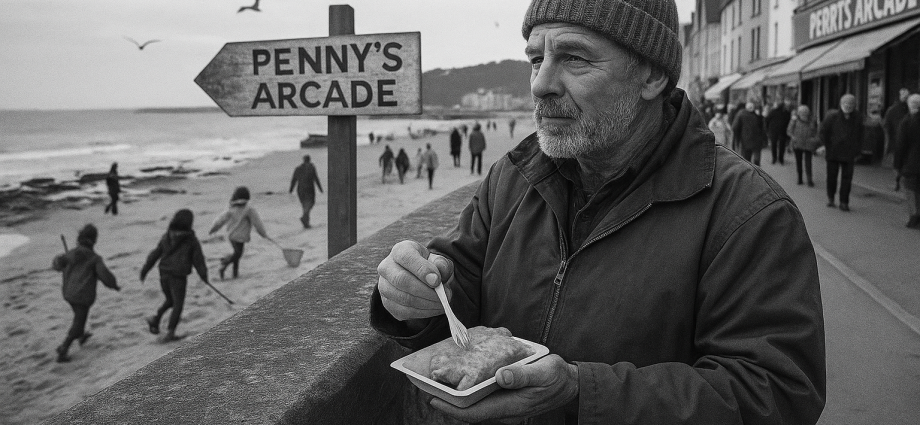
I arrived on a Friday evening as the tide was pulling back, leaving a glistening carpet of shells and seaweed across the sand. Children chased each other with nets, hoping to trap tiny crabs in the shallow pools. An old fisherman named Bramley Croft told me he has walked these shores every day since he was a boy. “The sea doesn’t change,” he said, eyes narrowing against the wind. “It takes and it gives, but it’s always the sea.” His words carried the weight of truth as the waves gnawed steadily at the seawall behind us.
The town itself is a medley of peeling paint, clapboard shops, and narrow streets that smell perpetually of frying fish. Every other storefront sells haddock in some form: fried, smoked, pickled, or even baked into a pie that the locals swear is restorative. The Haddock Pie Shop, run by three sisters with matching aprons, served me a slice that was half dinner, half legend. “We put more fish than crust,” one sister confided, “and that’s the way it should be.”
By Saturday morning, the promenade was alive with visitors. Couples strolled arm-in-arm, elderly men read newspapers behind the shelter of windbreaks, and teenagers queued outside Penny’s Arcade. Inside, the sound of clattering machines, bells, and cheers filled the air. Penny herself, a formidable woman with hair as red as a sunset, told me her family had run the arcade since before the Great Storm. “It’s not about winning,” she said, gesturing to the flashing lights, “it’s about forgetting everything outside those doors.”
Not far from the arcade stands Haddock’s most peculiar attraction: the Museum of String. Housed in a converted lifeboat station, it is exactly what it claims to be — a collection of string. Bundles, braids, knots, and coils line the cases, from ordinary twine to a ceremonial rope said to have moored the King’s barge during a royal regatta. The curator, a bespectacled man named Edgar Blinn, gave his tour with scholarly seriousness. “String,” he declared, “is the foundation of civilization. Without it, sails would not fly, shoes would not tie, and haddock would slip through every net.” I left convinced he was right.
Evenings in Haddock-on-Sea are best spent by the harbour. The pubs spill light onto the cobbled lanes, and fiddlers strike up tunes as pints of dark ale flow. I joined a group of sailors at The Drunken Gull, where the talk was of storms weathered and nets lost. A young deckhand raised his glass and proclaimed, “If you don’t leave Haddock with salt in your beard and a tune in your head, you’ve done it wrong.” The whole pub roared in agreement.
On Sunday, I woke early to watch the sunrise. The horizon glowed faintly pink, and the gulls wheeled in anticipation of another day’s scraps. Down by the shore, church bells rang faintly from St. Oswin’s, calling the faithful. A few fishermen crossed themselves before casting off, while others simply set their shoulders to the work. The sea stretched endless, indifferent yet intimate, a reminder of why Haddock endures.
A weekend in Haddock-on-Sea is not an escape into luxury, but rather a return to essentials: the taste of fried fish hot from the pan, the creak of nets drying on the quay, the clatter of pennies in an arcade. It is not polished, nor does it pretend to be. But it is alive, honest, and seasoned with salt.