Times-Observer – Rural Life & Public Safety
The people of Lowmarsh Parish have always lived in an easy friendship with the river. The River Aelwyn, broad and slow-moving through the southern marshlands, has fed their fields for generations, watered their cattle, and brought in barges of trade from the coast. Its seasonal moods were familiar and rarely feared—until this week, when the river quietly rose in the night and slipped over the levee like an unwelcome guest.
There was no storm, no thunderclap, no cascade of rain from the highlands. Instead, the river simply swelled until the old stone-bank protecting Lowmarsh gave way with a muted groan. By dawn, much of the western pasture lay under water, and the outer cabbage plots rippled like a shallow lake.
Fortunately, no lives were lost. The flood, though disruptive, moved gently enough to allow families time to gather children and livestock. Even so, the damage was plain: a dozen sheep unaccounted for, several barns standing knee-deep in muddy water, and the early barley harvest spoiled where it had been laid out to dry.
Yet Lowmarsh is a parish known for its resilience—and for its habit of treating misfortune not as a disaster but as a reminder.
A Parish Takes Stock
By midmorning, the parish warden, Catrin Hawsley, had organized a gathering outside the stone chapel. Villagers arrived in boots and rolled sleeves, some still dripping from wading through their yards. Catrin delivered the news plainly: the levee would need reinforcing before another tide, the lower fields would have to be drained, and the parish granary would distribute reserves as needed.
Her tone was steady, almost cheerful. “It could have been worse,” she said, “and besides, work done together goes twice as quickly as work done alone.”
The remark drew nods—and just enough laughter to ease the morning’s tension.
The Value of Old Wisdom
Elders of the parish recalled a similar overflow more than forty years ago, when heavy spring meltwater surged down from the northern hills. At that time, the parish rebuilt the levee with double-thick stone, set by hand under the guidance of the stonemasons’ guild. Over the years, however, small gaps had formed, mortar loosened, and patches of the wall went untended.
No one blamed anyone else. As one farmer put it, “We trusted the stones to remember what we forgot.” The old ways of yearly inspection had grown lax, not from negligence but from prosperity and routine.
Still, the flood was a gentle admonition that the river’s gifts come with responsibility. The marshland, fertile as it is, demands stewardship.
A Light Spirit in Heavy Work
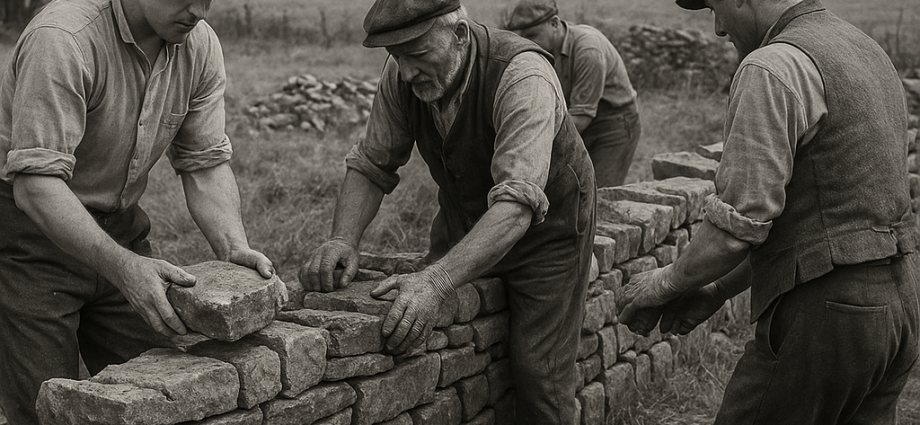
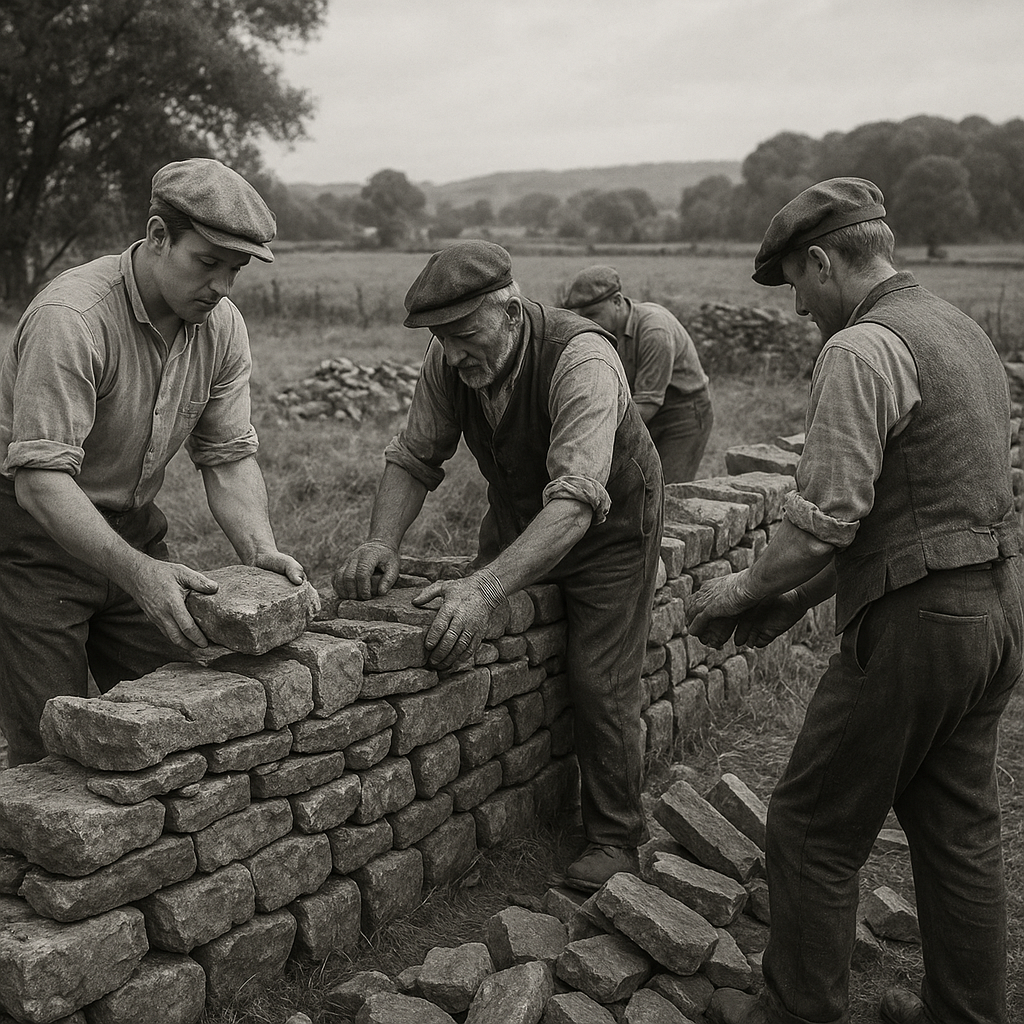 By afternoon the parish had organized a levee-repair crew. Men and women hauled stones from the quarry path, while boys ferried them by handcart to the break in the wall. The river had already begun to recede, leaving behind a patterned sheen of silt that caught the light like pewter.
There was no gloom to the work—only the satisfying rhythm of hammers, the scrape of stone, and the cheerful murmur of neighbors sharing tasks. Someone brought a jug of cider, to be passed from hand to hand; someone else produced a bundle of cheese and oatcakes. A mason joked that the river had done half the work by washing the stones clean.
Even the parish priest joined in, clearing mud from the chapel’s footpath and fetching buckets for the work crews. Children, delighted to find so much water in unusual places, took to floating little wooden boats between the furrows while their elders pretended stern disapproval.
Lessons of the River
By evening, the break in the levee had been sealed with new stones, set carefully in fresh mortar. The wall now stood slightly higher than before, reinforced with timber braces cut from the parish woodlot. It was not a grand work, but it was solid—and it was their own labor that made it so.
The day’s events sparked renewed discussion in Lowmarsh about the value of regular inspections, the importance of maintaining the ditches and drainage channels, and the wisdom of keeping a modest reserve of grain and hay for the unexpected. No one framed these things as burdens. Instead, they were spoken of as part of the ancient rhythm of life by the water.
As Elder Reevers summed it up, leaning on his walking stick as he watched the work conclude:
“Rivers don’t mean harm. They simply go where they go. It’s our task to keep pace with them—and be thankful for the reminder.”
Lowmarsh will dry out in a few days. The cattle will return to their pastures, the planting will resume, and the laughter of children will once again mix with the song of the river. But the parish carries a renewed resolve: to live in harmony with the land by honoring its conditions, its warnings, and its gifts.