By Clarion Hask, Special Correspondent, The Times-Observer
In a city where dawn is the hour of truth, the presses rolling, the milk carts rattling, the bells sounding the day’s first reckonings, it was midnight that gave the Kingdom its rudest awakening. A junior telegraph operator of the Inverness Central Signal Office has confessed to rerouting government wires for months to an address believed to be within Marelia. What began as a routine audit of line voltages has opened a scandal that now touches foreign chancelleries, military dispatches, and the fragile web of trust that binds the Realm’s communications.
The Discovery
The breach was first suspected when the Royal Signal Corps noted a persistent two-minute lag on priority lines between the Hall of Ministers and provincial governors. At that hour, the lines should run clean; instead they hummed like a hive. Lieutenant Verne, a methodical man by temperament, ordered a nocturnal test: simultaneous dummy messages sent from three ministries, each embedding a harmless ciphered marker. Two of the markers arrived as expected. The third surfaced moments later on a commercial line never authorized for government traffic.
“That should be impossible,” Verne told The Times-Observer. “Either the wires had learned to lie, or someone had taught them.”
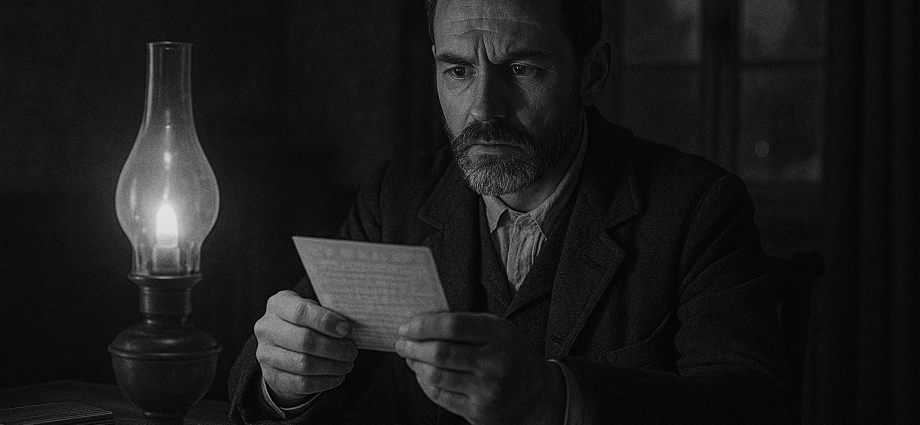
The trail led to Desk 14 at Inverness Central, a night station manned by one Merrick Hale, age twenty-six, employed two years, known to colleagues as quiet, punctual, and fond of chess problems. Under questioning, Hale admitted to “technical adjustments” on the switchboard, bridges that allowed a copy of select messages to be echoed to a private trunk routed north by northwest.
“I told myself it was harmless,” Hale reportedly said. “Words move; it is their nature. I only helped them along.”
The Mechanism of Betrayal
Telegraphy, to the layman, is a mystery of needles and nerves. To a traitor, it is a map. Investigators say Hale exploited an obscure maintenance protocol that permits operators to loop traffic onto a secondary path during line repairs. The protocol requires two keys and a supervisor’s countersign. Hale had one key by duty, the other by theft, and the countersign by forgery, a schoolboy’s hand aping a master’s,” as the Inspector put it.
Each night between eleven and two, a narrow window when the government lines quieted, Hale would engage the repair loop for “diagnostics.” In that interval, duplicates of flagged messages – ministerial bulletins, requisition schedules, troop-rail timetables – were skimmed and fed onward to a numbered address at the Northpost Exchange. From there, the trail vanishes into a mesh of relay houses and border stations that end, investigators believe, with a Marelian receiver.
Not all content was captured. The system depended on Hale marking particular origin codes for duplication. “He was selective,” said Lieutenant Verne. “He valued not noise, but signal.”
The Confession and the Question of Motive
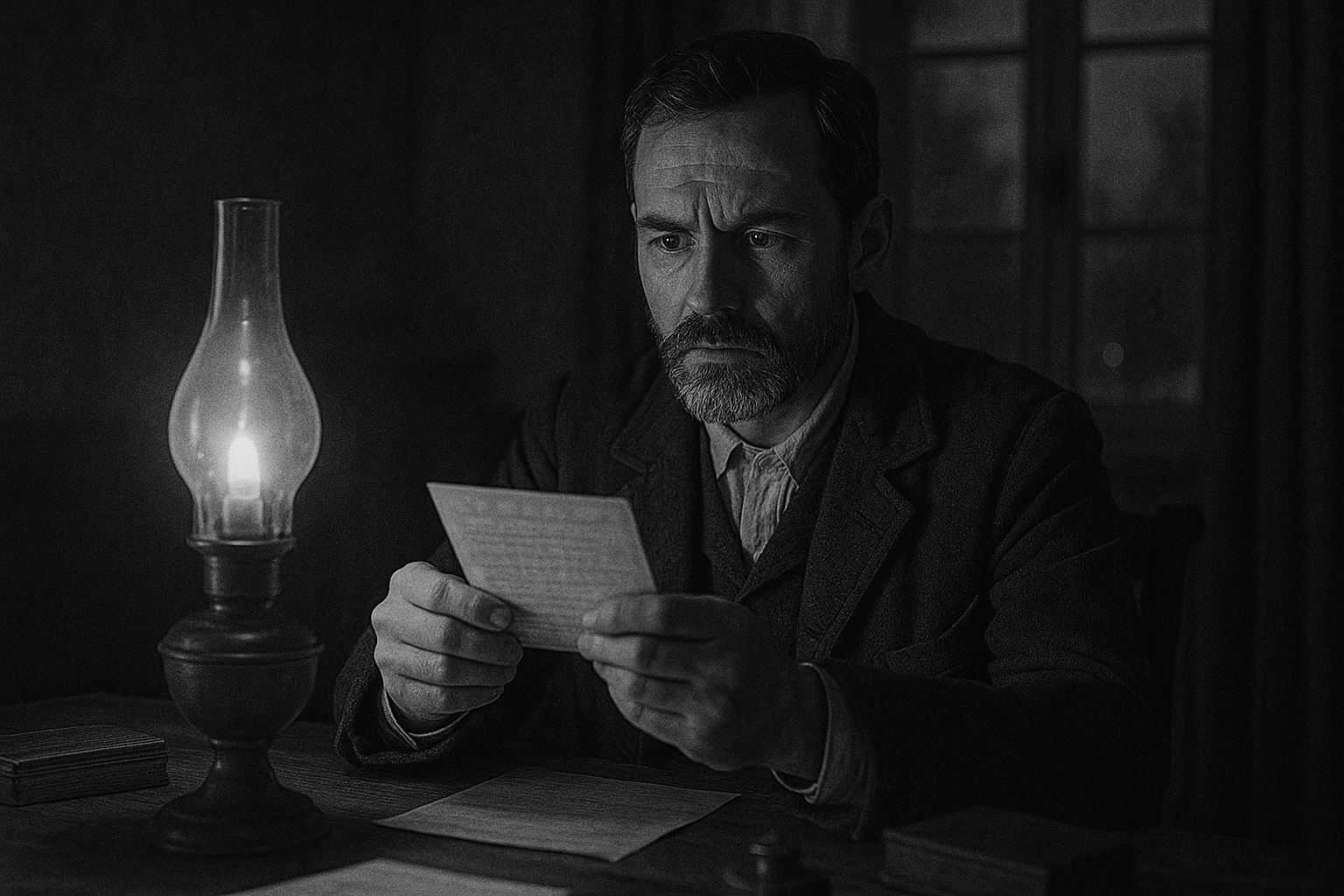 Hale’s confession, taken in the small hours of Sixthday, is at once blunt and baffling. He denies political allegiance and disavows any acquaintance with Bianchovi or The Red Banner. He claims not to have profited beyond “modest gratuities”, untraceable small sums deposited to a pawn-broker’s account and drawn down as cash.
“Why?” asked the Inspector. Hale’s answer, by all accounts, chilled the room: “Because I could.”
Yet fragments of correspondence found in his lodgings tell a murkier tale: a postcard of Marelia’s capital with a line in tiny script: “Truth thrives in the dark.” A chess problem annotated, “Sacrifice the knight to open the file.” A receipt for a steamer ticket never used.
The Ministry of Justice suspects a recruiter – an intermediary who trawled the lesser ranks of the Nation’s critical services for men with small salaries and larger pride. “He was groomed,” said Minister Thayne. “Not for doctrine, but for vanity, the most reliable accomplice of treason.”
Diplomatic Shockwaves
Before noon on Seventhday, the Ministry of Foreign Affairs summoned the Marelian chargé for “urgent consultations.” The meeting, according to two officials, was frosted from the first handshake. The chargé denied state involvement and suggested that “mischievous privateers” may have pirated the lines for commercial advantage. The Prime Minister’s secretary, stone-faced, replied: “Privateers do not crave troop timetables.”
By evening, a communique announced heightened scrutiny of all Marelian diplomatic traffic and an audit of signal stations within thirty miles of the border. Two Marelian couriers were politely detained at North Gate Station for baggage inspection. They protested. The Constabulary, polite in turn, continued.
Securing the Wires
The technical remedy is already underway. The Royal Signal Corps has revoked repair-loop privileges outside of supervised day shifts; introduced triple-key access to government trunks; and mandated live redundancy, whereby a second operator must mirror and certify any reroute. Each ministry has established a Message Ledger of Record, a bound book in which priority wires are logged in ink at dispatch and receipt, so that no silence goes uncounted and no delay passes without a name beside it.
The Guild of Telegraphers, stung by the implication that its trade shelters spies, has offered to place oath plaques in every exchange: “We carry messages for the Crown and for the people; we carry none for their enemies.” Apprentices will henceforth swear it aloud.
What Was Lost
Officials downplay the damage, citing the selective nature of the capture and the precautionary vagueness customary in sensitive wires. Even so, two episodes loom large: a rail movement notice for a cavalry brigade later ambushed by smugglers along a diversion; and a procurement schedule for coastal signal lamps that coincided, curiously, with a spate of thefts from warehouses near the docks.
“Coincidence is a coward’s refuge,” said a senior officer. “We are not cowards.”
The City Reacts
In taverns and tea rooms, outrage mingles with embarrassment. “We laughed at the lies of a newspaperman,” said a clerk on Candle Street. “Now we learn a wire can lie as well.” A seamstress told this correspondent she kept her children home from school “until the air felt honest again.”
At Inverness Central, a sheet has been tacked to the notice board bearing a single sentence in careful, workman’s script: “We will not be Merrick Hales.” Operators arriving for the night shift touch it with two fingers as they pass.
After Midnight
Hale sits now in a cell beneath the Justice Hall, silent, his chessboard removed. He will be tried under the new provisions debated this week – malicious fabrication for public harm – with the aggravating factor of aid to a foreign power. His recruiter, if he exists, remains in the dark.
The city’s wires still sing at midnight. They always will. But henceforth they will sing to two sets of ears and under three keys, and every delay will have its ledger. It is the nature of a realm to trust the unseen paths that carry its speech. After the Midnight Telegram, it is also our nature to verify.