By Lucian Harcourt, Diplomatic Correspondent, The Times-Observer
In a move that has sent a chill across the northern frontier, the Ministry of Foreign Affairs yesterday ordered two senior Marelian envoys to depart the Kingdom within forty-eight hours, citing “activities inconsistent with their diplomatic status.” The expulsions mark the sharpest rupture in Eyehasseen–Marelian relations in a generation and follow swiftly upon the discovery of telegraphic tampering and the unmasking of the River Docks conspiracy, both traced by investigators to “persons and interests sympathetic to the Marelian cause.”
The Moment of Dismissal
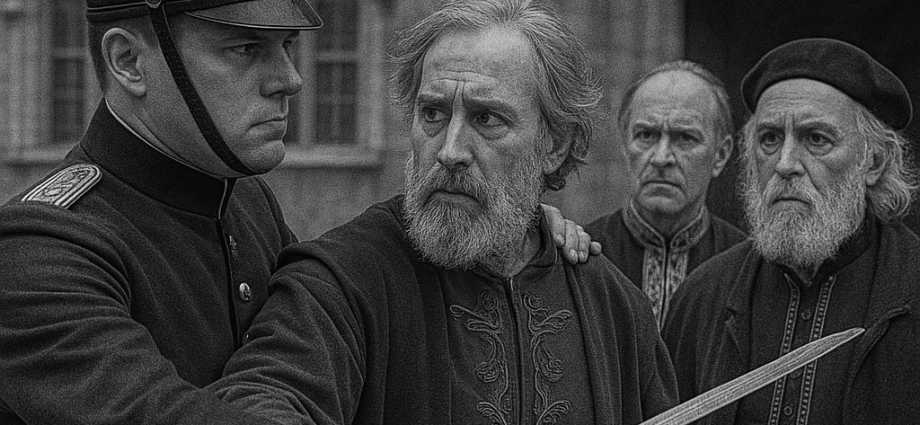
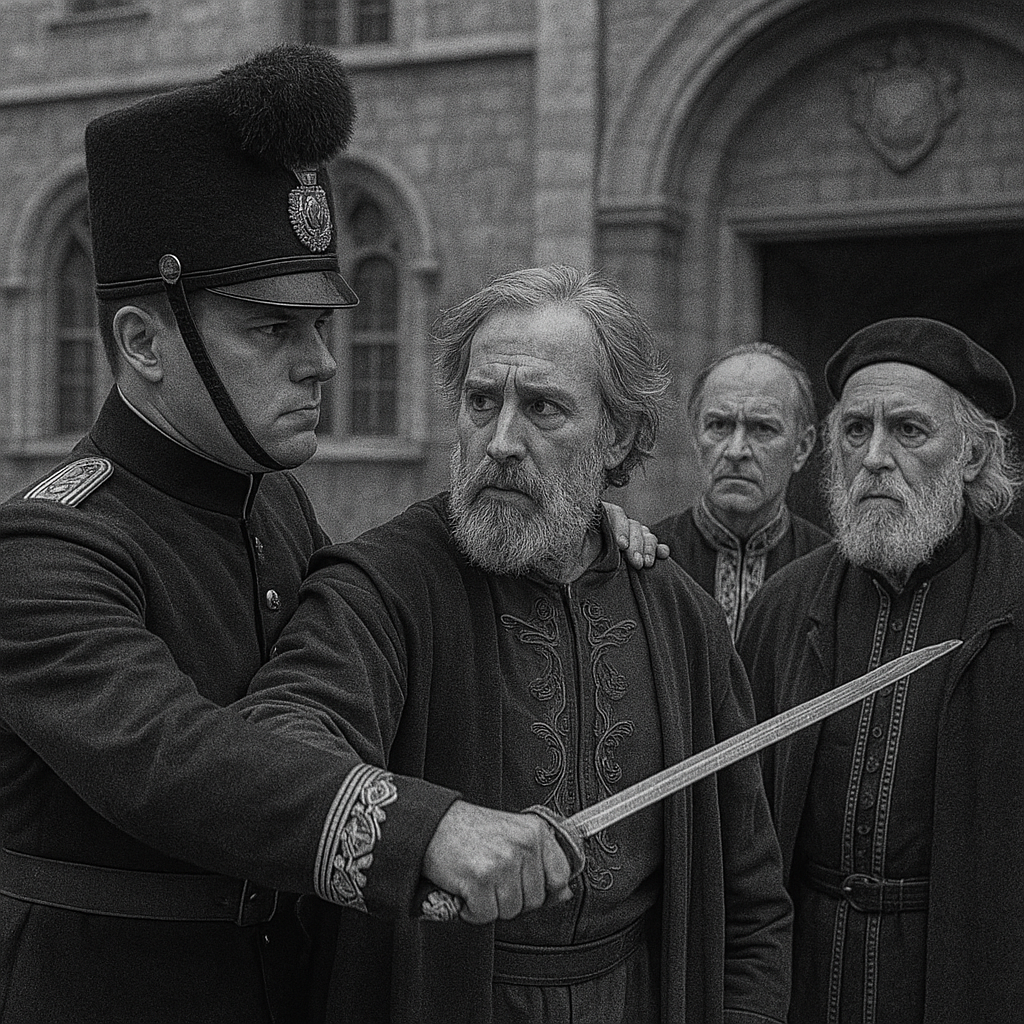 Shortly after midday, a closed carriage bearing the royal crest drew up before the Marelian Legation on Rue des Scholars. Inside sat Sir Reginald Clay, the Permanent Secretary of the Ministry, accompanied by two uniformed aides and a sealed document. Witnesses describe a tense exchange at the gate; voices rose, then fell to frost. Minutes later, the Marelian flag atop the legation staff was lowered to half-mast—a gesture of protest, not of mourning.
By three o’clock, the names of the expelled diplomats—Counsellor Vitor Amsen and Attaché Dalin Nor—had been publicly read before the Hall of Ministers. The order cited “conduct injurious to the security of the Realm and hostile to the peace of nations.” Their immunity, while formally preserved, was curtailed to safe-passage status only. They are to leave by rail before dusk tomorrow.
The Trail That Led to Them
Sources within the Royal Constabulary tell The Times-Observer that correspondence seized from the dockside conspirators contained ciphered directives originating in a Marelian codebook recovered during the recent “Midnight Telegram” investigation. The pattern of phrasing matched diplomatic traffic issued through the Marelian legation’s private wire. Although no document bore the envoys’ signatures, investigators believe their staff acted under “instruction or tolerance.”
A senior official summarized the government’s position: “Whether they commanded it or condoned it is immaterial. The snake does not choose which of its rings bites.”
A Palace Decision
The decision to expel was reached during an emergency session of the Royal Council late last night. The King himself is understood to have approved the order after consulting both the Prime Minister and the Commander of the Royal Army. A courtier present at the meeting described His Majesty as “grave but unflinching.”
“His Majesty has long believed that leniency invites impudence,” the courtier said. “The line has been crossed. Courtesy ends where conspiracy begins.”
The Ministry’s official communiqué was brief:
“The Government of the Kingdom, having determined that certain agents accredited to it have violated the trust upon which civilized intercourse depends, has declared those agents persona non grata. It remains the hope of the Crown that the Marelian nation will prefer honor to intrigue.”
Marelia’s Reply
Within hours, the Marelian Foreign Office in its capital issued a statement of “indignant astonishment,” denying all wrongdoing and accusing Eyehasseen of “manufacturing provocations to mask internal discord.” It announced reciprocal expulsions of two Eyehasseen diplomats, including the respected cultural attaché, Miss Clarisse Rowe, who had served in Marelia for six years. “We shall pack with dignity,” she told reporters before boarding the midnight train. “I love their people, if not their politics.”
Trade representatives on both sides have been instructed to suspend negotiations over the proposed Northern Tariff Accord, a measure once hailed as a symbol of postwar cooperation. “That parchment will gather dust now,” remarked one weary merchant on King’s Wharf.
The Public Temper
In Inverness, the expulsions were greeted with a curious mix of pride and apprehension. Crowds gathered outside the Marelian legation to watch the carriages depart; some jeered, others merely stared. One youth attempted to wave the Eyehasseen flag atop the departing coach but was restrained by Constables. “Let them leave without theater,” a sergeant admonished.
At the taverns, talk ran fierce. “We should have sent them packing months ago,” declared a veteran of the coastal garrisons. “Their ink was in every seditious pot.” A shopkeeper, more measured, wondered aloud whether the loss of Marelian trade would raise the price of imported wool. “Patriotism is dear,” she sighed.
Military Precaution
Though the Ministry of War insists that “no mobilization is contemplated,” the Royal Navy has discreetly increased patrols along the northern approaches, and the Signal Corps has been ordered to maintain continuous watch on border transmissions. Engineers are inspecting telegraph lines for “anomalous attachments,” the phrase now serving as official shorthand for espionage.
Colonel Varrin of the Palace Guard summarized the prevailing mood: “We are not preparing for battle; we are ensuring peace is not mistaken for weakness.”
The Long Shadow of the Liar
It is not lost on the public that every thread of the current tension leads back, however faintly, to the lies of Rodger Bianchovi. His printed venom, once confined to pages, has become a contagion of distrust between nations. “He taught men how to doubt,” said a lecturer at the Royal Academy. “Now even our neighbors’ greetings sound like whispers behind a door.”
Departure at Dusk
Tomorrow evening, as the train bound for the frontier departs from Inverness Central, the two expelled envoys will be escorted to the platform by a small detachment of Constables. They will travel in the last carriage under closed blinds, bearing diplomatic seals but few friends.
The stationmaster has already ordered the signalmen to clear the line: no other train will share the rails until the foreign delegation has crossed the border. “Let their wheels be the only sound,” he said, “so the Realm may hear itself think again.”
And so they will go—without fanfare, without farewell—leaving behind unanswered questions, a tangle of broken treaties, and the faint metallic taste of tension in the northern wind.