By Staff Writer, The Times-Observer
The Royal Palace of Inverness, long considered the safest place in the realm, was the scene of an extraordinary security breach this past Seventhday, when members of the Royal Guard intercepted what officials describe as “an act of coordinated sedition from within the Palace walls.” The discovery – a bundle of letters and pamphlets addressed to the King himself – has sent tremors through both the corridors of power and the ordinary taverns of the capital.
The Unlikely Couriers
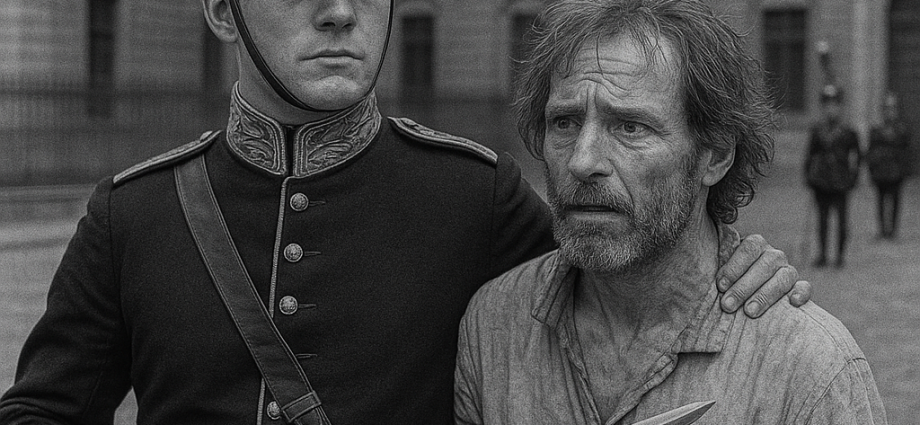
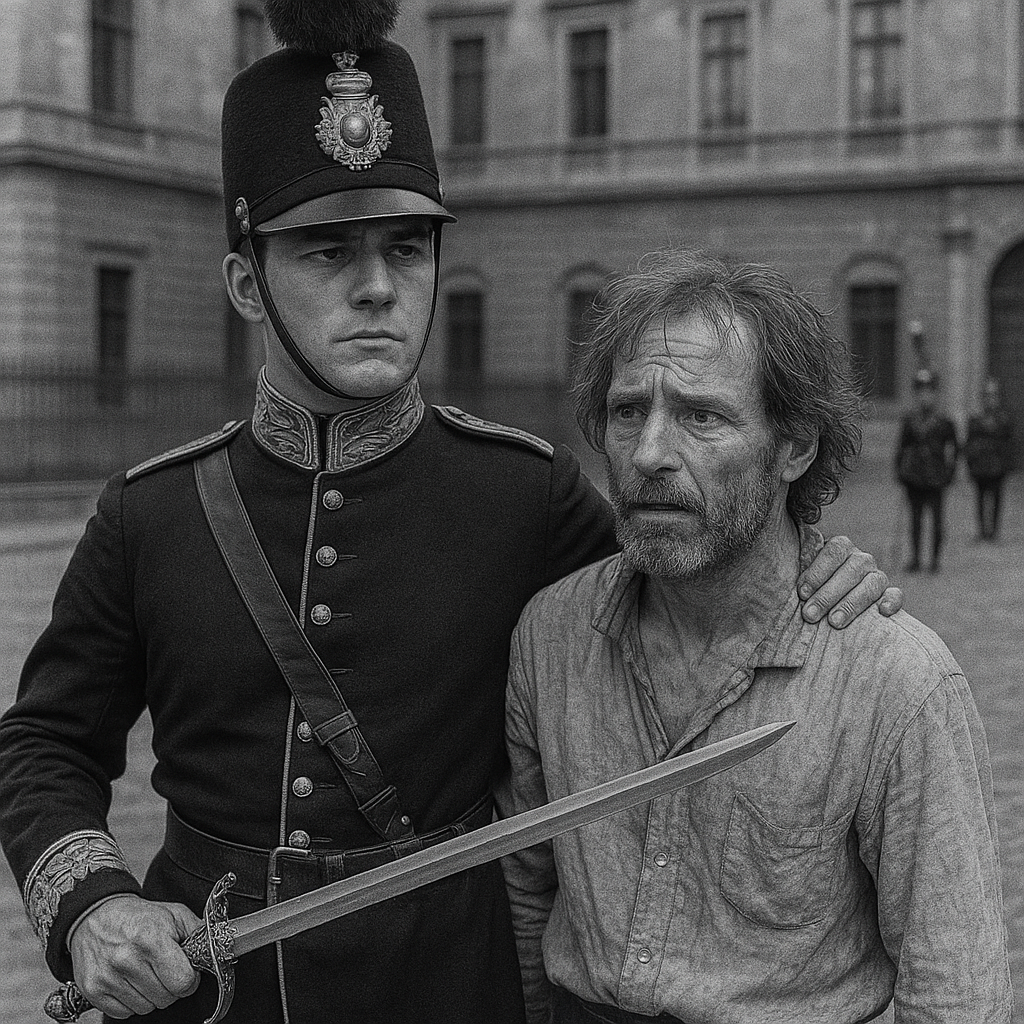 According to an official communiqué released by the Ministry of War & Conflict, three individuals employed as servants and porters within the Palace kitchens were detained after a midnight patrol discovered a sealed parcel concealed within a flour sack bound for the Royal Pantry. Upon examination, the package was found to contain a series of handwritten appeals from sympathizers of the outlawed Crimson Dawn — the shadow organization that has arisen from the ashes of Bianchovi’s Red Banner network.
The letters were artfully written, imitating the courteous tone of common petitioners, but their content was venomous. They accused the King of “tyranny cloaked as virtue,” demanded the release of “political prisoners,” and included coded phrases believed to contain instructions for further subversion.
“Had the letters reached their destination,” said Captain Ainsworth of the Royal Guard, “they might have appeared to His Majesty as the pleas of misguided subjects. But they were poison folded in politeness.”
The Foil at the Pantry
Sources within the Guard report that the interception was made by Lieutenant Bramwell, a veteran officer known for his caution. The lieutenant was conducting routine inspection of supply deliveries when he noticed that the flour sack’s stitching was fresh and uneven, an anomaly that aroused suspicion. Upon opening the bag, he discovered a sealed envelope bound in red string and stamped with an unfamiliar insignia: a half-sun rising over a broken quill.
“That was the emblem used by the Crimson Dawn press,” said Inspector Daven when contacted for comment. “They meant it as a sign of new light after darkness. Now it marks only disgrace.”
The suspects — identified as Tomas Geary, Lennet Vohl, and Iris Faen, all recently hired for service in the Palace kitchens — were immediately detained and transferred to the Constabulary headquarters for interrogation. Early reports suggest that they were recruited from among the unemployed dockworkers displaced by the recent sedition sweeps.
The Broader Design
Investigators now believe that the intercepted letters were part of a wider campaign to infiltrate the Palace through its lowest ranks — the servants, messengers, and workmen whose duties give them access to sensitive spaces yet seldom draw attention.
“They sought to turn humility into a weapon,” said Minister Thayne. “The traitor who sweeps the floor hears more than the one who sits in council.”
Documents seized from the suspects’ quarters in the lower servants’ barracks indicate that they maintained contact with individuals outside the city via coded correspondence disguised as recipe lists and laundry inventories. One such list contained curious entries: “Six measures of red ink,” “Seven white envelopes for meat,” and “Three spoons of salt, not sugar.” Each phrase, decoded by the Constabulary, corresponded to prearranged meeting times and courier routes.
A Quiet Interception
While the discovery has stirred the imagination of the public, the Palace has handled the matter with deliberate restraint. No official statement has been issued by the Crown, and court life has proceeded uninterrupted — the bells have rung at their usual hours, the King’s carriage has appeared for chapel, and the guards still stand at attention by the north gate.
“The best defense against panic is composure,” remarked one courtier. “The King will not dignify conspirators by trembling at their shadows.”
Nevertheless, palace security has been quietly reinforced. Access passes have been reissued, the kitchens inspected, and every domestic worker has been required to swear anew the Oath of Fidelity, standing hand to heart before a senior officer of the Guard.
Rumors and Reverberations
The populace of Inverness has received the news with a mixture of alarm and admiration. Outside the Palace walls, crowds have gathered nightly to express support for the Guard. “They caught the serpent before it could bite,” said a blacksmith from Copper Lane. “Makes a man proud to pay his taxes when the soldiers earn them.”
Less flattering whispers circulate as well — that the conspirators had help from within, or that more letters have slipped through undetected. The Ministry of Justice refuses to comment on ongoing investigations but has confirmed that “additional personnel are being questioned.”
In the taverns, some now speculate that the entire plot was designed not to harm the King directly, but to test Palace security for a larger future operation. A scribe at the Royal Chancery told The Times-Observer: “The traitors wanted to measure our response — to see how far the walls echo when struck.”
The Moral of Vigilance
In a brief address to the Guard the following morning, Colonel Varrin, commander of the Palace Watch, commended his men for “proving that loyalty is strongest when it listens.” His closing words were repeated throughout the ranks and have already become something of a watchword in the city:
“The liar may print his falsehoods by day,
But truth stands watch at night.”
For now, the Palace remains calm, its lamps burning late, its guards steady on the parapets. Yet within those quiet walls, every footfall now carries a new weight. For if treason has learned to whisper in the kitchens, the Kingdom must learn to hear it before it speaks again.