By C. M. Ellingham, Times-Observer Historical Correspondent
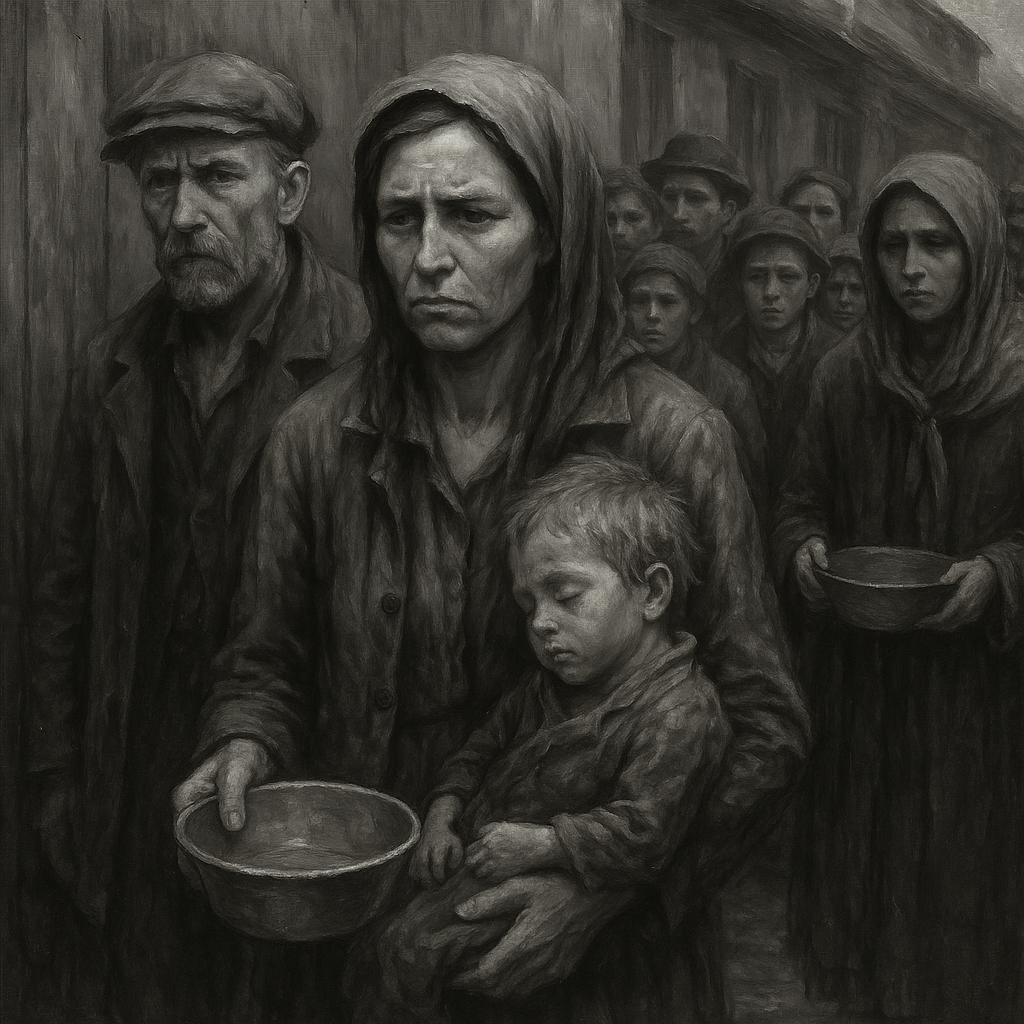 The Great Northreach Famine, which lasted from the late spring of 742 until the first harvest of 745, remains one of the most consequential domestic crises in the recorded history of Eyehasseen. It reshaped the administration of the northern provinces, altered the relationship between the Crown and the countryside, and left a legacy of both reform and trauma that endured for generations. Though droughts and crop failures were not unknown in the kingdom’s earlier centuries, none matched the scale, duration, or social upheaval of this period.
The famine’s root causes lay in a series of unfortunate seasonal patterns. The winter of 741 had been particularly severe, with deep snows across Northreach, Thornwold, and the upper valleys of the Valmere River. When the thaw came, it was abrupt. Floodwaters damaged planting grounds, and many farms could not sow barley or wheat on schedule. To compound the difficulty, the spring that followed was unusually dry, and by midsummer entire fields lay stunted or barren. Initial reports from provincial reeves spoke of “patchy but concerning shortages.” Few yet imagined the crisis to come.
By early 742, the grain stores in the market towns—Northreach, Denford, and Brammerton—still held enough reserves to maintain ordinary trade. But as rural villagers came in increasing numbers to purchase grain after their own supplies dwindled, merchants raised prices sharply. Some did so simply in response to supply and demand; others, as later investigations revealed, colluded to drive up profits. Speculators from the southern provinces and even from Marelia arrived to buy grain in bulk, transporting it out of the region before the Crown realised the extent of the problem.
The famine entered its most dangerous stage in the autumn of 742. Little had grown that year, and the remaining grain in storage was now controlled by a handful of trading houses with well-defended warehouses. Across the countryside, families began slaughtering their livestock prematurely, hoping to stretch food supplies through the approaching winter. Parish records from the period tell a grim and consistent tale: rising infant deaths, deserted farms, and families attempting to migrate south in numbers the roads could not sustain.
It was in this atmosphere of hunger and frustration that agitation first took hold among labourers and young tradesmen in Northreach and Denford. Meetings in taverns and guildhalls produced the first public condemnations of the grain merchants. The protestors’ anger focused especially on a consortium known as the Seven Merchants of Denford, whose warehouses were rumoured to contain enough grain to feed half the province. Whether or not this was strictly true, the perception alone was enough to turn the mood of the towns dangerous.
The first riot occurred on the night of 4 Frostwane, 742, when a crowd—some accounts say three hundred strong—forced the gates of the Renshaw granary in Northreach. The garrison of the watch attempted to disperse them but was overwhelmed. By morning, the granary had been emptied, with much of its contents carried away by desperate families rather than organised rebels. A second and more violent riot followed days later in Denford, where a mob set fire to a merchant’s warehouse. The flames spread to neighbouring buildings before soldiers brought in from Thornwold restored order.
News of these disorders reached Inverness quickly. The Crown, then under King Hadrian II, was reluctant to intervene heavily at first, wary of appearing indifferent to the north’s plight. A commission was appointed to investigate the causes of the unrest, but the situation on the ground deteriorated faster than any official inquiry could operate. When the spring planting of 743 also failed due to persistent drought, the famine reached its lowest point.
It was at this juncture that a figure emerged whose name is inseparable from the history of the famine: Sir Edmund Rowntree, a senior royal administrator with long experience in provincial affairs. Rowntree had previously served as Deputy Steward of Westmere and was known for his measured temperament and ability to work with local authorities. The King appointed him Special Commissioner for Relief and Order in the Northern Provinces, investing him with broad powers to stabilise the situation.
Rowntree travelled north in the company of a small staff and two companies of soldiers. His first action was to secure the grain warehouses under Crown authority. Rather than seize the merchants’ property outright, he imposed a strict requisitioning schedule, ensuring part of their stores would be distributed to the public at controlled prices while the remainder was held in reserve. He also brought an end to the speculative export of grain, ordering that no food leave the region without explicit royal approval.
His second major initiative was the establishment of public relief kitchens, operated in cooperation with the parish clergy and the guilds. These provided modest meals for those in immediate need and stabilised the most volatile urban areas. Rowntree also reopened the north–south canal route, which allowed shipments of barley from the southern provinces to reach the famine-stricken towns more reliably.
However, Rowntree’s leadership was not solely humanitarian. Recognising that lawlessness, if unchecked, threatened the entire provincial order, he restored the authority of the local courts and watch captains. Arrests were made for vandalism, arson, and attacks upon grain convoys. Contemporary reports note that Rowntree insisted upon fair trials and avoided the more brutal punishments common in earlier eras, yet he made it clear that violence against merchants, clergy, or officials would not be tolerated. Gradually, stability returned.
The turning point came in the summer of 744, when the long-awaited rains finally broke the drought. Fields across Northreach and Thornwold produced their first healthy crops in nearly three years. Relief was profound. Though hunger did not vanish overnight, the constant fear of starvation finally lifted. By the autumn of 745, most families had returned to ordinary routines, and the famine was officially declared ended.
Rowntree remained in the region long enough to oversee one final reform: the creation of the Royal Granary System, a network of Crown-operated grain stores intended to prevent a future crisis of similar scale. These granaries, placed in the major towns and supplied annually from provincial surpluses, ensured that Eyehasseen would never again be so vulnerable to sudden shortages or speculative manipulation.
Historically, the famine is remembered as a tragedy that exposed both the weaknesses and the resilience of the northern provinces. The riots, though violent, were born of desperation rather than ideology. The merchants, though hardly blameless, operated in a system with few safeguards. And the Crown, though slow to act, ultimately restored order through measured authority and capable leadership. In the end, the Great Northreach Famine transformed the kingdom’s approach to food security and provincial administration, leaving a legacy more constructive than the hardship that gave rise to it.