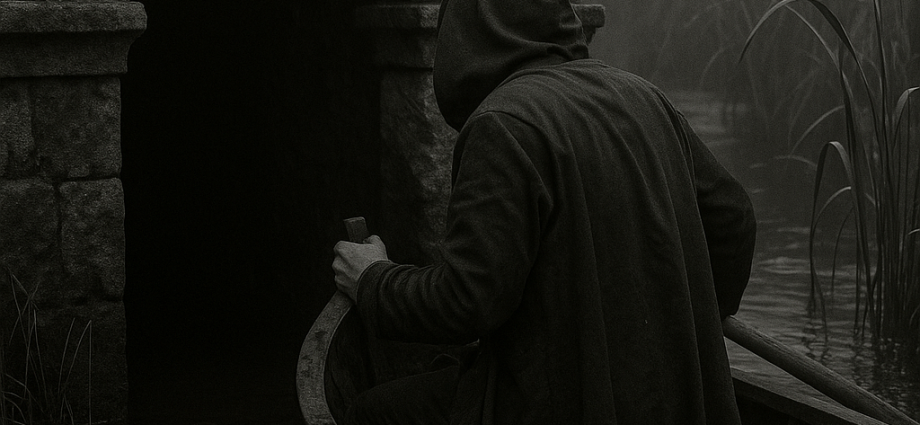
By Dorian Merrow, Special Correspondent, The Times-Observer
The Elderfen Marshes have always carried a reputation for secrets. The reeds whisper even when there is no wind, the water moves even when nothing disturbs it, and the fog lingers long after sunrise as if reluctant to surrender whatever it hides. So when the Royal Exploratory Society announced a descent into the Flooded Catacombs of Elderfen, I volunteered—partly out of foolishness, and partly out of the irresistible tug that all uncharted places exert upon the curious.
Our small team—three Society divers, one historian, and myself—set out at dawn, rowing into the fen in a flat-bottomed skiff that glided silently over dark, glassy water. The marsh smelled of peat and slow decay, but the sky above burned gold. “A good omen,” murmured Historian Bramble, though he clutched his field journal as if expecting it might leap out of the boat at any moment.
The Mouth of the Catacombs
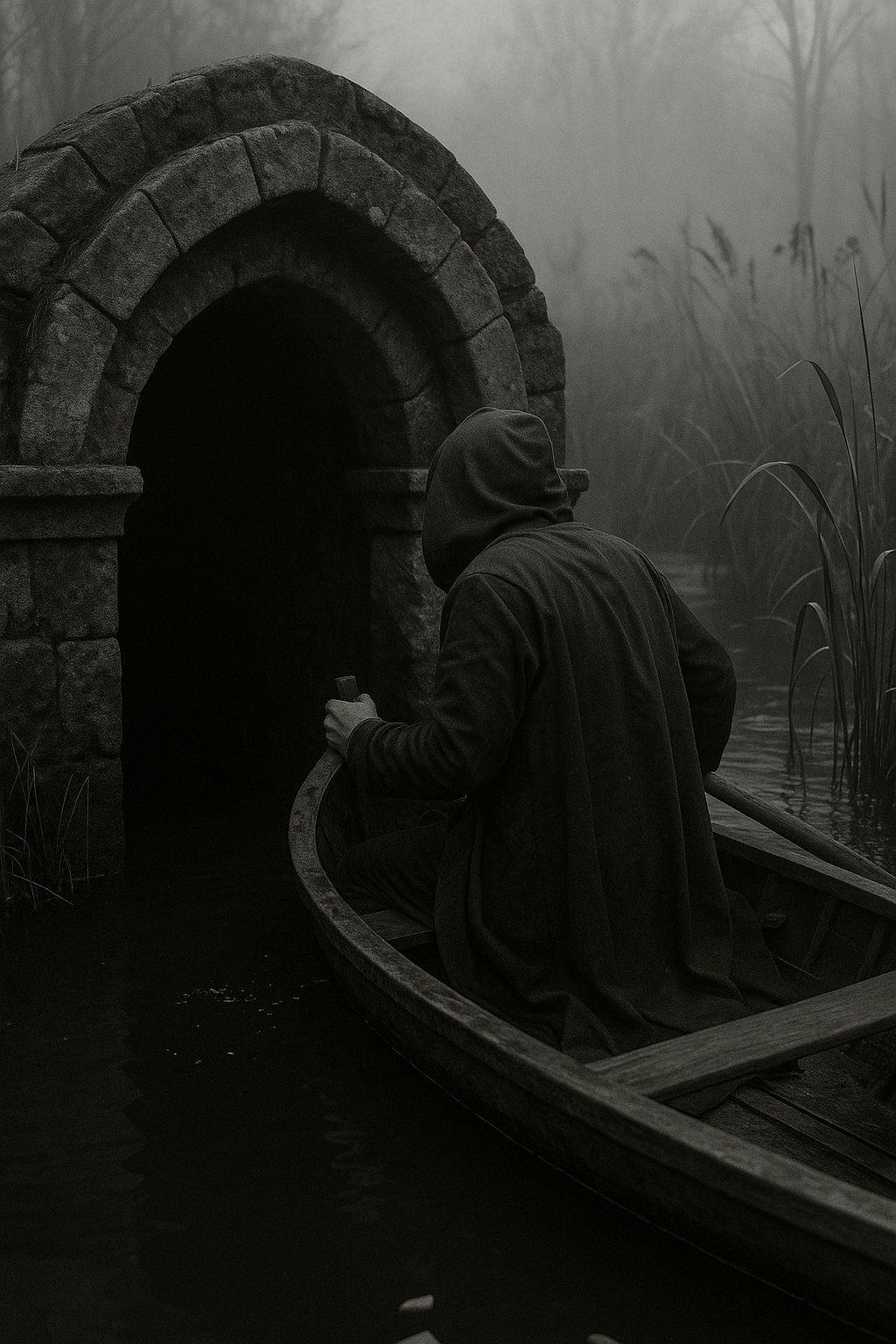 Locating the entrance is an exercise in patience. The fen’s surface is a shifting tapestry of open water, floating moss beds, and half-sunken branches that look like skeletal hands reaching upward. Our guide, a marsh-dweller named Serra Yarrow, led us through narrow channels until at last a shape emerged ahead—a stone archway protruding from the water like the doorway of a drowned chapel.
“This is it,” she said. “The rest is below.”
Below indeed. Only the top three feet of the arch remained visible; the rest vanished into black, motionless depths.
The divers strapped on their weighted belts and adjusted their lamps, each encased in waterproof brass housings that glowed like trapped stars. I remained in the boat with Serra, listening to the quiet plinks as the divers slipped beneath the surface.
Descent into Black Water
The historian went next, lowering himself into the water with trembling determination. “Everything down there predates the Kingdom,” he told me, breath puffing white in the cold morning air. “We are about to meet our ancestors in the dark.”
His lamp disappeared like a candle swallowed by night.
The skiff rocked gently as Serra and I waited. The fen was unnaturally still—no frogs, no birds, only the soft lapping of water against stone. Every few minutes we glimpsed a faint glow swirling beneath the surface as the divers explored the submerged corridors.
“People used to say the dead speak down there,” Serra said quietly.
“Do you believe that?”
She shrugged. “The fen keeps more than it loses.”
The Discovery
Nearly an hour passed before a diver surfaced, gasping, one arm hooked over the rim of the boat. In his other hand he clutched a stone tablet, slick with algae and carved with spiraling patterns.
“These markings—” he began, but Bramble interrupted, his voice trembling.
“They’re pre-unification glyphs. No, older. Much older. We must bring it up.”
The divers made several more trips below, returning each time with fragments—ceramic shards, rusted metal hooks, a length of chain whose links were etched with tiny symbols. But the real discovery came last.
The historian himself surfaced at last, hauling a stone relief panel the size of a serving tray. Upon it was carved a procession of figures—some human, some animal, and some composed of shapes that defied easy description. At the center stood a cloaked figure holding a staff crowned with a spiral.
“It’s a ritual scene,” Bramble whispered. “Look at the spiral—it’s the same as on the boundary stones in northern Cairndale. This predates the First King by centuries.”
The divers exchanged uneasy glances. One muttered, “Whatever they were doing down there… it wasn’t meant to be seen again.”
The Rumbling Below
As the final artifact was lifted aboard, the water around the arch shuddered. Not a splash—not a ripple—but a deep vibration, as if something shifted far below. A wave of bubbles rose around the skiff.
“Time to go,” Serra said at once, gripping the oars.
The divers needed no encouragement.
As we rowed back through the winding channels, the fog thickened, sliding across the fen like a closing curtain. Behind us, the archway slowly disappeared into white.
“No one lives long who seeks every secret,” Serra said softly. “But sometimes knowing a little is enough.”
Aftermath
Back in Elderfen Village, a crowd gathered as we unloaded our finds. Word travels fast in the marshlands, especially when the old stories stir. Children whispered that the catacombs were waking. Old men muttered that nothing beneath the fen should ever be disturbed.
The artifacts were sent to the Royal Museum for study, though Historian Bramble confessed privately: “I fear the more we learn, the more questions we inherit.”
As the sun set, the reeds whispered again. This time, I could almost imagine words within their sighs.
Whatever lies beneath the fen has slept for generations.
Now, it knows we remember it.