By Reginald Thistlewhite
International Desk – Times-Observer
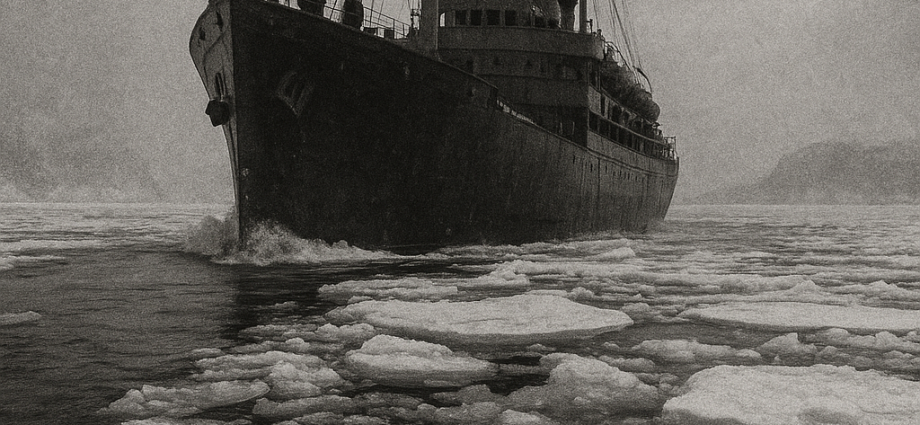
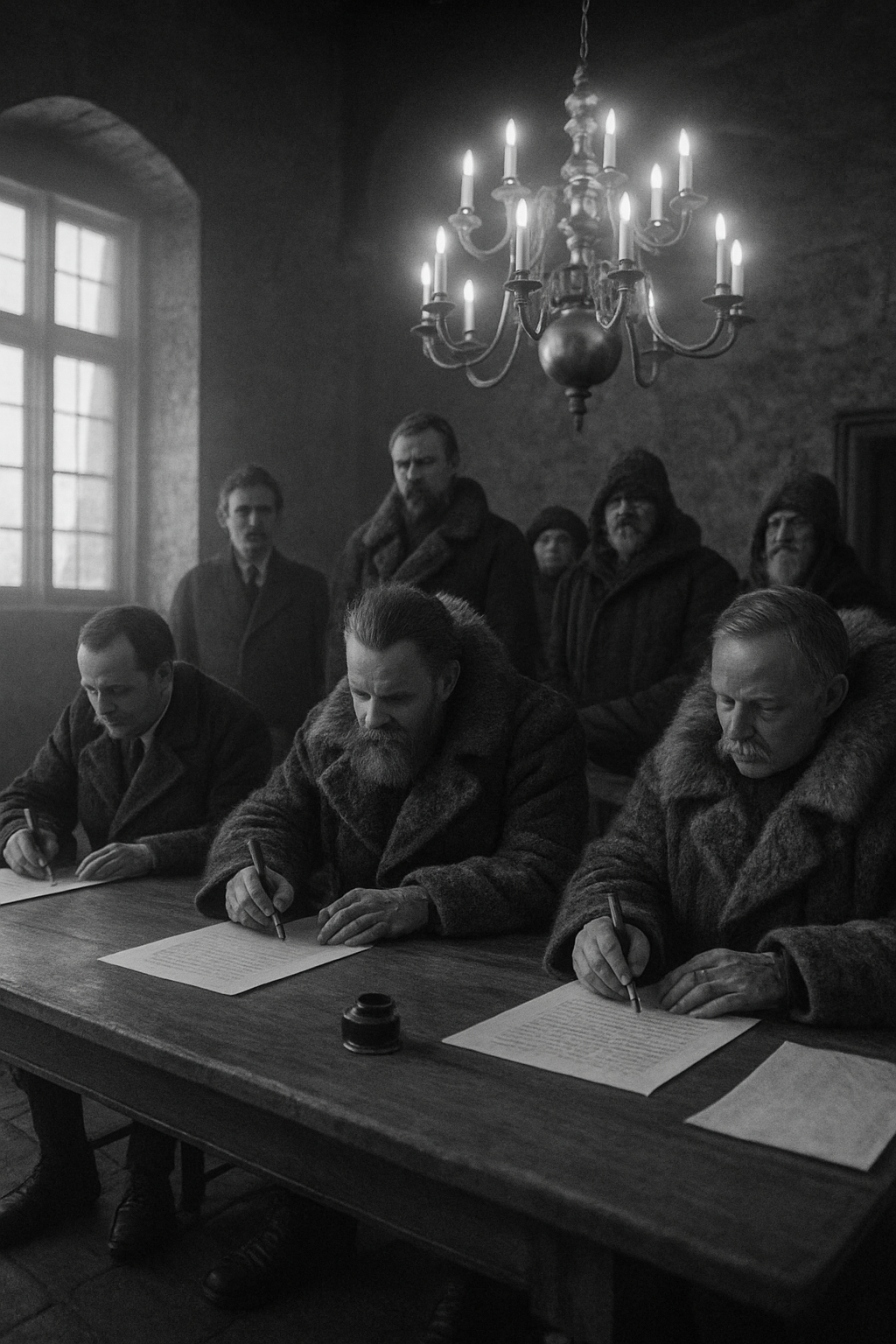
INVERNESS — In the frozen halls of Nordmark’s capital, beneath chandeliers dripping with ice and history, the Treaty of Blackfjord was signed this past week. The accord, negotiated in fits and starts over the past two winters, grants Eyehasseen naval vessels privileged access to emerging northern shipping lanes, a passage long choked by ice but now pried open by shifting seas and warmer seasons.
 The Ministry of Foreign Affairs hailed the pact as “a vital safeguard for Eyehasseen’s maritime interests and for the broader cause of lawful commerce.” The Royal Navy, which had dispatched frigates to escort convoys through trial passages last year, stands to gain formal rights of passage — and the ability to station small patrol flotillas along the Arctic routes.
“This is not an act of conquest,” declared Commodore Philip Ravenshoe, addressing reporters upon his return to Inverness. “It is a recognition of responsibility. Where there are trade winds, there must be trade rules.”
Yet for every cheer within government corridors, there has been a chorus of skepticism among common folk. Fishermen along the northern coasts, from Haddlesby to Sternthistle-on-Wye, have grumbled that the agreement primarily benefits foreign merchants, whose deep-bellied cargo ships will be the first to exploit the widened lanes. “We’ll see barrels of Nordmark cod, Marelian timber, and Thulian oil pouring into our ports,” one Haddlesby trawler captain remarked, “while our own catch is squeezed from the market.”
Opposition voices in Parliament seized upon these fears, branding the treaty a “handing away of sovereignty upon icy parchment.” Some went further, questioning whether the Eyehasseen Navy would be stretched too thin defending routes far from home.
The Ministry of Economics & Finance, however, pointed to projected revenues from tariffs, dock fees, and charter licenses. A confidential memorandum leaked to the Times-Observer suggests that if even 10 percent of projected Arctic shipping passes through Eyehasseen-controlled waters, the kingdom’s coffers could swell by several million aureals annually.
 Observers note that Nordmark and Thule, though publicly aligned, are themselves wary of one another’s ambitions. By drawing Eyehasseen into the arrangement, they may have sought a counterweight to their own rivalry. “It is a three-legged stool,” one diplomat commented. “The presence of Eyehasseen prevents either Nordmark or Thule from toppling the other.”
Meanwhile, back in Inverness, public imagination has been fired less by high diplomacy than by tales of sailors glimpsing polar bears, auroras dancing over rigging, and ice floes cracking like cannon fire beneath the bows. Local taverns are already brewing “Blackfjord Ale” in celebration, though the drink is said to carry a bitter chill.
Whether the Treaty of Blackfjord proves to be a commercial boon or a strategic entanglement remains to be seen. What is certain is that Eyehasseen’s horizon has shifted northward, toward waters once deemed impassable and now declared essential. The Arctic, long silent, has entered the kingdom’s conversation.