By Maritime Correspondent, Port Alwyn Bureau
HARTHOLM, WESTERN COAST — The sea has gone strangely quiet. For days now, fishermen along the Hartholm inlet have spoken in lowered voices of wreckage, searchlights, and the faint echo of engines under the waves. No formal declaration of war has been issued, but the sea appears to have declared one of its own.
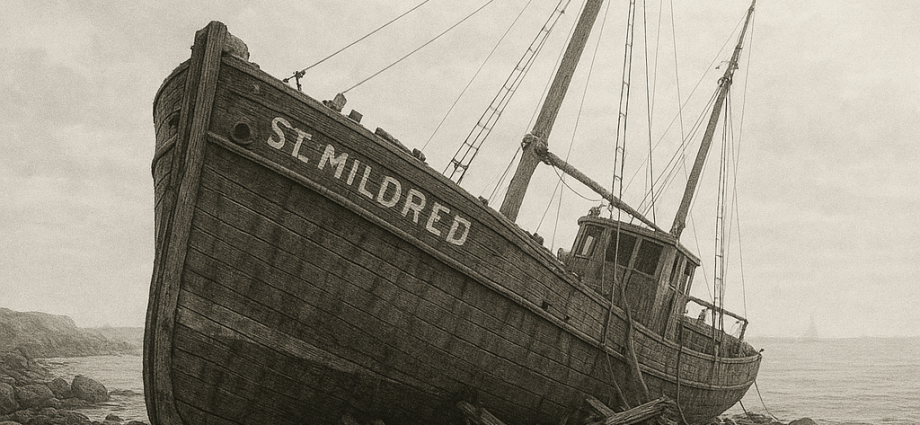
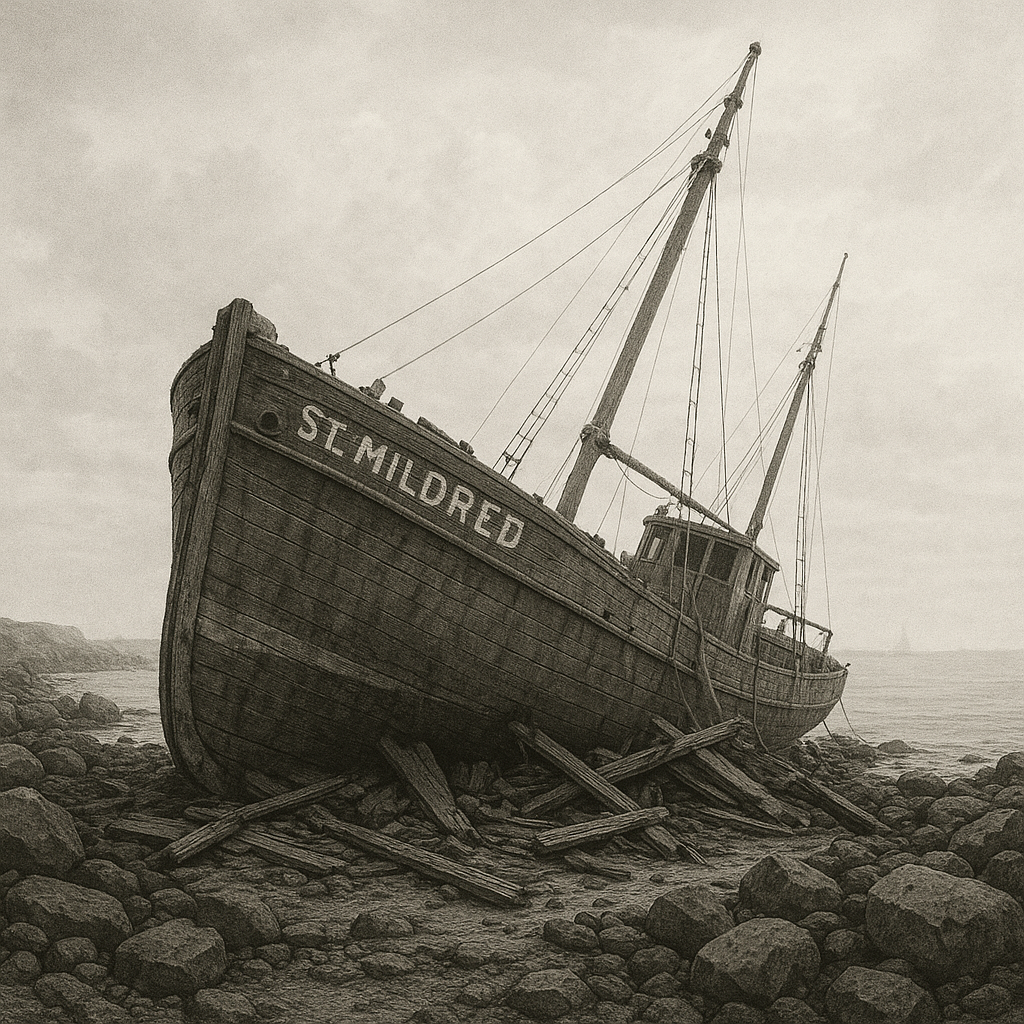 Late last week, the crew of the trawler Saint Mildred discovered splintered timber and twisted plating floating some five miles off the coast. The debris bore markings unfamiliar to Eyehasseen shipwrights—thin stenciled numerals in a foreign hand, and rivet patterns typical of Marelian design. The fragments were lashed together and towed to shore, where they were promptly seized by the Royal Navy’s Coastal Intelligence Bureau.
Admiral Sir Benedict Farlow, commander of the Western Squadron, arrived within hours. Grim and sunburned, he stood amid the debris and declared the find “a matter of national security.” When pressed for details, he said only:
“Whatever flag she sailed under, she was no merchantman.”
The wreckage has been conveyed under guard to the naval yards at Port Alwyn for examination. Observers stationed near the quay report the presence of divers, cipher clerks, and several sealed crates marked “Evidentiary Material – Handle with Discretion.” One crate, witnesses claim, emitted the smell of fuel oil mixed with something metallic and acrid—unmistakably foreign.
Officials will not confirm it, but multiple sources within the Admiralty believe the debris belongs to a Marelian reconnaissance vessel lost during one of several nocturnal “patrol encounters” in recent weeks. Eyehasseen’s own coastal patrol logs, normally routine reading, are now printed on heavier paper and locked nightly in the First Lord’s safe.
Local residents tell their own stories. The keeper of the Hartholm Light, old Tobias Rendell, insists he saw “two pinpricks of red light” gliding low across the bay the night before the discovery. “They moved too steady for fishing boats,” he said. “Then came a sound like an iron gate falling, and the sea went black again.”
Fishermen along the pier corroborate the account, though none wish their names printed. “We’ve mouths to feed,” said one, hauling nets that yielded more seaweed than fish. “If the Admiralty says it was driftwood, then driftwood it is. But driftwood don’t bleed oil.”
The Ministry of War and Conflict has maintained its habitual reticence. A terse communiqué issued from Inverness describes the wreck as “material of uncertain origin consistent with a maritime mishap.” Yet a senior official speaking off record admitted that coded fragments were recovered from a watertight cylinder found among the debris. “There are numbers,” he said, “and coordinates that lead nowhere we admit to.”
Since the incident, the Royal Navy has intensified its presence across the Western Reach. At least four destroyers now patrol the approaches, and the Coastal Telegraph Service reports intermittent interference—scrambled bursts of static coinciding with moonrise. The merchant fleet has been instructed to sail in pairs and maintain radio silence after dark.
In the taverns of Port Alwyn, rumor is the only cargo moving freely. Some say a Marelian submersible was sunk by our own depth charges; others claim it was scuttled by its crew after being spotted too near the shore. One tale has it that divers recovered a periscope with the name “Beloura” etched upon its base—a name absent from any known registry.
The Admiralty refuses to be drawn into speculation. “We do not chase phantoms,” Admiral Farlow told reporters before boarding his launch. “We simply remind them they are unwelcome.”
For now, the people of Hartholm live with the peculiar unease of those who have glimpsed a secret too large to explain. The sea continues to lap at the charred fragments piled on the beach, each tide carrying away a little more evidence and leaving only the scent of oil behind.
At sunset, when the gulls cry and the masts creak, one might almost believe the ocean itself is keeping its silence under orders. Yet the fishermen still go out, their lanterns bobbing like fireflies across the black water, pretending that nothing has changed.
As one old deckhand muttered while coiling his rope, half to himself, half to the wind:
“They can call it peace if they like, but peace don’t leave wreckage.”