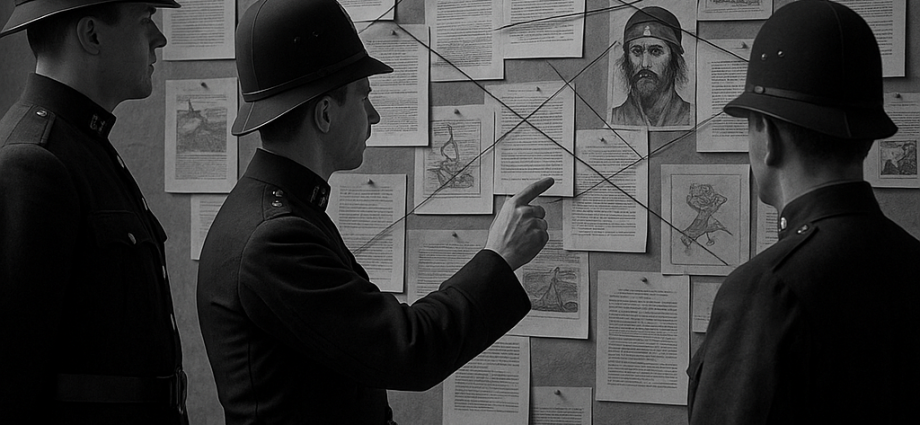
By Staff Writer, The Times-Observer
The execution of Rodger “The Liar” Bianchovi, carried out at dawn on Seventhday in the Yard of Justice at Inverness Prison, brought to a close one of the most disgraceful chapters in the annals of treachery within the Realm. Yet even as the noose fell silent, the reverberations of his deceit continue to shake the very institutions he sought to defile.
Witnesses report that Bianchovi met his end not with dignity, but with an unseemly display of cowardice. Guards escorting him from his cell to the gallows say he whimpered, sobbed, and clutched at his chest, alternating between pleas for mercy and shrill accusations against those who had brought him to justice.
“He cried like a child who’d broken his toy,” said one Constabulary sergeant who witnessed the final procession. “He blamed everyone — the courts, the Crown, even his own followers. It was a pitiful thing to see.”
The Final March
Shortly before the appointed hour, Bianchovi was offered the ministrations of the prison chaplain. He refused. “I need no forgiveness,” he spat, trembling as he spoke. “They deserved it! All of it!”
When asked to whom he referred, he merely muttered a litany of names — ministers, magistrates, officers, and even his former co-conspirators — many of whom are now under investigation by the Royal Constabulary.
As the sun broke over the stone walls of Inverness Prison, the condemned man’s last words were shouted into the chill morning air: “You think you’ve killed me — but you’ve only killed the messenger!” Moments later, the trapdoor opened, and silence reclaimed the yard.
“He couldn’t even die with grace,” said another witness. “A liar to the end.”
A Network of Deceit
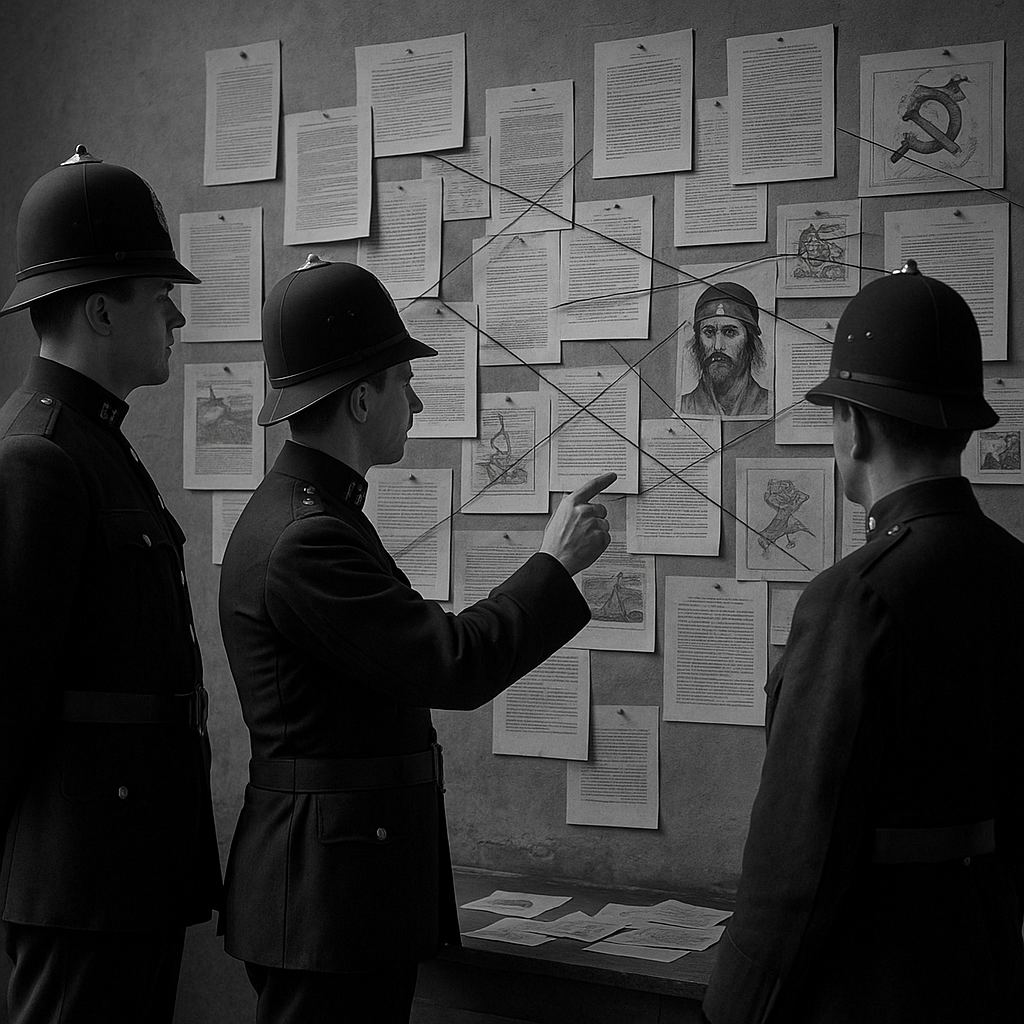 In the wake of his execution, the Royal Constabulary has launched a sweeping inquiry into what is now being described as “a vast web of sedition and deceit,” linking Bianchovi to a clandestine network of agitators, pamphleteers, and foreign agents. Early findings suggest that The Red Banner served not merely as a vehicle for slander, but as a communications hub for coordinated subversive activity.
Chief Inspector Daven of the Royal Constabulary stated that documents recovered from Bianchovi’s quarters indicate contact with unnamed parties beyond the northern borders — individuals suspected of financing the paper’s operations. “This was not one man’s vanity project,” Daven said. “This was an attempt to corrode the soul of the kingdom from within.”
Bundles of coded correspondence, intercepted through the diligence of the Postal Authority, point to a hierarchy of operatives tasked with recruiting writers, illustrators, and couriers. Many of these individuals remain at large. Others, already in custody, are reportedly cooperating with investigators.
“The noose may have silenced one voice,” Inspector Daven continued, “but we are beginning to hear echoes of a much larger chorus.”
Poison in Print
The Ministry of Information has confirmed that new censorship protocols are being enacted to prevent further abuse of the printed word. “Freedom of expression,” declared Minister Thayne in a public statement, “is not the freedom to incite treason. The press must be loyal to truth, not enslaved to ideology.”
The Ministry has ordered the immediate seizure of all remaining Red Banner printing plates, as well as the arrest of any individual found to be reproducing its imagery or slogans. One notorious phrase — “Justice is the tool of tyrants” — was found scrawled on walls in the Dock District after the execution, and its author is now sought by the Constabulary.
Analysts note that The Red Banner’s tone shifted sharply in the months preceding Bianchovi’s arrest, suggesting that his hand may have been guided by outside influence. “The language became more violent, more coordinated,” said one investigator familiar with the case. “It wasn’t mere propaganda — it was psychological warfare.”
The Kingdom Responds
In Inverness and across the Realm, the public reaction to the execution has been one of grim approval. Bells tolled briefly at midday, not in celebration but as a mark of closure. Citizens gathered quietly in squares and taverns to discuss the news, many expressing relief that the long season of lies had come to an end.
“Good riddance,” said a shopkeeper on Copper Lane. “My boy read that trash once and came home spouting nonsense about burning the tax rolls. I told him — lies spread faster than truth, but they don’t last as long.”
Others, however, remain unsettled by the notion that such poison could have spread so widely and so cleverly. “He had help,” said a schoolmistress from the East Borough. “No one man could twist so many minds alone.”
The Investigation Broadens
Late on Seventhday evening, Constables raided a warehouse on the Lower Docks and discovered a cache of banned printing equipment, together with uncut reams of paper and half-finished broadsheets bearing the heading The Crimson Dawn. Authorities believe it was to be the successor publication to The Red Banner. Several suspects were detained; two escaped into the night.
Documents found at the scene referenced “Phase Two” — believed to be a plan for coordinated unrest across several towns. One parchment, partially burned, read simply: “When the Liar falls, the flames rise.”
“The investigation has now widened beyond journalism,” said Inspector Daven. “We are looking at a network of printers, agitators, and smugglers — all part of a concerted effort to destabilize the realm.”
A Warning and a Reminder
The Ministry of War & Conflict has placed the Royal Signal Corps on alert for any suspicious transmissions, while the Ministry of Justice has ordered the swift trial of those arrested in the raids. It is expected that several more charges of sedition will be laid before the month is out.
“The rot must be cut out root and branch,” said Minister Thayne. “If we allow deceit to fester, we invite ruin. The kingdom stands only so long as its people believe in truth.”
As night fell over Inverness, the Yard of Justice stood empty once more, the gallows dismantled and the stones washed clean. Yet many said that a faint echo lingered — not of Bianchovi’s cries, but of the lesson his life and death now teach: that words, when wielded without conscience, can wound a nation as surely as any blade.