By Staff Writer, The Times-Observer
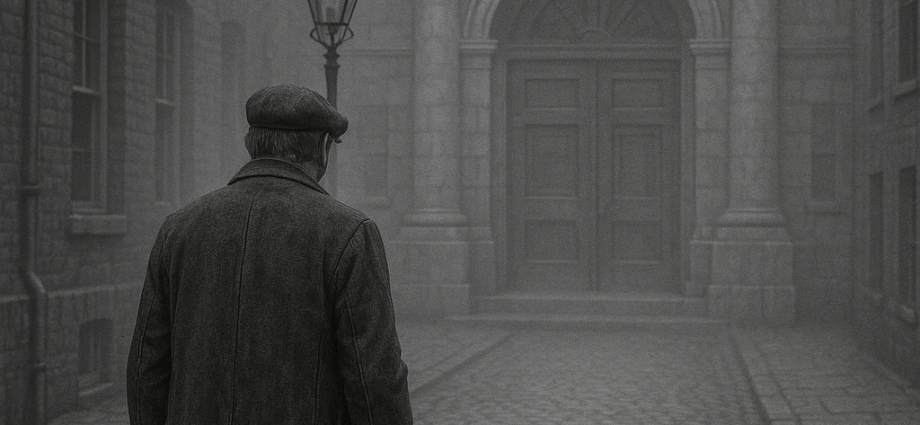
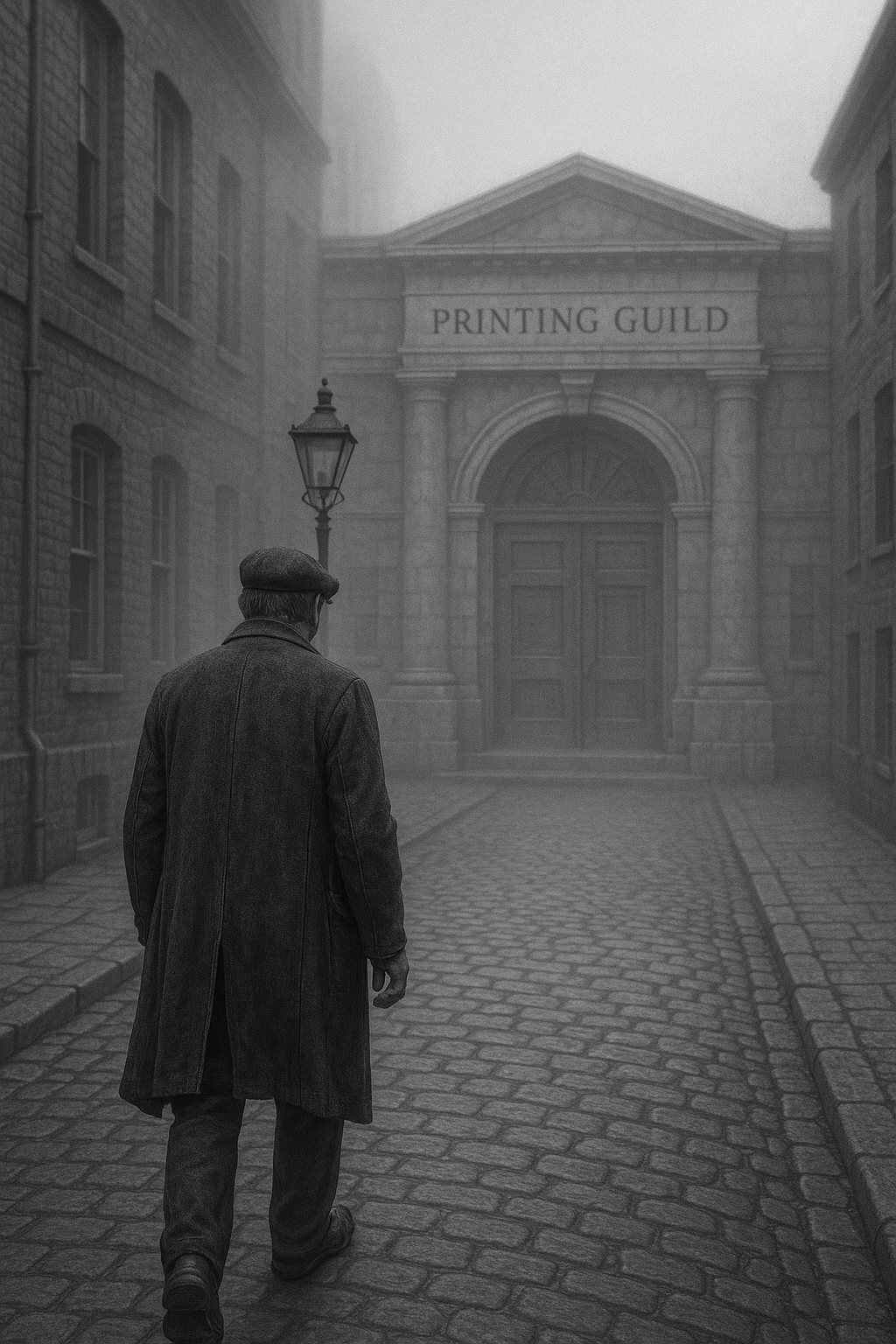
For more than two centuries, the Royal Printing Guild has stood as one of the Kingdom’s most trusted institutions — a fellowship of craftsmen whose skill gave form to faith, law, and learning. From royal decrees to school primers, from the hymnals of the parish to the journals of science, its presses have inked the nation’s conscience. But now, the Guild’s venerable halls echo not with the steady rhythm of honest labor, but with the creak of locked doors and the whisper of suspicion.
The First Cracks
 The trouble began quietly, with a single ledger unearthed during the Constabulary’s raids on the Red Banner network. Among the charred correspondence and coded receipts seized from Rodger Bianchovi’s effects were invoices bearing the Guild’s official seal, each authorizing the delivery of printing components — metal slugs, font sets, and brass spacers — to addresses that do not exist.
At first, the Guildmaster, Sir Roderick Mairn, dismissed the documents as forgeries. “We are the custodians of letters, not conspiracies,” he told The Times-Observer last week. “Our records are impeccable. No press leaves our supervision without the Crown’s mark.”
Yet when auditors from the Ministry of Industry arrived at the Guild’s workshops to verify the ledgers, they found entire shipments unaccounted for — materials sufficient to assemble at least four medium presses. Several apprentices could not be located.
“Impeccable,” muttered one inspector, “is not the word I’d choose.”
A Breach of Sacred Trust
The Guild’s founding charter, granted in Year 782, forbids its members to lend their craft to “subversive or unlawful publication.” Violations are considered not only a civil offense but a moral betrayal of the Crown’s confidence.
“This is no mere accounting error,” said Minister Thayne of Justice, addressing reporters outside the Guild Hall. “If even a fraction of the evidence proves true, then what we are seeing is an organized effort to supply tools of treason under the cloak of craftsmanship. To forge the instruments of falsehood is to share in the falsehood itself.”
The Guild’s defense rests on a plea of ignorance. In a written statement, Sir Roderick contends that the rogue transactions were “the independent acts of faithless apprentices and dismissed journeymen,” and that the leadership “neither authorized nor profited from their villainy.” But Constabulary investigators hint at deeper rot. One document recovered from the Red Banner cellars refers cryptically to “the brass mouths of the silent allies,” a phrase now believed to describe complicit printers.
Behind the Closed Doors
A Times-Observer correspondent permitted inside the Guild Hall described the mood as “funereal.” The great composing room, once alive with the smell of ink and molten type, now stands half-darkened, presses sealed with red wax and marked Under Audit by Order of the Crown. Apprentices whisper in corners; masters speak only in hushed tones.
“We’re not villains,” protested one journeyman. “We just make the letters. It’s not for us to judge the words that fill them.”
But another, older printer struck a different note: “There was talk,” he admitted. “Orders for extra slugs, paid in cash, no records. You look the other way once, and soon you’re blind altogether.”
Political Reverberations
In the Royal Assembly, the Guild scandal has become ammunition in the ongoing debate over media oversight. Critics of the Ministry of Information argue that the entire printing trade must now fall under judicial regulation. “If the Guild that prints the Bible can print sedition,” declared one minister, “then perhaps it is time Scripture had a license.”
Others caution against overreaction. Lord Chancellor Berrow warned, “We cannot rebuild trust by tearing down every pillar that holds it.” He proposed a Temporary Crown Commission to administer the Guild’s affairs until a full accounting is complete.
Behind the scenes, the Prime Minister’s office is said to favor this middle path. A confidential memorandum leaked to The Times-Observer suggests the government aims to “purge the rot but preserve the reputation.”
The Ink-Stained Trail
Evidence of complicity continues to surface. In the port city of Whitehaven, Constables discovered crates of typefaces identical to those used in The Red Banner’s final editions, each stamped with the mark of the Guild’s North Quarter Workshop. Two foremen from that facility are now in custody and reportedly cooperating.
A Guild messenger intercepted on the road to Marelia carried letters of credit totaling nearly two thousand aureals — a fortune in the trade — bearing the signature “R. M.” Though Sir Roderick insists the initials were forged, handwriting analysts disagree. The Guildmaster has not been seen in public for three days.
Meanwhile, the Ministry of Industry has seized control of the Guild’s central press archives, removing thousands of invoices for examination. “Every sheet of paper tells a story,” said one investigator. “We intend to read them all.”
The Verdict Yet to Come
For now, the Guild remains under partial lockdown. Apprentices continue their studies under watch; presses producing government documents operate under armed guard. Across the city, printers have begun placing small placards in their shop windows reading “By Charter and by Conscience — We Print in Truth.”
The phrase has caught on. It adorns walls, ledgers, even church bulletins — a quiet pledge that the written word, once tarnished, may yet regain its honor.
Whether the Royal Printing Guild itself will survive the storm is uncertain. A Royal Commission of Inquiry convenes next week to determine the extent of its guilt and the possibility of its reformation under new leadership.
Until then, the great presses of the realm rumble on — slower, warier, and watched — their black ink carrying not only words but the weight of a nation’s trust.