By Staff Writer
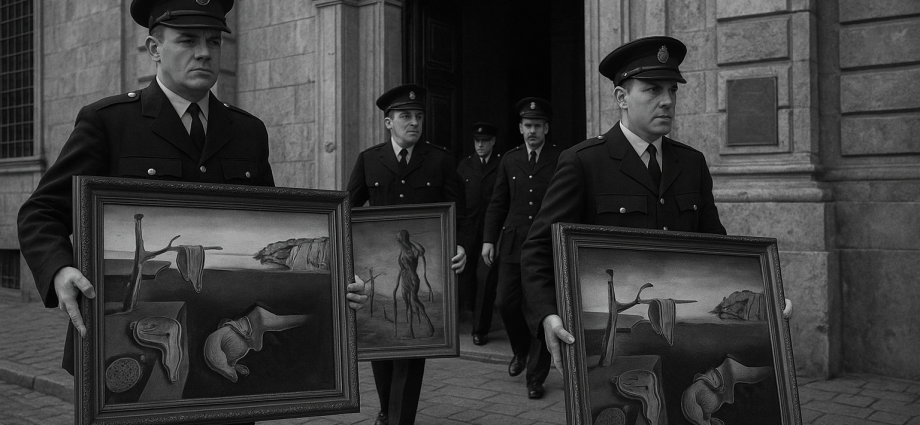
INVERNESS — In one of the largest art scandals to strike the Kingdom in recent years, Constabulary agents raided the vaulted halls of Palazzo Tarasconi late last week, uncovering an astonishing trove of counterfeit paintings attributed to the celebrated surrealist master Salvador Dalié.
The raid, which took place under court order and with the cooperation of the Ministry of Cultural Integrity, seized more than 200 canvases and works on paper that had been hanging in a special exhibition billed as “Dalié and the Impossible Dream.” Officials now allege that virtually every piece in the show was a forgery, executed not by the Spanish-born genius but by a network of backroom copyists and fraudulent dealers.
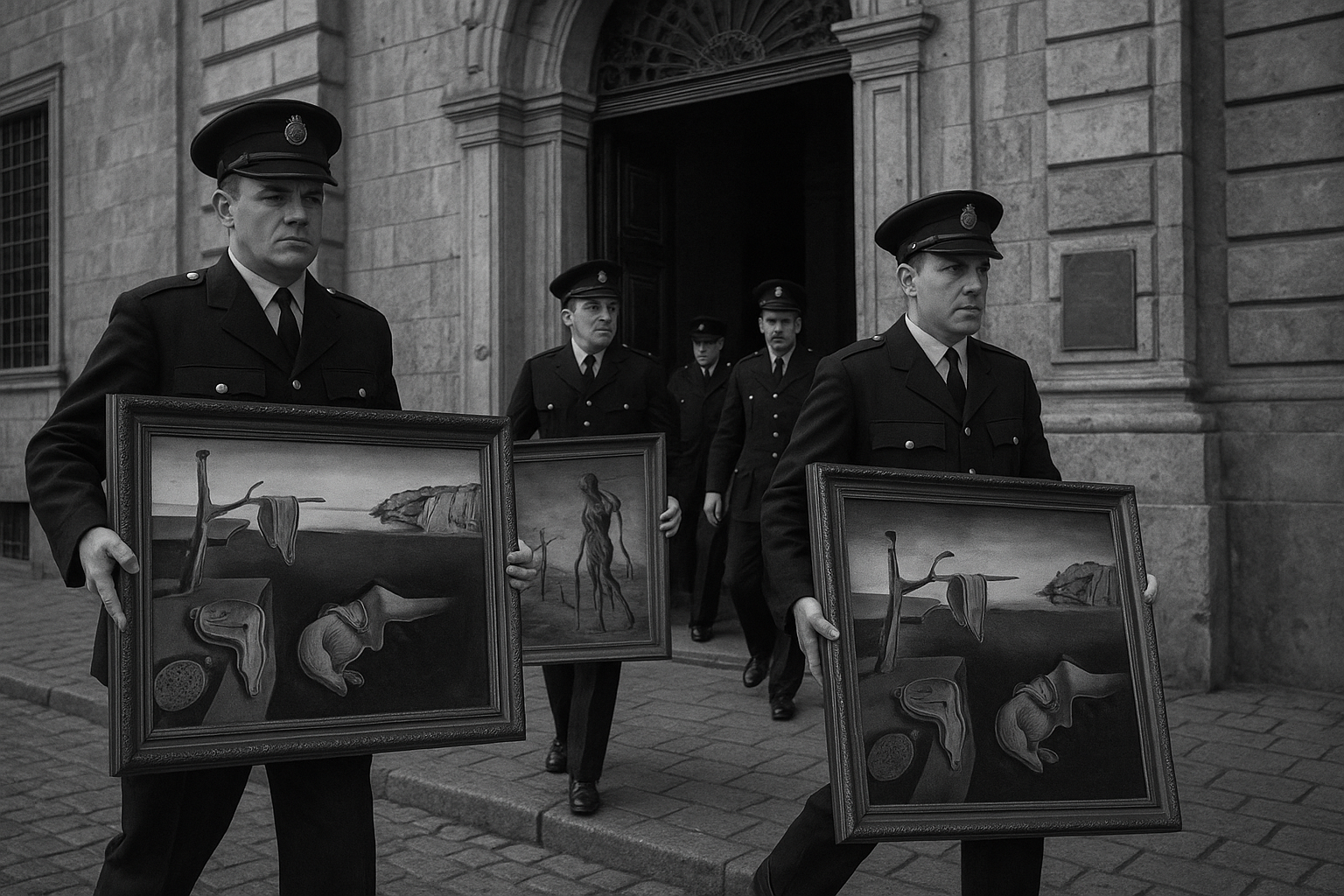 “We have dismantled a ring that sought to profit by deceiving the public and sullying the reputation of one of the 20th century’s greatest artists,” said Inspector Reginald Smythe of the Royal Constabulary’s Art & Antiquities Division. “The Kingdom will not stand idle while fraudsters peddle false visions to our citizens.”
The Palazzo Tarasconi, a Renaissance-era mansion repurposed as a cultural venue in the capital, had proudly promoted the exhibition for months, drawing thousands of curious visitors. The show promised “rarely seen” works by Dalié—complete with melting clocks, elongated figures, and dreamscapes of shifting sand. Some guests reported that the brushwork looked “oddly mechanical” and the colors “too freshly minted.”
Whispers reached the Constabulary earlier this summer, prompting a quiet inquiry. Experts from the Royal Academy of Fine Arts soon confirmed suspicions: the canvases lacked Dalié’s signature underpainting, the pigments were modern synthetics, and several frames bore stamps from factories that did not exist during the artist’s lifetime.
“We were invited to examine two works, and it was immediately apparent that something was amiss,” said Professor Alaric Wendover, Chair of Surrealist Studies at the Academy. “The hand of the master has a certain nervous precision. These were mere imitations.”
The exhibition’s organizers have maintained their innocence, claiming they acquired the collection in good faith from private dealers abroad. “We are victims as much as anyone,” said a spokesperson for the Palazzo. “Our sole intention was to bring Dalié’s genius to the people of Eyehasseen.”
Yet prosecutors allege that at least some of the organizers knew the works were spurious, citing correspondence in which one curator referred to them as “in the manner of Dalié” before later marketing them as authentic. Charges may include fraud, forgery, and unlawful enrichment.
The scandal has rocked the Kingdom’s art world. Collectors fear that other forgeries may be circulating, while ordinary citizens express dismay that they paid good aureals to view what amounted to little more than clever imitations.
Outside the Palazzo this week, visitors gathered at the locked gates. “I don’t know much about art, but I know when I’ve been cheated,” said one schoolteacher from Northmarch, shaking her head. “I thought I was gazing at the dreams of a genius. Turns out I was staring at the lies of a scoundrel.”
The Ministry has pledged to create a permanent register of certified Dalié works in Eyehasseen collections, to prevent similar frauds in future. Meanwhile, the seized fakes will be held in storage until the courts decide their fate. Some have suggested they be kept as a cautionary exhibit titled “The Art of Deception.”
Whether the scandal will permanently tarnish Palazzo Tarasconi’s reputation remains to be seen. But for now, the once-celebrated “Impossible Dream” show has turned into an impossible nightmare.