By Aldus Penwright, Correspondent in Inverness
The fog that clings to the River Gate Docks has always been thick enough to conceal a crime or two, but seldom one of such consequence as the plot now uncovered beneath its worn planks. What began as a routine patrol by the Royal Constabulary late on Fourthday evening has unraveled into a full-blown sedition inquiry — the latest thread in the sprawling conspiracy left behind by Rodger “The Liar” Bianchovi and his circle of deceit.
Discovery Beneath the Wharf
According to Constabulary sources, officers from the Dock Precinct were following up on reports of “unusual nocturnal labor” when they noticed a faint vibration beneath the boards of Warehouse 17. Upon closer inspection, they found a concealed trapdoor disguised by barrels of tar and rope. Below lay a half-finished chamber, barely large enough for six men to work within, its walls lined with stolen lumber and marked with chalk diagrams.
By lantern-light, the officers identified a crude press of foreign design, incomplete but functional enough to print leaflets. Nearby tables held coded letters, half-burned drafts, and, most disturbingly, military charts detailing the layout of the capital’s northern defenses.
“It wasn’t smuggling,” said Inspector Daven, who arrived on the scene before dawn. “They weren’t moving goods — they were preparing to move minds.”
The Crimson Dawn’s Hand
Initial evidence links the site to the underground organization calling itself The Crimson Dawn, believed to be the ideological successor to The Red Banner. Several documents bore the phrase ‘Phase Two begins at the waterline’, suggesting a coordinated plan to reignite the sedition that Bianchovi’s execution was meant to extinguish.
A sealed envelope recovered from the chamber contained a short manifesto written in a familiar hand — one matching the late Bianchovi’s style almost perfectly. Experts at the Ministry of Information are now examining whether the letter was written by a disciple trained to imitate the traitor’s rhetoric.
“His lies did not die with him,” remarked Minister Thayne grimly at a press conference. “It seems they left seeds.”
Foreign Involvement Suspected
The incomplete press itself has drawn intense interest. Unlike the domestic makes favored by the Guild, this machine bore the markings of Marelian manufacture — a damning clue, if confirmed. The Ministry of Foreign Affairs has not yet issued a formal protest, but one senior official told The Times-Observer under condition of anonymity, “We have long suspected foreign hands were greasing the gears of our domestic dissent. Now we may have proof.”
In response, the Royal Navy has been instructed to conduct heightened inspections of all incoming cargo from Marelia and its allied ports. “A press can fit in a crate,” said an officer at the River Gate. “So can a revolution.”
The Arrests
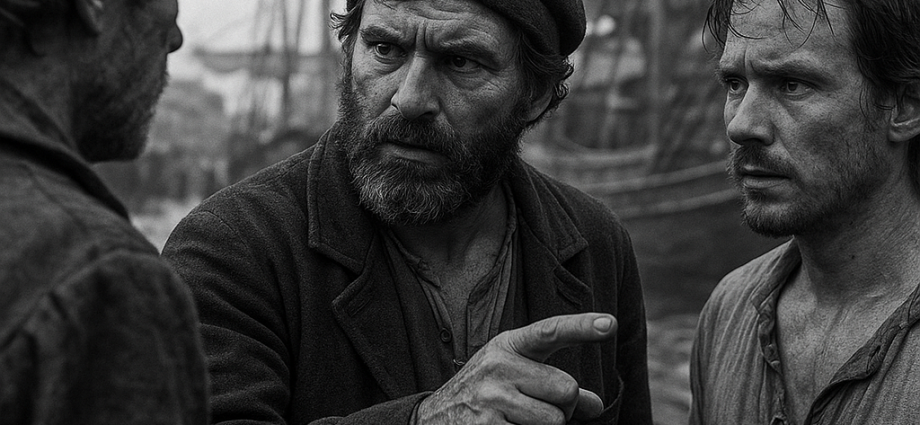
Three men were seen fleeing the warehouse as officers descended. One, identified as Tobin Gral, a known dockside laborer with ties to the Socialist Party, was apprehended after a brief chase along the quay. Another, Ellis Varde, was captured hiding in a coal barge later that morning. The third remains at large.
Under interrogation, Varde confessed that the men had been “commissioned to prepare the chamber” and were to receive payment from “northern friends” once the press was operational. He denied knowing the true purpose of the materials found within but admitted to recognizing Bianchovi’s name. “We thought it was just pamphlets,” he claimed. “Like before. Words, not war.”
Inspector Daven was unmoved. “Words were the war,” he replied.
The Public Reaction
The discovery has reignited public unease about the lingering influence of the seditionists. Crowds gathered along the riverbanks the following morning to watch as Constables hauled the stolen press into daylight. Some cheered as the pieces were loaded onto wagons; others crossed themselves silently.
“I thought we’d buried this poison with the man who made it,” said a fishmonger. “Seems the river’s dredging it back up again.”
Merchants, worried about the impact on trade, have petitioned the Ministry of Commerce to increase patrols and compensate for the delays caused by ongoing searches. “Our docks run on trust,” said the Wharfmaster. “If that trust rots, the whole city will stink.”
The Broader Web
The investigation has since widened. Documents recovered from the scene refer to “safe rooms” in other river towns — notably Westmarch and Daleford — where sympathizers may have been storing supplies and correspondence. A coordinated sweep is underway.
Meanwhile, a second cache of papers found nearby describes plans for an event cryptically titled “The Illumination.” The text appears to reference a series of simultaneous public disturbances, timed to coincide with the anniversary of The Red Banner’s founding. Officials have not disclosed whether arrests have been made in connection with the scheme, but sources confirm that surveillance of known agitators has intensified.
A Kingdom on Guard
As night falls once more over the docks, the scent of tar and damp wood hangs in the air — but beneath it lingers something sharper, something uneasy. Patrols move in pairs now, and citizens crossing the bridge are stopped for questioning.
Yet the people of Inverness, wary but resolute, seem unwilling to surrender their calm. A notice recently posted outside the Dock Constabulary reads:
“Let the liars sink with their presses. The river carries no false witness.”
In the taverns along the wharf, the phrase has already become a toast. Men raise their glasses and echo the Constables’ oath — a vow that the truth, though besieged, will not drown.