By Lionel Gant, Sports Correspondent, The Times-Observer
The roar of drums, the hiss of smoke, and the slap of oars upon water will soon return to the capital, for the Kingdom Canal Jousting Championship has been officially declared by the Royal Maritime League to commence on Fourthday next, along the Grand Canal of Inverness.
From every corner of the realm — from the cold reeds of Northreach to the marsh flats of Elderfen — the champions of each region are converging upon the capital to decide who shall hold the gilded Trident of the Waters, the highest honor in this most Eyehasseen of sports.
A Sport of the People and the River
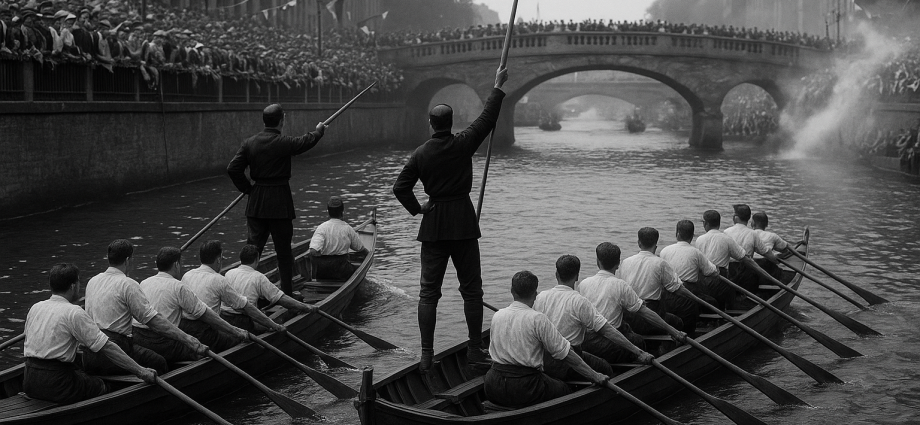
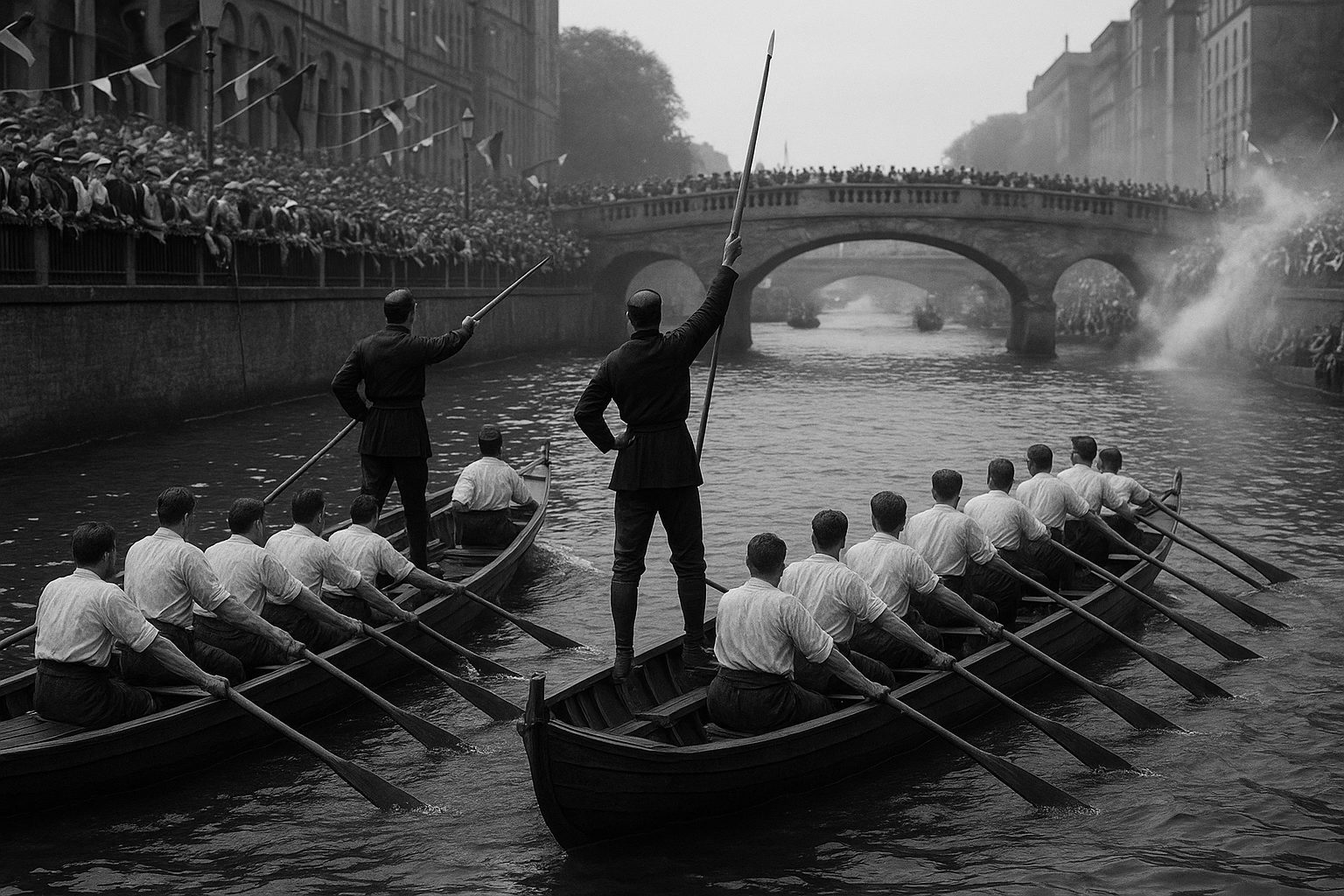 Born from mischief and muscle, Canal Jousting began nearly a century ago among dockworkers of Westmere, who, after long hours of loading barrels, took to spearing them for wagers when the tide ran slow. The pastime grew dangerous, then formal, and finally grand — elevated to national spectacle by decree of King Edmund IV, who famously declared it “the only war worth fighting after supper.”
Since that decree, the game has evolved from a laborer’s diversion to a national tradition. Each year, crowds in the tens of thousands line the canal banks waving colored streamers, shouting odds, and chanting the regional songs of their favored crews. The smell of oil, smoke, and ale hangs thick over the water, mingled with the rhythm of drums echoing from the arches of the city bridges.
The Contestants of 1024
This year’s field of champions is considered one of the strongest in memory, with several seasoned rivals and one dark horse entry from the eastern reaches.
Northreach: The Iron Current — a disciplined squad of fishermen-soldiers renowned for their synchronized rowing and ironwood lances. Their captain, Arlan Moor, has never once fallen from his prow.
Westmere: The Wharf Hounds — last year’s champions, masters of brutal contact tactics and ferocious spirit. Their Joust Captain, Darrow Pike, known as “the Barrel-Breaker,” once struck four orbs in a single run, a feat yet unmatched.
Thornwold: The Mist Cutters — lithe, silent, and tactical, these boatmen rely on agility and cunning, often turning opponents’ wakes against them. Their Shieldman, Serra Vale, is the only woman in the League finals.
Goldvale: The Auric Tide — a flamboyant team of merchants and sailors whose ornate gilded craft, The Golden Gudgeon, is as famous as their taunting songs.
Elderfen: The Marsh Vipers — masters of muddy shallows, strong in endurance but less practiced in the capital’s clean canals. Their Pilot, Fenrick Lough, is known for steering one-handed while smoking a pipe.
Highmere: The Crestfallers — a disciplined military regiment’s sporting detachment, famous for precision drills and unbending decorum.
Tarnfell: The Black Eels — rowdy, superstitious, and unorthodox. Their boats are slicked with oil, making collisions near impossible to control.
Ravenshore: The Sea Ravens — a stoic northern team known for raw strength and an unsettling habit of staring down opponents without blinking.
Southmarch: The Marchwater Men — newcomers to the sport, drawn from cavalrymen who traded horses for hulls. Known to shout battle cries before each strike.
Cairndale: The Stone Rowers — their oars are carved from local granite wood, their rhythm slow but relentless.
Easthallow: The Lampers — city tradesmen turned athletes, their tactics unpredictable, their humor infectious.
Braydon Fields: The Wind Farmers — eccentric tinkerers who built their own fan-driven auxiliary paddles, of questionable legality.
The Royal Course
The championship will be fought along the Grand Canal of Inverness, specially dredged and lined with floating stands capable of holding twenty thousand spectators. The course measures five hundred yards, with seven scoring orbs of varying hues — each worth a single strike but glowing brightest for the crowds at nightfall.
At the halfway mark, the great bell of St. Clement’s will toll, signaling the second “Run,” when both boats pass each other in the narrowest point of the canal — an exchange known as “The Crossing of Smoke,” when colors mingle and tempers flare.
The Stakes
The winning team receives not only the Trident of the Waters but also a royal commission and lifetime exemption from water tax — a prize envied by every dockhand in the realm. The losing teams receive applause, bruises, and often a dunk in the canal for good measure.
The opening ceremonies will include a flotilla parade led by the King’s own Royal Barge Indomitable, followed by the ceremonial tossing of the first orb, traditionally performed by the reigning Queen herself.
A Nation Holds Its Breath
As posters go up across the city and bookmakers argue over odds, one thing is certain — no event in Eyehasseen better captures the spirit of boldness, rivalry, and laughter as Canal Jousting. It is a sport born from toil and turned to glory, where men who once fought over barrels now fight for banners and pride.
The first matches begin at dawn next Fourthday. The waters of Inverness will not sleep again until a new champion is crowned.