by Health and Fitness Staff
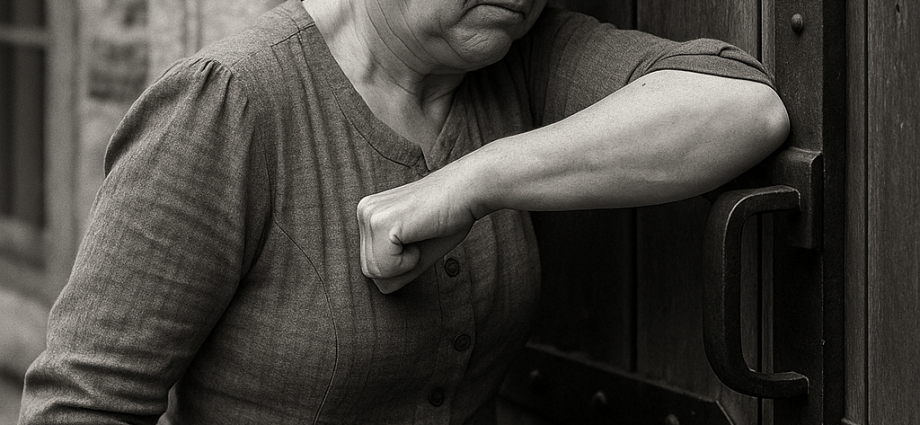
A curious uptick in bruises, sprains, and sheepish clinic visits has prompted the Ministry of Health to officially recognize a rising condition: Elbow-to-Door Syndrome (EDS). The ailment stems from a trend sweeping Inverness and several outlying towns — citizens attempting to open heavy oak doors using only their elbows.
The origin of the behaviour appears harmless. Someone, somewhere, decided that elbow-opening was a tidy way to avoid touching doorknobs, which — according to whispered rumours — were “harbouring more fingerprints than is strictly comfortable.” Soon enough, the practice spread.
“The problem is not the hygiene concern,” explained Dr. Harriet Barlowe of the Royal Infirmary. “It’s the physics. A wooden public door often weighs several stone. Striking it with an elbow is equivalent to negotiating with a mule by poking it.”
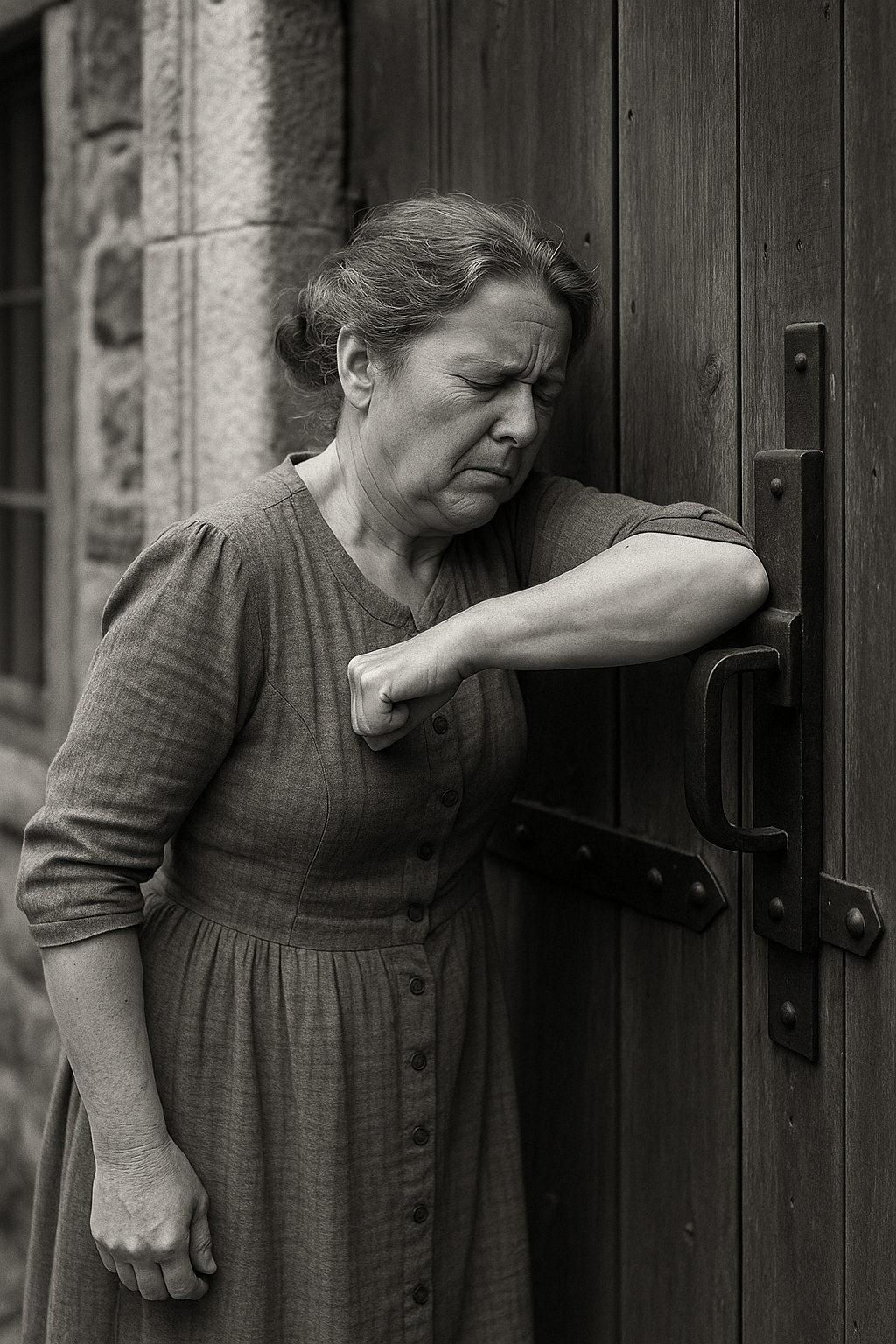 Reports describe citizens approaching doors sideways, raising their elbow with determination, and then either failing to move the door at all or slamming it too hard and ricocheting backward. The injuries range from bruising to mild ligament strain.
One postal worker recounted his ordeal: “I tried to elbow the Southgate Office door open. It didn’t budge, but my arm did. I must have looked like I was attempting a very poor dance.”
Merchants with large shop doors have grown concerned. “We hear thuds constantly,” said grocer Elspeth Murney. “Half the time, customers bounce off and apologise to the door as though it were offended.”
To address the growing issue, the Ministry released a three-page advisory encouraging “the continued and unembarrassed use of hands for the opening of doors.” Hands, the document notes, “remain the Kingdom’s primary gripping organ” and should be employed “without hesitation or shame.”
The Ministry also noted that door handles are cleaned regularly and present “no greater threat than any other object commonly touched, including spoons, coins, or one’s own face.”
Architects weighed in as well. “Doors are designed for hands,” said master builder Rowan Tew. “If we intended elbow operation, we’d have mounted the handles shoulder-high and shaped them like small anvils.”
Despite the guidance, some citizens insist that their elbow technique is “nearly perfected.” One man defended the practice: “It’s efficient. Hands are for holding important things. My elbow is free.” However, his arm was in a sling at the time.
A pilot rehabilitation programme now offers brief instructional sessions in proper door-opening posture. Participants are reminded to place their hand on the handle, apply steady pressure, and step through the doorway calmly, “without attempting unnecessary gymnastics.”
Local taverns have adopted signs reading: Please Use Hands. Elbows Are For Ale-Carrying Only. These have met with moderate success.
While EDS is unlikely to have long-term consequences, the Ministry warns that continuing the practice could undermine both health and dignity. As the advisory concludes: “A door is not an adversary to be struck. It is an object to be opened. Kindly use your hand.”