By Special Correspondent, Maritime Desk
 There are few places left in the Kingdom where the sea still feels like a secret. The Lantern Isles, scattered like pearls off the southern coast, are among them. No rail line reaches their shores, no great ferry makes the crossing. To go there one must take the small mail boat from Westreach, and even that ventures out only when the weather and the tides are in rare agreement.
From the deck, the journey seems to last an eternity and a heartbeat at once. The sea lies flat as slate, the horizon a soft smudge. As the sun lowers, the water begins to shimmer faintly—as if something beneath is stirring. “It’s not the tide,” the mailboat captain tells me, eyes on the dim line ahead. “That’s the light of the Lantern Isles. They glow before you reach them, like a promise or a warning, depending on your mood.”
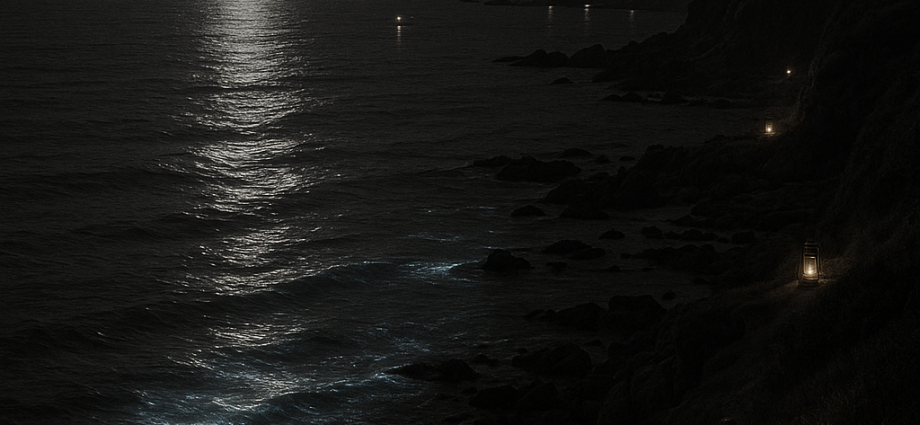
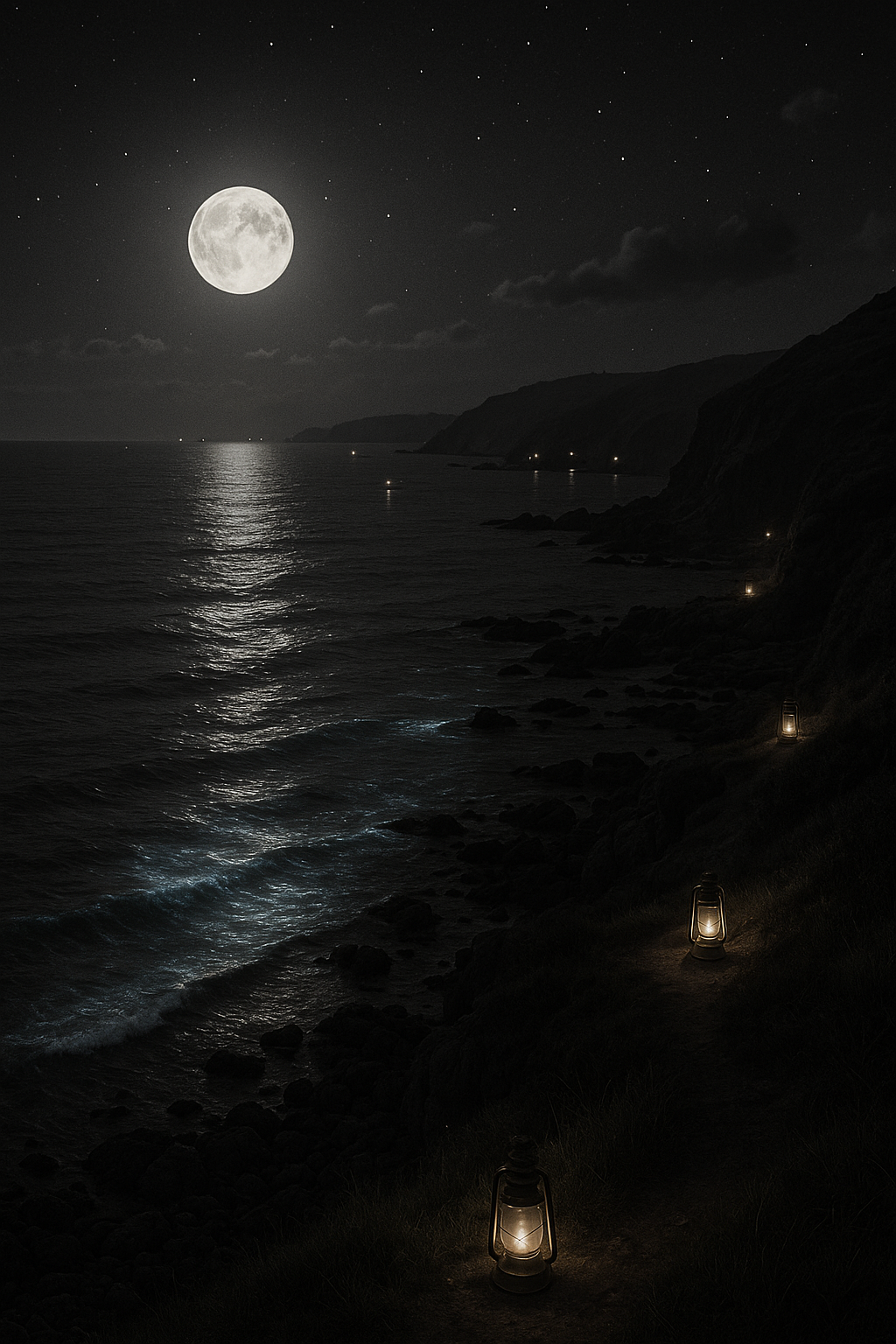
The glow proves no exaggeration. The waters surrounding the isles hold a natural phosphorescence; at night they burn faintly blue, tracing the movements of fish, oars, and even the swirl of the wind. The locals call it the sea’s memory. It is said that if one stands on the cliffs long enough, the currents will paint the history of the islands upon the waves—old shipwrecks, passing storms, lost voyages returning home in light.
There are seven inhabited islands in all, each small enough to cross on foot within an hour. The largest, St. Merrow’s Haven, is the only one with a pier of consequence and the only inn with actual walls. Most of the islanders live in weather-beaten cottages wedged between rock and mist, their windows hung with oil lanterns that mirror the glow of the sea below.
When darkness comes, it becomes difficult to tell where sea ends and sky begins. Lights drift and ripple in every direction, some from fishing skiffs, others from the phosphorescent tide. “We sleep by colour here,” says Captain Torven Lusk, an old mariner turned innkeeper. “Red lamps for storms, yellow for peace, and blue for remembering.” He does not elaborate what must be remembered, and I do not ask.
The Lantern Isles are quiet to the point of enchantment. Paths wind through seaberry thickets and gull-haunted meadows; bells from distant buoys toll lazily in the fog. The air tastes faintly of salt and iron. During the day, one might see children hunting shells along the shallows or mending nets strung like harp strings between stones. By evening, everything slows to the pace of the tide. There are no carriages, no clocks striking the hour—only the rhythm of waves against rock and the occasional cough of an oil engine from some unseen boat.
At the northern edge of St. Merrow’s stands a long-abandoned chapel, its steeple half swallowed by ivy. Inside, fishermen now store coils of rope and spare nets. Yet at night, when the lanterns are lit along the shore, the windows catch the blue reflections and shimmer faintly like stained glass. “The sea still prays,” one islander tells me. “The building just remembers how.”
Further east lies Cray’s Point, a headland riddled with shallow caves where, for reasons no one can quite explain, a handful of people choose to live. They are called the cave dwellers, though the term is used without mockery. They work odd hours, tending the nets and guiding small boats through the phosphor-lit channels. When the mailboat arrives each week, they appear suddenly at the cliffs, standing in silhouette like sentinels. They say little, but their lanterns are always the first to light when the sun goes down.
Visitors are rare but welcomed politely, if not effusively. The Isles offer little commerce, yet one feels that money would somehow cheapen the transaction anyway. I am offered tea that tastes faintly of seaweed and honey, and bread dense enough to anchor a skiff. In return, I listen to their stories: of whales that breathe fire, of bells that ring from beneath the sea, of voices carried on the mist that are not always human. No one claims to believe these tales, but everyone tells them.
On my last evening, the tide withdraws far out to the reefs, leaving the wet sand glowing like glass. The islanders gather along the cliffs to watch, their lanterns swaying gently in the wind. “The sea sings tonight,” someone murmurs. And indeed it does—a low, shimmering hum as the waves return, rolling the light back toward the dark horizon.
The Lantern Isles will not remain forever untouched. Already, the mainland whispers of tourism, of improved docks and electric lamps. But for now, they are still what the sea remembers: quiet, uncertain, and achingly alive beneath the phosphorescent dark.