By Nathaniel Blenkensop
Geopolitics Desk – Times-Observer
HERRINGBONE ISLES — A handful of windswept rocks in the northern seas has set three nations at odds, with Eyehasseen, Nordmark, and the Republic of Marelia each laying claim to the Herringbone Isles.
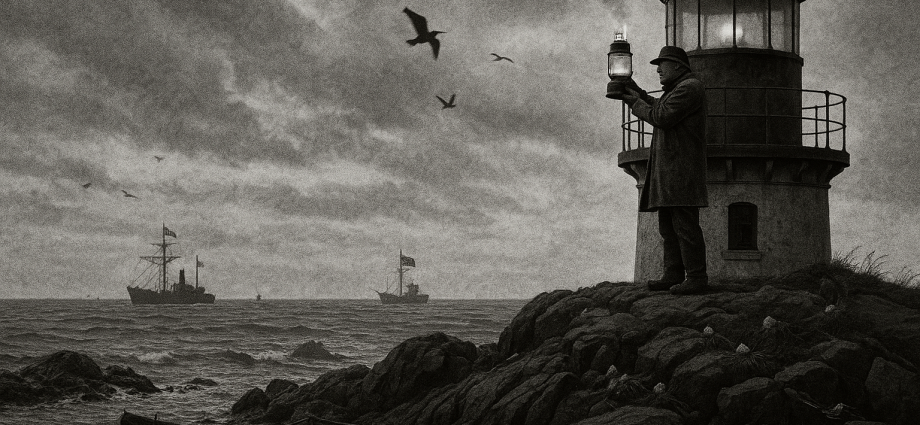
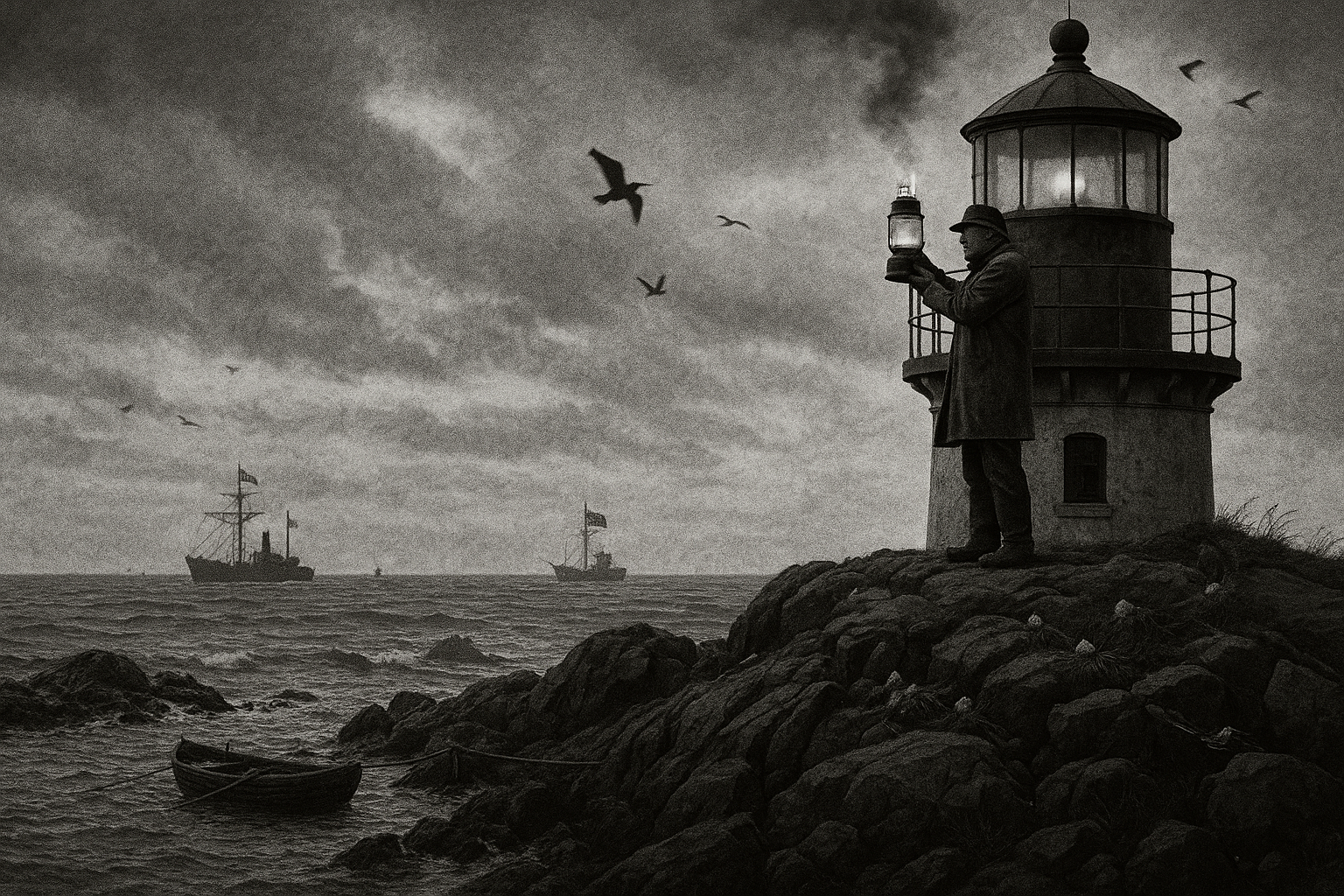
The islands, scarcely more than jagged ridges topped by seabird nests, would seem of little consequence. Their only permanent resident is a weary lighthouse keeper, Mr. Elias Rudge, who maintains a lonely lantern powered by whale oil and stubbornness. Yet strategic maps have a way of magnifying the importance of barren rocks.
 Eyehasseen’s Ministry of Foreign Affairs argues that the Isles fall under its historic maritime sphere, pointing to records of Inverness fishermen who dried nets on the rocks as far back as the 14th century. Nordmark counters with charts showing Viking longships using the isles as waystations. Marelia, for its part, insists the lighthouse was built with Marelian funds and staffed originally by their citizens.
“Each nation claims grandfather’s bootprint,” remarked one sardonic diplomat. “But no one asks what the seabirds think.”
At stake, however, may be more than guano and nostalgia. The surrounding waters teem with herring shoals, which provide not only food but also lucrative exports. Control of the Isles could extend territorial fishing rights by several leagues, a prize far richer than the rocks themselves.
The lighthouse keeper, caught in the middle, has become a minor celebrity. In a rare interview, Rudge declared: “I light the lamp, I chase off gulls, and I collect guano for the Ministry. If kings and parliaments want the place, they’re welcome to argue. Just don’t forget to send oil.”
In Inverness, Parliament debates whether to press the claim firmly or seek arbitration. Hawks urge dispatching a naval frigate “to remind Nordmark of the limits of its reach.” Doves warn that sabre-rattling over bird droppings risks ridicule abroad.
Ordinary citizens, meanwhile, seem more amused than alarmed. Satirists have filled taverns with ballads such as The Guano Wars, while caricatures depict diplomats hurling fish at one another across a map. Street vendors now sell “Herringbone Hats” adorned with fake gull feathers.
Still, the dispute carries genuine peril. A single clash of fishing boats could escalate, drawing navies into confrontation. The Ministry of Clandestiny is said to be monitoring the situation closely, though as always, it neither confirms nor denies.
For now, the Herringbone Isles remain what they have long been: battered by waves, home to gulls, and watched over by a solitary lantern. Yet their symbolic weight grows with each diplomatic note, proving once again that even the smallest rocks can cast long shadows.