Times-Observer – Crime & Rural Affairs
The highland parish of Eldenwood, long known for its thick pine stands and the quiet chant of wind through its ancient boughs, has been shaken by revelations of a clandestine timber-cutting ring operating deep within its royal forest. What began as a series of puzzling absences—missing wildlife, unusual wagon tracks, the distant thump of axes at unlawful hours—has now unfolded into one of the most significant environmental crimes the Kingdom has faced in years.
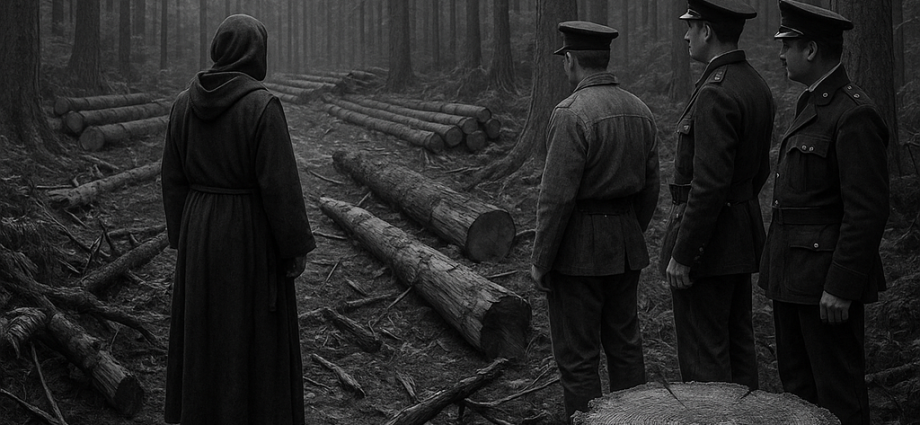
It was Brother Caelin, a monk of St. Dunred’s Abbey, who first raised the alarm. Rising before dawn for the monastic office of Prime, he noticed faint lantern light flickering where none should have been: the eastern boundary of the Royal Preserve. At first he thought it was a shepherd or a hunter who had lost his way. But the lights grew in number, then vanished all at once. When he ventured out after daylight, he found spruce stumps cut low and clean—no stormfall, no accidental breakage. Someone had been working with precision and secrecy.
When the Crown’s Forest Wardens arrived to survey the damage, the scale was sobering. Hidden just beyond a rise in the land, well out of sight from the parish paths, they found an illicit logging site: felled timber stacked in neat rows, bark stripped, wagon ruts leading into a narrow trail that branched away from the lawful road. The clearing had been chosen with cunning—far enough from the village to avoid notice, yet close enough to the Abbey’s old pilgrim path to provide access for those who knew the backways.
What troubled the wardens most, however, was not merely the theft of trees but the absence of wildlife. The Eldenwood forest has always been a haven for hart, fox, and mountain fowl. Yet the signs of their passage—tracks, burrows, nests—were unnervingly scarce. Wardens suspect that poachers working alongside the timber gang have been trapping game to feed the illicit crews or to smuggle meat and pelts out of the province.
A Community Roused
When the findings were presented to the Eldenwood parish council, villagers reacted with a mixture of sorrow and indignation. One elder, Riston Harthill, put it plainly: “You do not cut the King’s trees in secret. And you do not take the forest’s creatures as though they were your chattel. The land is our inheritance, not a quarry for thieves.”
Within days, volunteers from the village formed watch-parties, patrolling footpaths by lantern-light and repairing broken waystones. The Abbey offered shelter to displaced wildlife—an unusual gesture, but the monks have long kept herb gardens and quiet enclosures suited for healing injured animals. In their refectory prayer, they spoke openly about stewardship, reminding the faithful that to defend creation is not a pursuit of novelty but a return to the oldest duties given to mankind.
The Crown Intervenes
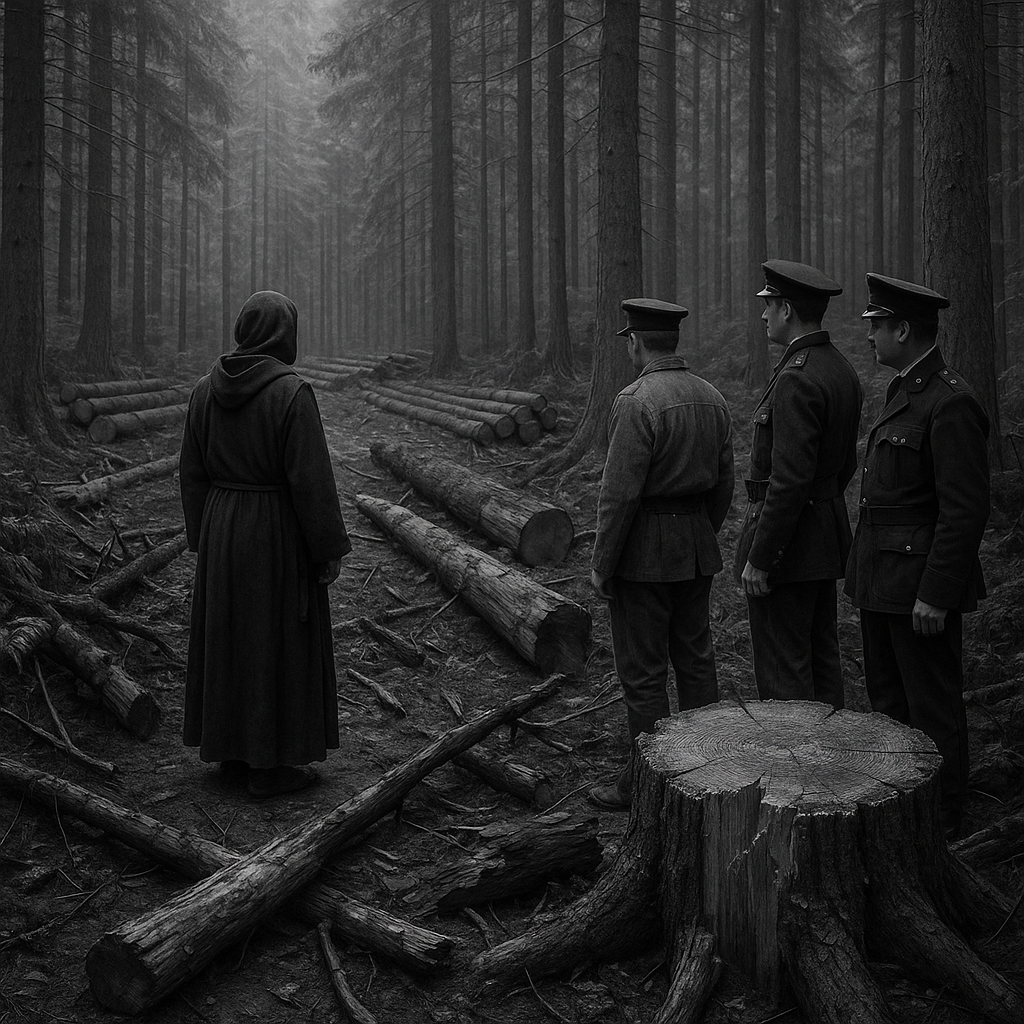 The Royal Constabulary sent a detachment from Inverness to support the investigation. Working with forest wardens, they discovered that the illegal timber had been loaded onto wagons bearing forged provincial seals, then transported covertly down the Timber Trail—a disused merchant’s route abandoned decades ago when the new stone highway was built. From there, authorities believe the wood was moved to a remote saw-house along the river and sold under the names of legitimate lumber cooperatives.
Though arrests have not yet been announced publicly, officials confirm that several suspects are being questioned in relation to the crime. Among them are two itinerant traders known for traveling with unusually heavy wagons and a carpenter’s apprentice who may have been lured into the operation by promises of quick earnings.
A Moral Reckoning
The situation has stirred deeper reflection within the province. The forests of Eyehasseen are not merely economic assets; they are woven into the Kingdom’s history, culture, and faith. Every generation has relied on them for warmth, shelter, and craft, yet the old laws demanded reverence for the woods—never taking more than the land could bear, and never without the Crown’s blessing.
Father Aldwyn, the abbey prior, addressed the parish after Vespers: “The forest is more than trees. It is memory. It is the cradle of our ancestors’ first settlements. When we allow its plunder, we not only betray the Crown—we betray the story we share.”
Looking Forward
In the coming weeks, the Ministry of Lands intends to restore damaged sections of Eldenwood, replanting saplings of the long-lived red fir and reinforcing boundary markers. Villagers have committed to assisting, and the Abbey plans a yearly Day of Stewardship, during which families will gather to clear paths, tend saplings, and give thanks for the gifts of the land.
For now, Eldenwood stands bruised but unbroken. Its people have shown that vigilance and rootedness—two virtues often forgotten in modern life—remain powerful guardians of the Kingdom’s heritage. And though the forest may need years to heal, the parish’s renewed devotion to its care may yet make the woods stronger than they were before.