by Health and Fitness Staff
The Ministry of Health issued a gentle but unmistakably exasperated advisory this week regarding a rising condition now officially named Chronic Over-Tea Syndrome, or COTS — an ailment born not from deprivation or pestilence, but from the Kingdom’s long-standing and enthusiastic love affair with tea.
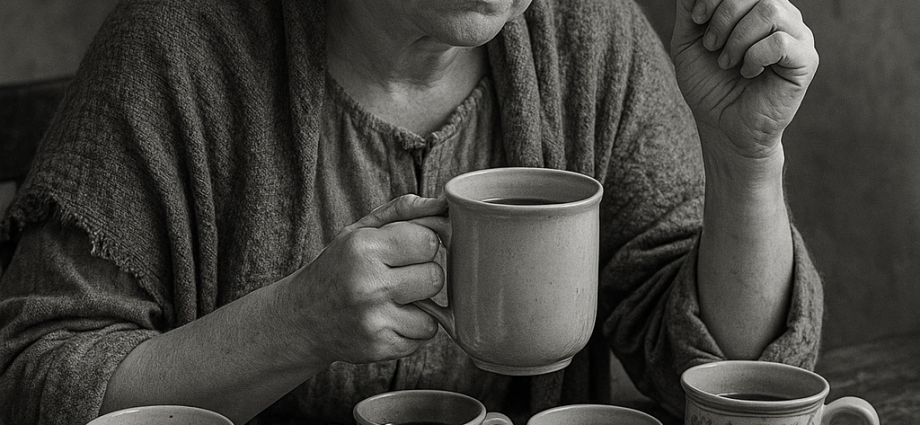
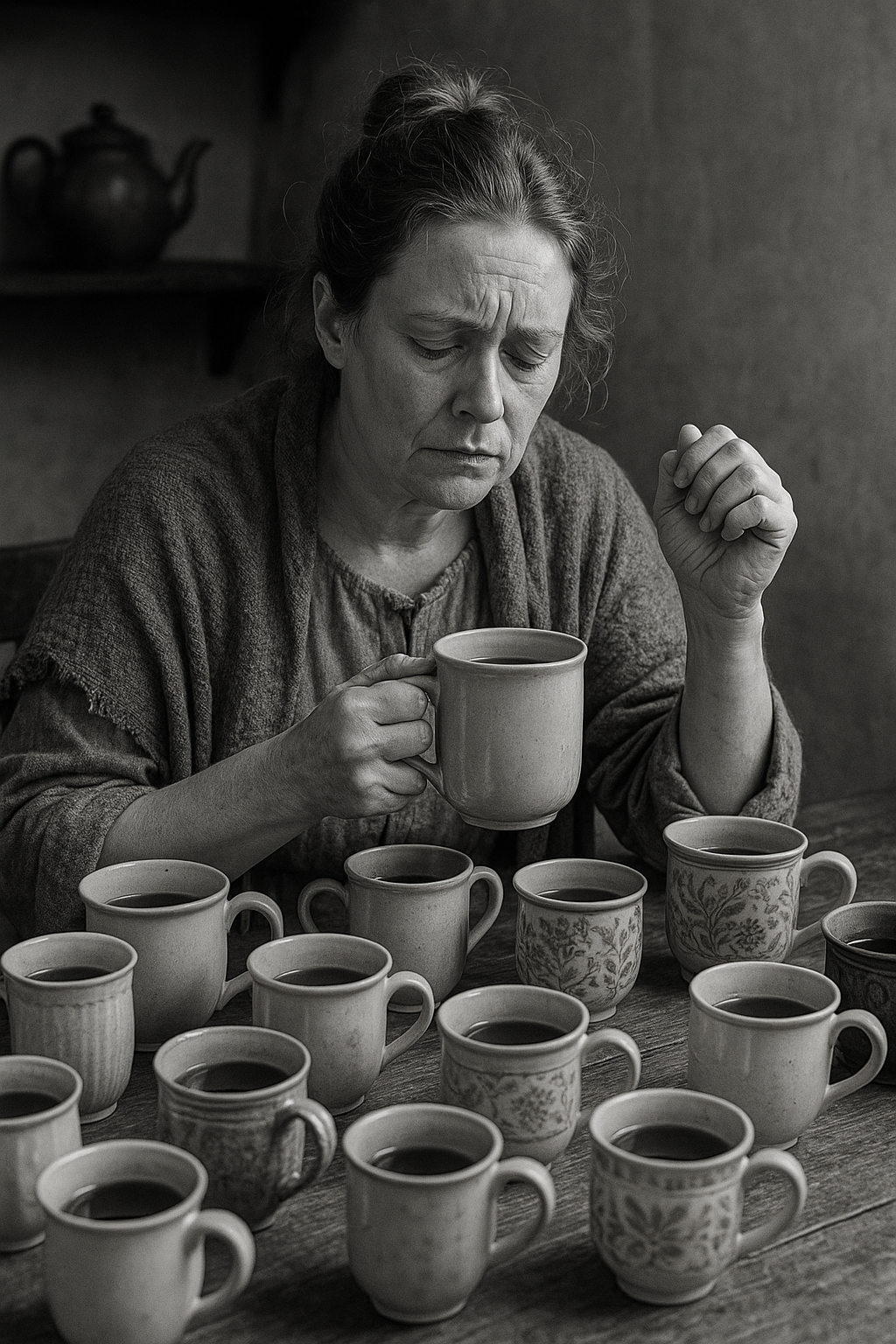
COTS manifests gradually. At first, a simple preference: “I’ll just have another cup to warm the hands.” Then, as the Ministry delicately phrases it, “a persistent state of unnecessary steeping.” Citizens begin carrying their own kettles, complaining that tavern water is “not quite hot enough,” or gripping mugs so habitually their fingers arc inward like small, porcelain-seeking claws.
 Doctors across Inverness and the provincial towns report patients insist they feel perfectly well. Yet the signs are unmistakable. “We see mild wrist tension, compulsive stirring, and an inability to make decisions without first making tea,” said Dr. Henrietta Grumph, chair of the Royal College of General Practitioners. “Yesterday a man insisted he couldn’t cross a street until he’d brewed a cup in a travel pot. This cannot continue.”
The Ministry’s circular was unusually direct. It urges citizens to “touch something that is not warm and ceramic at least once per hour.” Early data suggest the simple intervention can break the continuous brew cycle.
Local employers have started taking notice. The King’s Treasury recently observed that clerks were “steeping before stamping,” a habit that added nearly twenty percent to morning queue times. “We acknowledge tea’s cultural importance,” a Treasury spokesperson said, “but there are limits.”
Tea merchants, for their part, deny any involvement. “We merely supply the public demand,” insisted Goodwin Thistledown of Spire & Leaf Importers. “If half the Kingdom feels chilly and under-infused, that’s not our business to correct.”
The Ministry does not attribute COTS to any specific tea variety. However, a preliminary study suggests herbal blends with names like Moonrest Lavender and Old Moorland Fog may contribute to the tendency toward overconsumption. “They give drinkers the false impression they are ‘healthier’ because the blends aren’t technically tea,” Dr. Grumph explained. “But the teapot does not care what is inside it. Overuse is overuse.”
The advisory also warns of a growing secondary concern: mug accumulation. Some households have amassed so many mugs that shelves bow under the weight. A spokesman from the Office of Civic Infrastructure stated, “If everyone insists on owning seventeen different mugs, each for a distinct emotional state, there will be consequences.”
Still, not everyone accepts the diagnosis. “There is no such thing as too much tea,” said longtime resident Mabel Turwin, clutching a mug roughly the size of a small cauldron. “My mother drank tea all day and lived to ninety, and if holding a mug shapes my hand, well, it was shaped for nobler things anyway.”
The Ministry is not calling for abstinence — merely moderation. As the advisory concludes, “Tea should accompany life, not replace it.”
Next week, the Royal Infirmary will host free workshops titled “Set the Cup Down: Rediscovering Your Hands.” Attendance is optional but strongly encouraged.