By Staff Correspondent, Inverness Bureau
INVERNESS — The bells of the city ring on schedule, the trams keep to their routes, and the shops along Chancellor’s Row still open precisely at the eighth hour. Yet something subtle has shifted in the rhythm of life. It can be heard in the hush after the newsboy’s cry, in the way people glance skyward when an airship passes, or in the careful choice of words spoken between acquaintances who now measure optimism like sugar—sparingly.
No official declaration of war has been made. The government continues to describe current events as “an extended period of precautionary readiness.” But across the Kingdom, it is increasingly difficult to distinguish readiness from war itself.
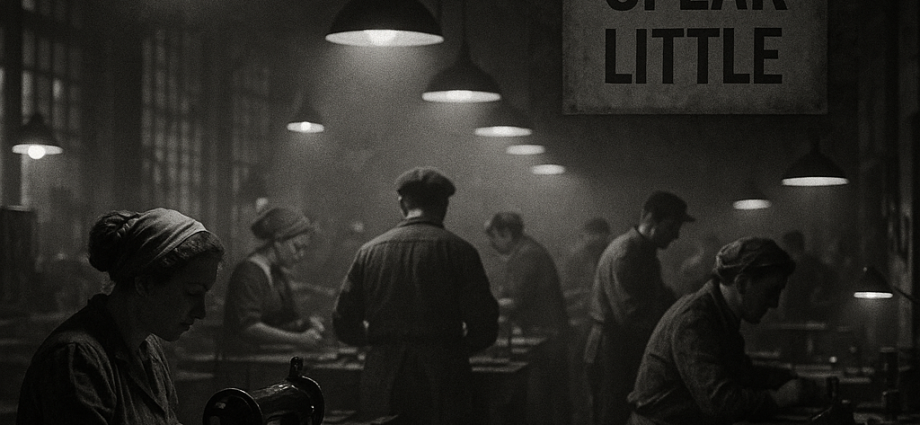
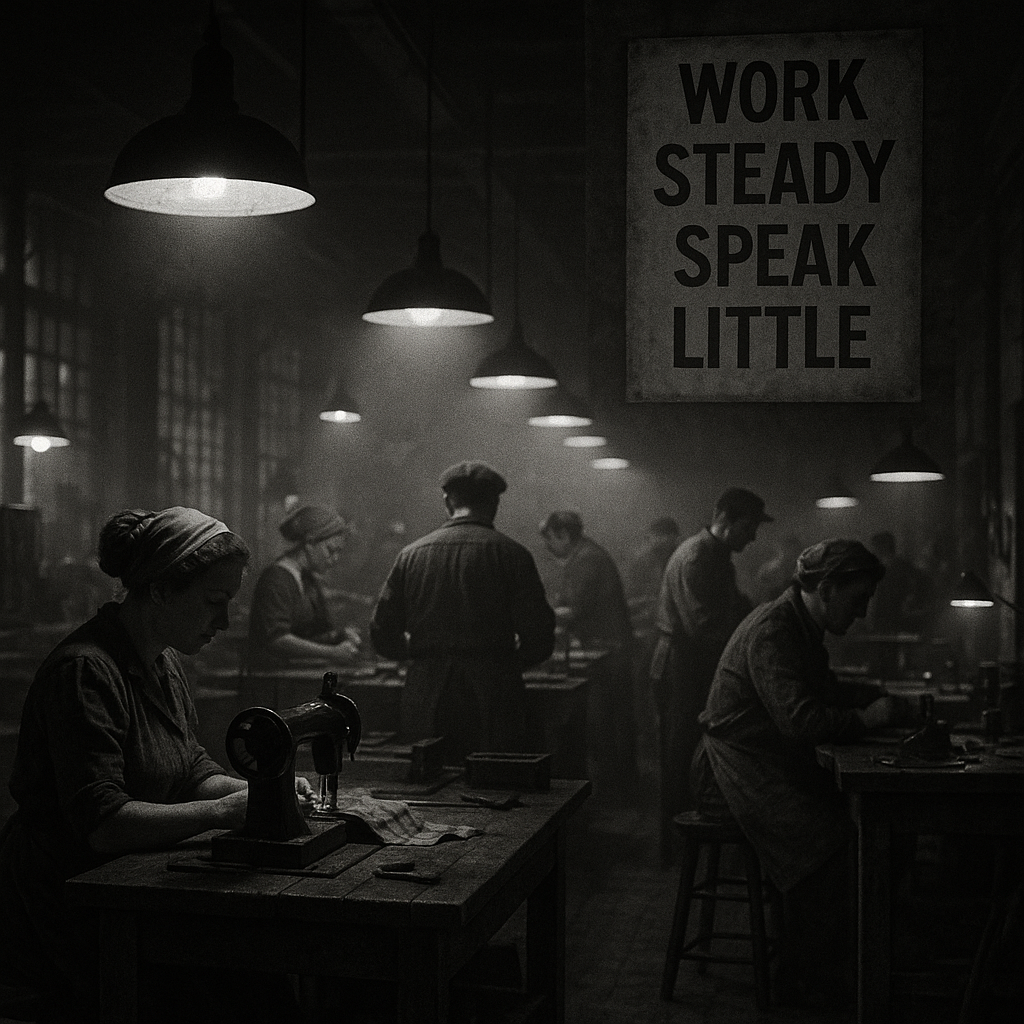 At the Royal Arsenal Works, output has doubled. The clang of hammers and the whir of belts carry across the river even after curfew, echoing through the fog. Rows of women in overalls and kerchiefs move in disciplined silence, stamping out casings and engine parts for the air fleets overhead. A new slogan has been painted above the foundry gates: “For Country, Not for Comfort.”
Mrs. Elsbeth Cawley, a forewoman of twenty years, shrugs when asked about the hours. “We’re doing what’s needed,” she says, wiping soot from her brow. “No one complains, not out loud. We’ve all got sons up there somewhere. Best keep our hands busy until they come home—or until someone tells us to stop.”
In schools, children have begun collecting scrap metal and used wire. They line up solemnly to hand over their small contributions, earning bright paper badges from the Ministry of Labour and Moral Instruction. “Every nail counts,” the posters say, featuring cheerful youths holding spanners. The children sing a new verse at morning assembly:
“The airships hum, the hammers ring,
We’ll stand our ground for King and King.”
Their teachers do not correct the redundancy. It feels appropriate.
At the Cathedral of St. Alaric, the votive candles burn day and night. The clergy decline to make political pronouncements, but the prayers are steady and specific. Father Renard notes that attendance has tripled since midsummer. “They come to speak to God,” he says, “and to listen for news between the hymns.”
In the markets of Inverness, trade continues—though goods are scarcer and tempers shorter. Coal is rationed; sugar is a memory; coffee has acquired the air of contraband. But even as shelves thin, merchants take pride in civility. At Madame Thornby’s bakery, customers queue beneath a sign reading “Patience is a Patriot’s Virtue.” When a child begins to cry for sweets, the entire line softly joins in a lullaby to distract him. “It’s what we can offer,” Madame Thornby explains. “A song costs nothing, and it sweetens the wait.”
The Royal Treasury has opened its subscription for Victory Bonds, promising repayment “upon the restoration of peace and sense.” The queues at post offices stretch around corners. Pensioners clutch coins in handkerchiefs, young couples pledge their savings for the future they insist will still arrive. “It’s not about money,” says Mr. Hargreaves, a retired tram conductor. “It’s about not feeling useless while the world decides itself.”
The government’s radio bulletins, measured and reassuring, continue to insist that “the situation remains stable.” Yet each evening, more citizens linger at their windows, scanning the sky. The glow of distant airships has become the city’s unofficial constellation—steady lights moving in slow arcs, reminders that something vast and fragile is being held at altitude by little more than silk and courage.
In the cafés of Government Row, conversation has grown quieter but sharper. Waiters lower their voices; newspapers are folded before they’re read. Everyone knows someone who “may be called up soon.” The rumour that fuel rationing will begin next week is neither confirmed nor denied; it simply hangs in the air like the scent of paraffin.
Yet, for all this tension, there is remarkably little despair. The national temperament, always inclined toward endurance, has solidified into something approaching collective poise. “We’re not built for hysteria,” says Miss Agatha Pell, a tailor’s assistant mending uniforms for the Home Guard. “If the bombs come, we’ll make tea and count them.”
At sunset, the streets take on their most curious calm. The lamps burn low under the blackout hoods, the factories fall silent for a few hours of rest, and the city seems to exhale. Couples walk arm in arm by the river; a violin plays from a balcony. The war—if it is war—feels momentarily suspended, waiting politely for dawn.
From her apartment above the Old Market, Mrs. Cawley listens to the distant thrum of engines and reflects what many now feel. “It’s strange,” she says softly, “how quiet courage sounds. No drums, no shouting—just everyone doing what they must, like always.”
And so Eyehasseen endures—its factories lit, its prayers whispered, its humour dry as dust but unbroken. The skies may be contested, the seas uncertain, but on the cobbled streets of the capital the people stand, as ever, with a stiff upper lip and both feet planted firmly on the good earth of home.