By Eleanor Stowe, Senior Correspondent, The Times-Observer
The war that began with fog on the River Nord and fire in the southern skies has ended not with humiliation, but with a handshake beneath a white flag. Marelia, its armies broken and its cities exhausted, has sued for peace, and the Kingdom of Eyehasseen, victorious yet temperate, has accepted.
The End of Arms
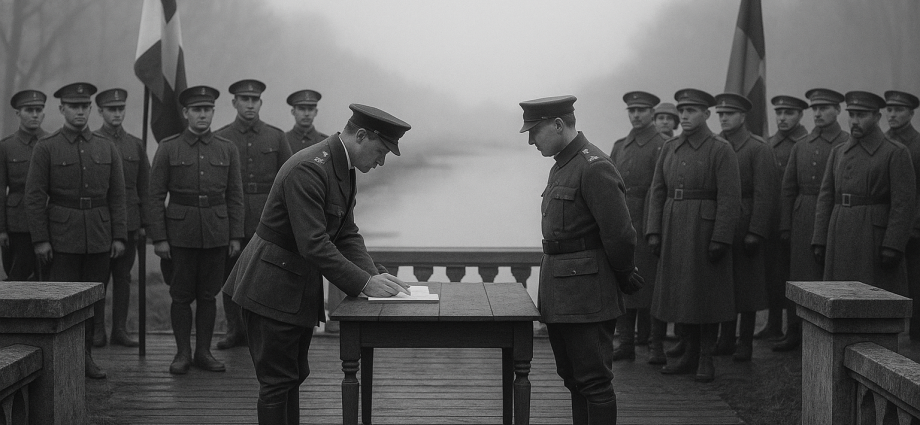
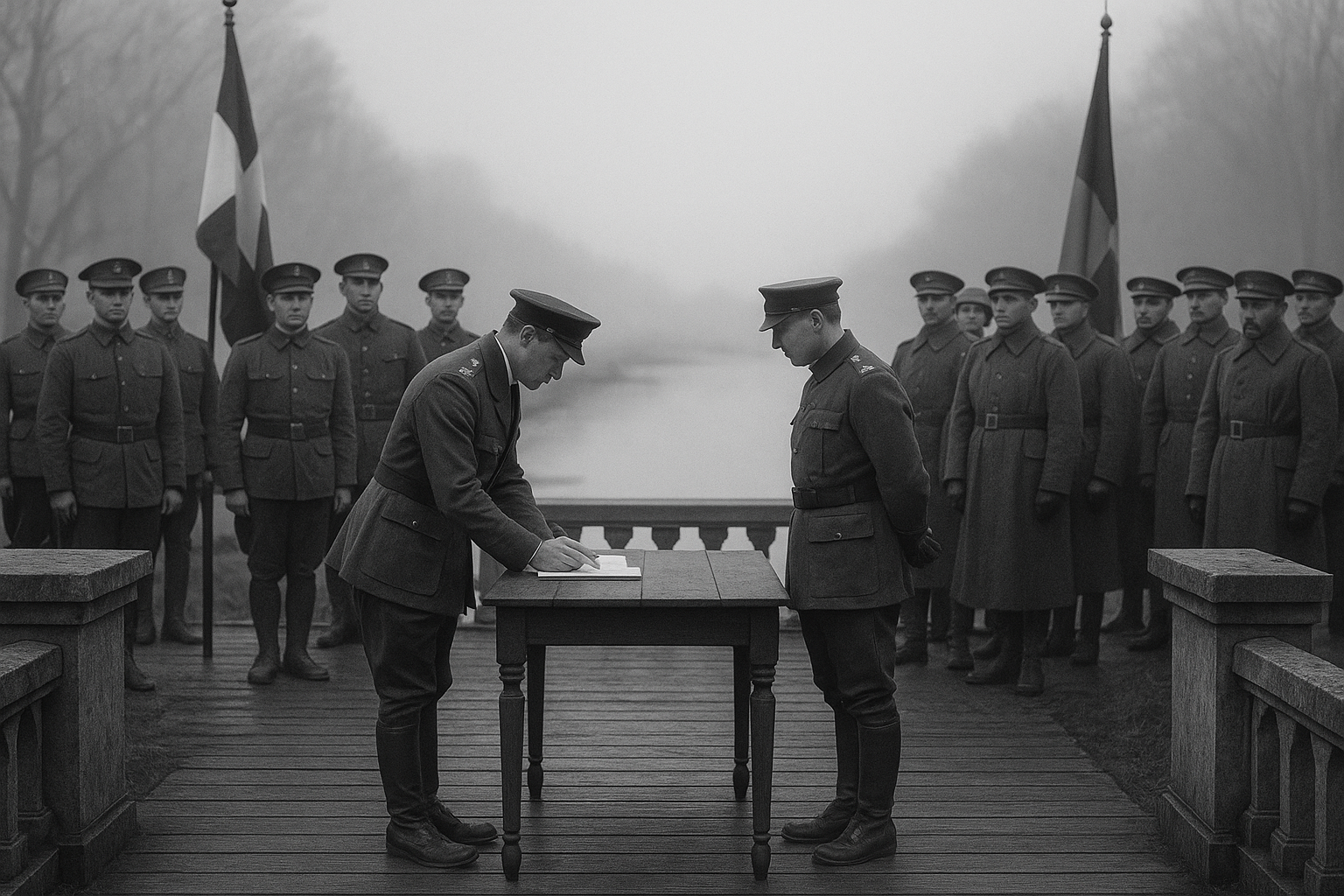 At precisely noon yesterday, representatives of both nations met at the ruined customs house at Hallowmead Crossing, where the River Nord first bends eastward toward the sea. There, upon a simple wooden table draped with neutral cloth, the two delegations signed what will henceforth be known as The Peace of Honour.
The terms are fair, if firm. Marelia renounces all claims south of the Nord and agrees to dismantle its military installations within twenty miles of the frontier. The Kingdom, for its part, demands no tribute and no territory—only a guarantee of silence and the return of our captured citizens.
“The measure of a just victory,” said the King in his address to the nation, “is mercy enough to end the need for another.”
The Scene at Hallowmead
It was a sight that stilled every tongue. The Marelian delegation arrived first—grim-faced officers in soiled uniforms, their boots still caked with the mud of Northreach. Behind them, the Eyehasseen convoy approached in immaculate order, their banners folded, their rifles slung muzzle-down.
When the two commanders met in the middle of the bridge, they paused, saluted, and shook hands. No cheers rose from the watching ranks. Only the wind moved, carrying away the echo of the last war cry.
Reaction Across the Realm
In Inverness, crowds gathered around the Guild bulletin boards as the first telegraphs confirmed the signing. For a long moment, there was silence—then applause, then tears. Bells tolled from every tower; church choirs began impromptu hymns of thanksgiving.
At the Royal Palace, His Majesty appeared on the balcony beside the Prime Minister and the Archbishop of Northmarch. The King’s words were brief:
“We have answered injustice with strength, and strength with compassion. Let no man boast of war, but remember who bore its cost.”
Across the Realm, citizens knelt in prayer. Factory whistles blew in unison at sunset. Soldiers returning from the northern front found garlands hanging over the gates of every village.
The Fate of Marelia
Within Marelia, the picture is bleaker. The once-proud capital of Marel burns only in its chimneys now. Reports from foreign correspondents describe ration lines stretching into the fog, and families greeting the news with both relief and disbelief.
“Peace is harder to believe than war,” said a Marelian woman to an Eyehasseen medic at a relief station. “But I will try.”
Already, the Royal Relief Corps has crossed the frontier bearing food, medicine, and engineers to rebuild what was destroyed. “We will not let the seeds of bitterness take root,” said Colonel Varrin. “A ruined neighbor invites ruin again.”
Memorials and Memories
Plans are underway to erect a memorial at Highmere Cross, the site of the Kingdom’s final victory. Its inscription has already been chosen from the words of a letter found on a fallen soldier:
“We fought not to conquer, but to stop the conquering.”
Meanwhile, the Resolute and her sister ships will return to the docks of Thornwold Aerodrome for refit and display. Children will be allowed to walk her decks on the first Peace Day, a new holiday declared by royal decree to commemorate “the end of Marelia’s folly and the beginning of Eyehasseen’s forgiveness.”
The Quiet Triumph
Not all victories roar. Some simply exhale. The air over Northreach is sweet again, the fences are mended, and the only lights on the horizon are the stars.
The people of Eyehasseen will remember this war not for its battles but for its restraint—the calm of men who knew they were right, and the mercy of a King who chose justice over vengeance.
The printing presses that once shouted of invasion now whisper of rebuilding. And through the open windows of the Times-Observer office, one can hear the faint chime of a clock striking twelve — not for war, but for peace.