Times-Observer – International & Humanitarian Affairs
The people of Eyehasseen have long known the sea as both a friend and a formidable master. But even our storied coasts have not witnessed the kind of ruin now reported from Hewarth, a neighboring realm across the Narrow Strait. Weeks of unseasonable storms battered Hewarth’s eastern coastline, destroying fishing villages, flooding croplands, and leaving entire families without shelter or food. Only when the storm season finally broke did the scale of the devastation become fully known.
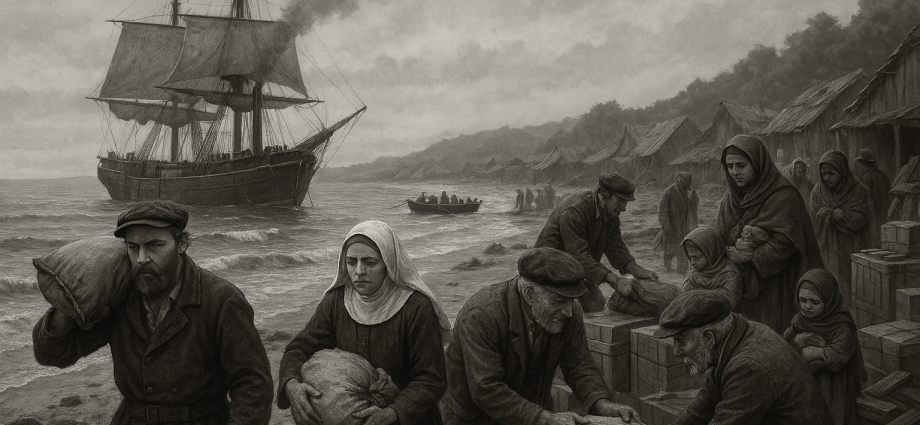
In response, the Crown authorized the launch of a Mission Fleet from Inverness—a convoy of three supply ships, one hospital barge, and several smaller craft carrying volunteers from guilds, parishes, and charitable houses. The fleet departed at first light last Seventhday, flying the Kingdom’s colors beside the white pennants of mercy.
What they found upon arrival would test not only seamanship and logistics, but the deeper moral character of those who serve.
A Coastline in Ruin
Initial reports describe shorelines where entire rows of cottages lie flattened, their roof-beams washed far inland by storm surge. The great fish-drying racks, the pride of Hewarth’s coastal economy, are now nothing but tangled driftwood. Wells are fouled, stored grain has spoiled, and the small herds of goats kept by local families were scattered or lost entirely.
Even so, the people of Hewarth were not idle. Before the Mission Fleet had even anchored, villagers were clearing debris with makeshift tools, erecting temporary windbreaks, and gathering dried brushwood for cooking. The first officers ashore were struck by the discipline and unity of families who had lost nearly everything yet carried themselves with quiet resolve.
“It felt as though we stepped into a parish suddenly deprived of its tools, but not its spirit,” said Sister Glynis, one of the healers aboard the hospital barge Mercy of the Strait.
Helping Hands, But Not Heavy Ones
 From the first day, the Commanders of the Mission Fleet stressed that Eyehasseen’s role was to support, not to supplant, Hewarth’s own recovery efforts. Too often, as senior delegates noted, foreign aid—however well intentioned—can overshadow local leadership. This mission aimed to do differently.
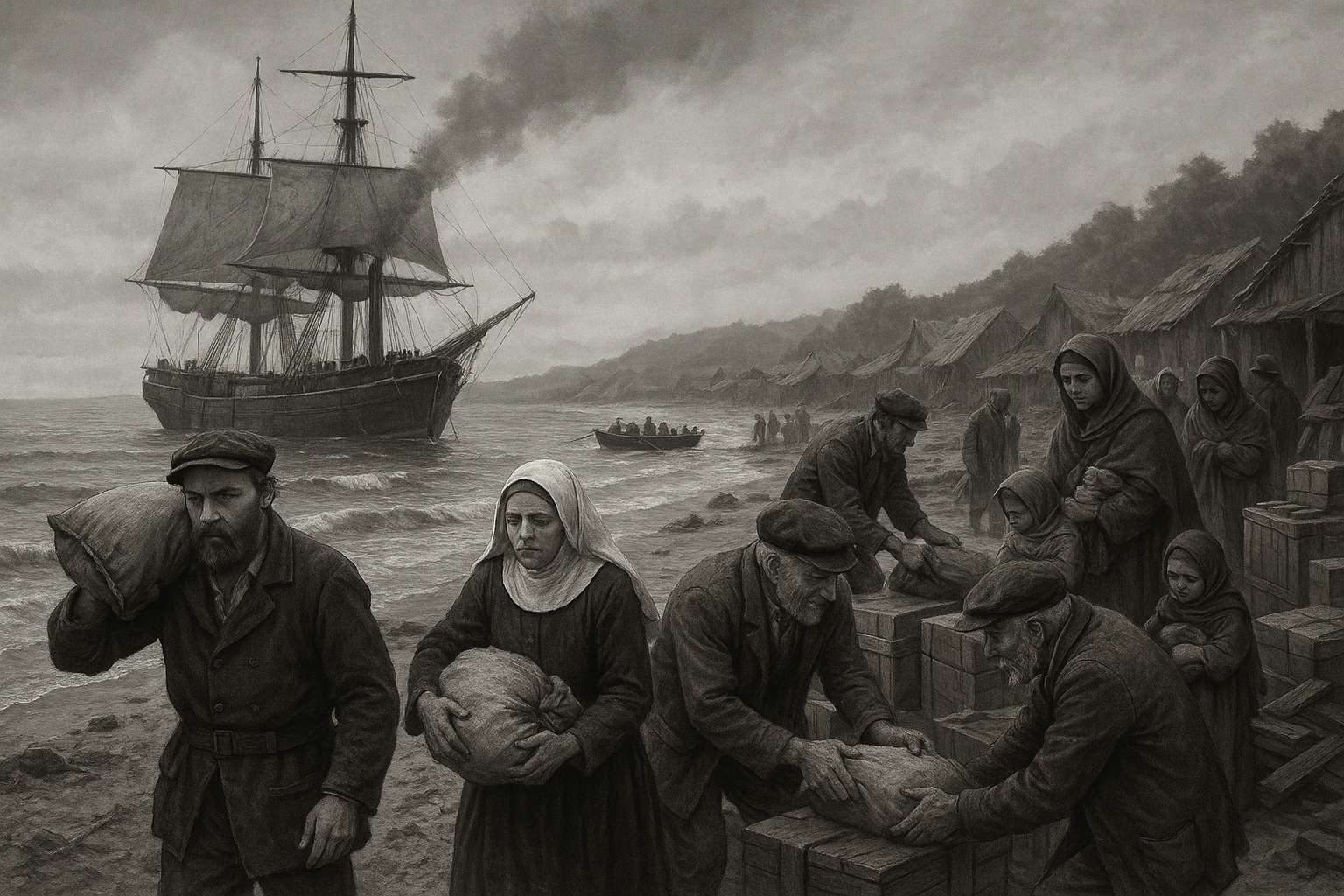
Supplies were not simply distributed; they were handed over to Hewarth’s village elders and councils, who then determined how best to allocate food, blankets, timber, and medicines among their own people. Local fishermen, though their boats were damaged, guided Eyehasseen carpenters in understanding Hewarth’s traditional hull-shapes so repairs would honor the islanders’ methods rather than impose foreign ones.
This cooperation proved especially important when the Mission’s engineers discovered that Hewarth’s seawalls, long neglected due to lack of funds, had failed in several places. Rather than drafting a unilateral rebuilding plan, the Fleet’s commander, Captain Norwyn Hale, insisted on joint design sessions with the elders.
“You know your sea. You know your shore,” he told them. “We have hands and tools. Let us work according to your wisdom, not ours.”
The Work of Many Hands
Within days, the joint crews began clearing the old seawall stones, inspecting each for cracks before relaying them in the traditional interlocking pattern used by Hewarth masons for generations. Meanwhile, guild carpenters constructed temporary shelters, and the monks onboard organized simple soup kitchens using grains and vegetables purchased from Eyehasseen markets.
Children helped carry driftwood. Older villagers cooked meals for the workers. One of Hewarth’s parish priests walked the shoreline each evening, blessing each crew as they returned from labor.
The Fleet’s healers tended to injuries caused by falling timbers and flooding; the hospital barge’s physicians worked with Hewarth’s herbalists to share remedies. Despite the exhaustion, there was a steadying sense that both peoples were laboring toward a common purpose.
A Lesson in Humility and Hope
The Mission Fleet’s presence has rekindled discussion in Inverness about Eyehasseen’s role abroad. Many in the capital remember past relief efforts that—without malice, but through haste—imposed solutions rather than fostering cooperation. This mission, observers say, marks a welcome return to the older tradition of service: offering aid through humility, listening more than commanding, and presenting strength without overshadowing those it seeks to help.
In older times, the Kingdom spoke of the “Strait Duty”—the responsibility owed to neighbors whose shores face our own. It was understood not as charity alone, but as the natural fruit of kinship among seafaring peoples. That spirit appears renewed.
Looking Ahead
The Mission Fleet is expected to remain in Hewarth for at least a fortnight. Vegetable seeds, fishing line, nails, and simple tools are being distributed to help families rebuild their livelihoods. The seawall restoration continues steadily, and the hospital barge reports declining cases of storm-related illness each day.
For all the destruction Hewarth has endured, its people remain steadfast—and the partnership forged in these difficult days may well endure long after the last stone of the seawall is laid.
As one Hewarth elder said while watching Eyehasseen and Hewarth workers standing shoulder-to-shoulder in the surf:
“When the sea took from us, our neighbors sent hands, not orders. That is something we will not forget.”