Times-Observer – Maritime & Public Safety
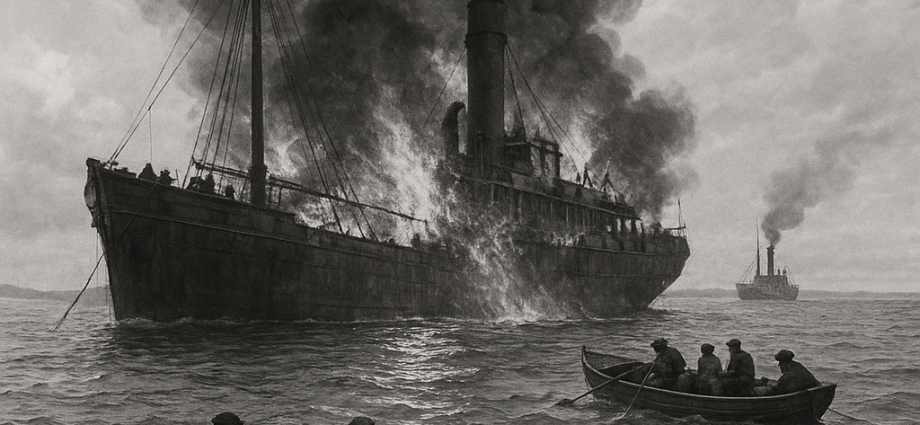
Dawn broke red over Eastreach Bay yesterday—not from the sun alone, but from flames leaping across the deck of the Mariner’s Gift, a medium-class merchant vessel bound for the capital with a hold full of wool bales, powdered dyes, and imported spices. What should have been a routine arrival before breakfast became, within minutes, one of the most dramatic maritime emergencies the Bay has witnessed in a decade.
According to the Harbourmaster’s Office, the Mariner’s Gift had signaled no distress during the night crossing. Seas were calm, and the vessel was running slightly ahead of schedule. It was only as the ship approached the stone beacon at Eastreach’s outer channel that watchmen noticed a strange, rising glow from her midship deck. At first they suspected reflection from the morning horizon—until a plume of black smoke erupted upward like a banner.
As the alarm bells sounded from the coast towers, fishermen already on the water were the first to respond. Small boats from Harthaven, Siltbar, and Narrowford turned their bows toward the burning vessel, braving thick smoke and drifting embers. From the shore, townsfolk could see at least four fishing craft converging on the Mariner’s Gift as it drifted perilously close to the shoals.
The Cause Unknown
By the time the Royal Coast Guard cutter Swift Heron reached the scene, the fire had already consumed the aft cargo deck. Crewmen aboard the merchant ship were seen launching their lifeboats, though one capsized in the churning heat as the crew struggled to free it from tangled ropes.
Initial reports suggest the fire began in the lower hold, where crates of dye-powders had been stored. Though non-flammable on their own, when such powders settle on oily cloth or wool, a single spark can create a deadly chain reaction. A ship’s galley stove, a lantern knocked loose during the night, or a shift in cargo may all be possible triggers. The Harbourmaster has ordered a full investigation.
Fishermen to the Rescue
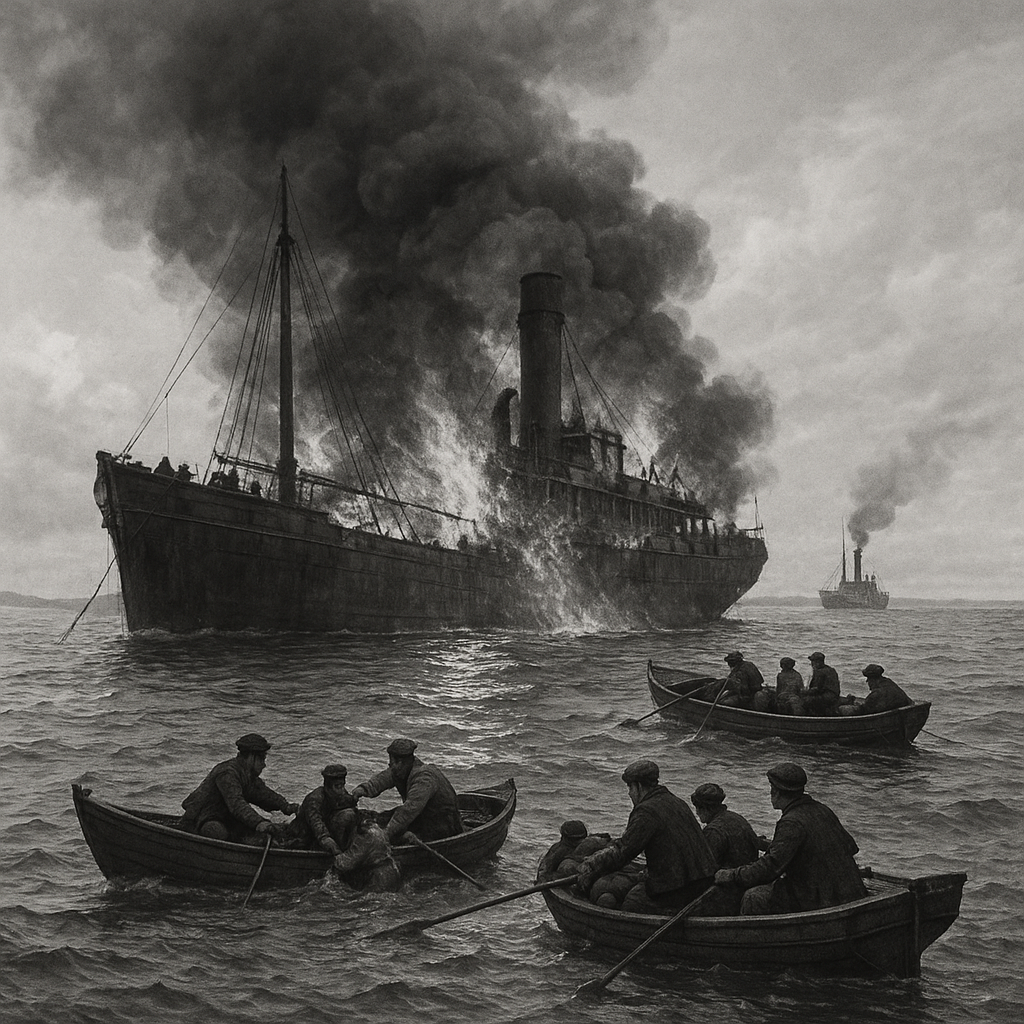 If not for the courage of the fishermen, the toll might have been far worse. Despite their small size, the fishing boats maneuvered with remarkable skill, cutting across the burning ship’s bow to retrieve crew who had leapt overboard. Witnesses say one fisherman, Garreth Veal, stood at his tiller guiding his boat dangerously close to the flames while his son hauled two sailors from the water.
“It wasn’t heroics,” Garreth told the Times-Observer afterward, “just seamanship. When a man is in the water, you go and get him. That’s the way it is.”
Other fishermen used wet sailcloth to shield themselves from cinders as they paddled closer, shouting directions and encouragement. Their boats made repeated runs between the sinking lifeboats and the Coast Guard cutter, ensuring every crewman was accounted for.
The Swift Heron’s captain later confirmed that all hands from the Mariner’s Gift survived, though several are being treated for smoke inhalation and burns at Eastreach Infirmary.
Containing the Blaze
Once all crew were rescued, the priority shifted to preventing the burning vessel from drifting into the harbor, where it could have ignited nearby warehouses or seawall stores. The Coast Guard used weighted chains to anchor the Mariner’s Gift outside the harbor mouth, allowing the fire to burn itself down under controlled watch.
By midday, only the ship’s charred ribs and the collapsed remains of her quarterdeck were visible above the tide. Salvage experts say the hull is likely beyond repair.
Lessons for the Kingdom
The disaster has renewed attention to shipping safety, especially among smaller merchant companies whose vessels often carry mixed cargoes: fabrics, dyes, oils, foods, and machinery. The Ministry of Trade is expected to conduct surprise inspections in the coming weeks, focusing on lantern placement, cargo separation, and nighttime watch procedures.
Yet perhaps the most enduring lesson is not technical but moral.
In an age of hurried trade and swelling ports, the response of the Eastreach fishermen stands as a living reminder of the virtues that shaped the Kingdom’s maritime tradition: courage, steady discipline, humility before the sea, and loyalty to one’s fellow man. No decree can teach such things; they are passed on at the oar, in the rigging, and between fathers and sons who learn the tides by heart.
The sea can be cruel, but yesterday it also revealed something enduring: the unbroken character of the people who work upon it.