By Staff Correspondent, Inverness Bureau
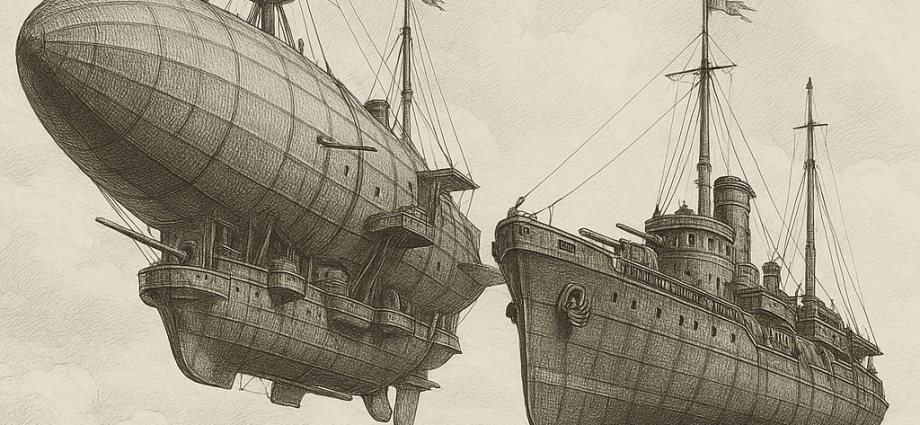
INVERNESS — Though the Kingdom of Eyehasseen has not formally declared war upon its western neighbour, Marelia, events above the frontier are beginning to resemble one. For the past fortnight, merchant sailors and coast-watchers alike have reported the ghostly silhouettes of dirigibles drifting through the dusk—our own banners glinting like brass halos in the dying light, and others, less familiar, lurking at the edge of cloud.
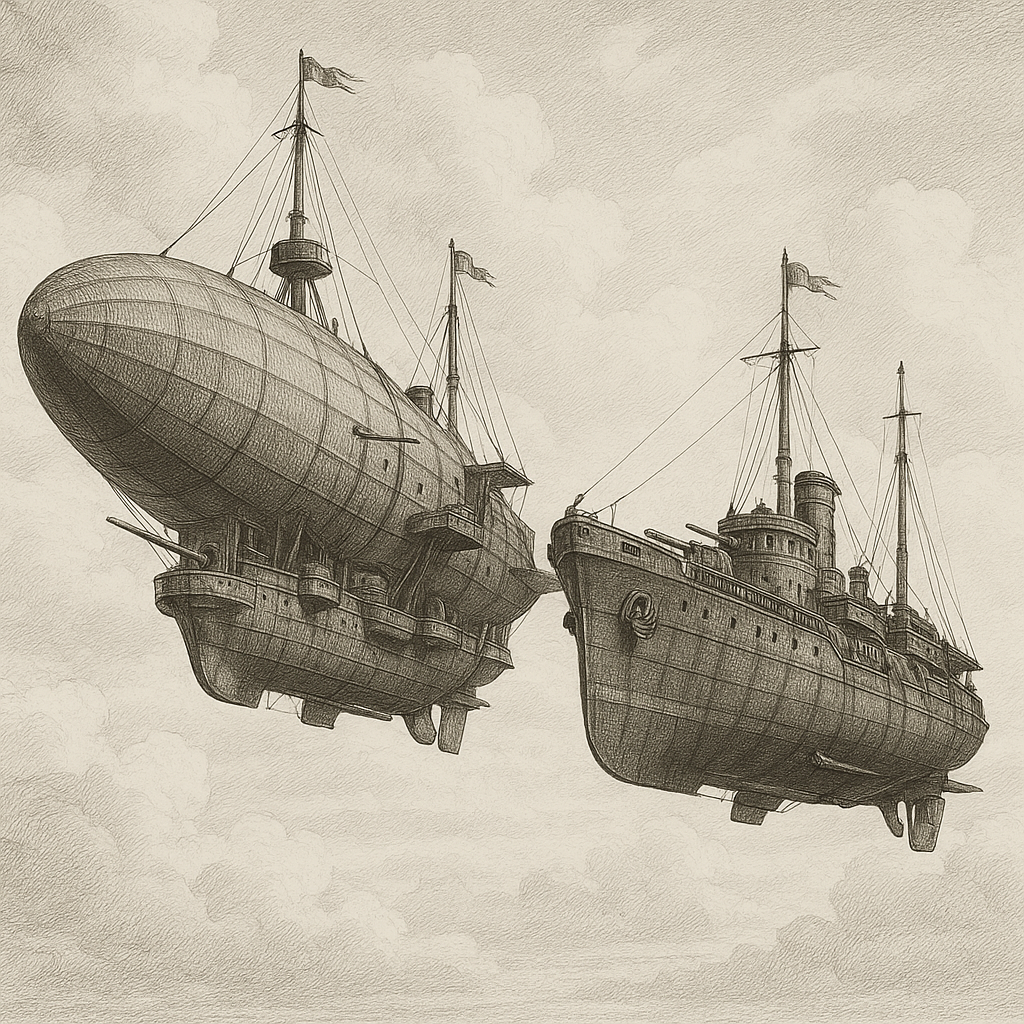 The Royal Air Fleet has increased its patrols “for purely defensive purposes,” according to the Ministry of War and Conflict. Yet the sky tells a different story. On two successive evenings, flashes were sighted above the Bay of Tharl, followed by the dull roll of distant concussions. Witnesses describe “a lantern’s bloom, then a rumble like falling timber.” One fisherman, still shaking from the sight, told the Times-Observer that he saw a Marelian craft veer sharply before disappearing into fog. “There was smoke trailing her—thin, like a thread unraveling in the wind,” he said.
Officials refuse to call these encounters battles. Instead, they use phrases such as “aerial proximity incidents” and “mutual displays of positional awareness.” Privately, officers admit that warning shots have been exchanged, though none claim to have drawn first fire.
At the centre of the growing drama stands Lady Eugenia Tolliver, Admiral of the Skies, who commands the fleet from her flagship, the HMS Resolute. In a brief statement delivered from the air-docks of Inverness, she affirmed the Fleet’s readiness:
“Our duty is to watch the horizon, and we are watching it most attentively. The peace of the Kingdom rests not in parchment but in altitude.”
Three new vessels—the Resolute, Vigilant, and Saint Camber of the Clouds—now patrol in continuous rotation. From the streets below, their polished hulls catch the morning sun, silent and serene, like guardian angels suspended by invisible thread. Children point to them from tram windows; shopkeepers pause mid-sale to squint upward, counting fins as if they were omens.
Inside the air-yards of Ardent Vale, production continues at a pace unseen since the Great Exhibition. Teams of apprentices sew reinforced silk sheathing, engineers hammer rivets by lamplight, and messengers sprint between hangars carrying crates of hydrogen cells. A new poster campaign urges citizens to donate linen and cordage “for the Defence of the Heavens.” The Ministry insists that all contributions are voluntary; the tone of the posters suggests otherwise.
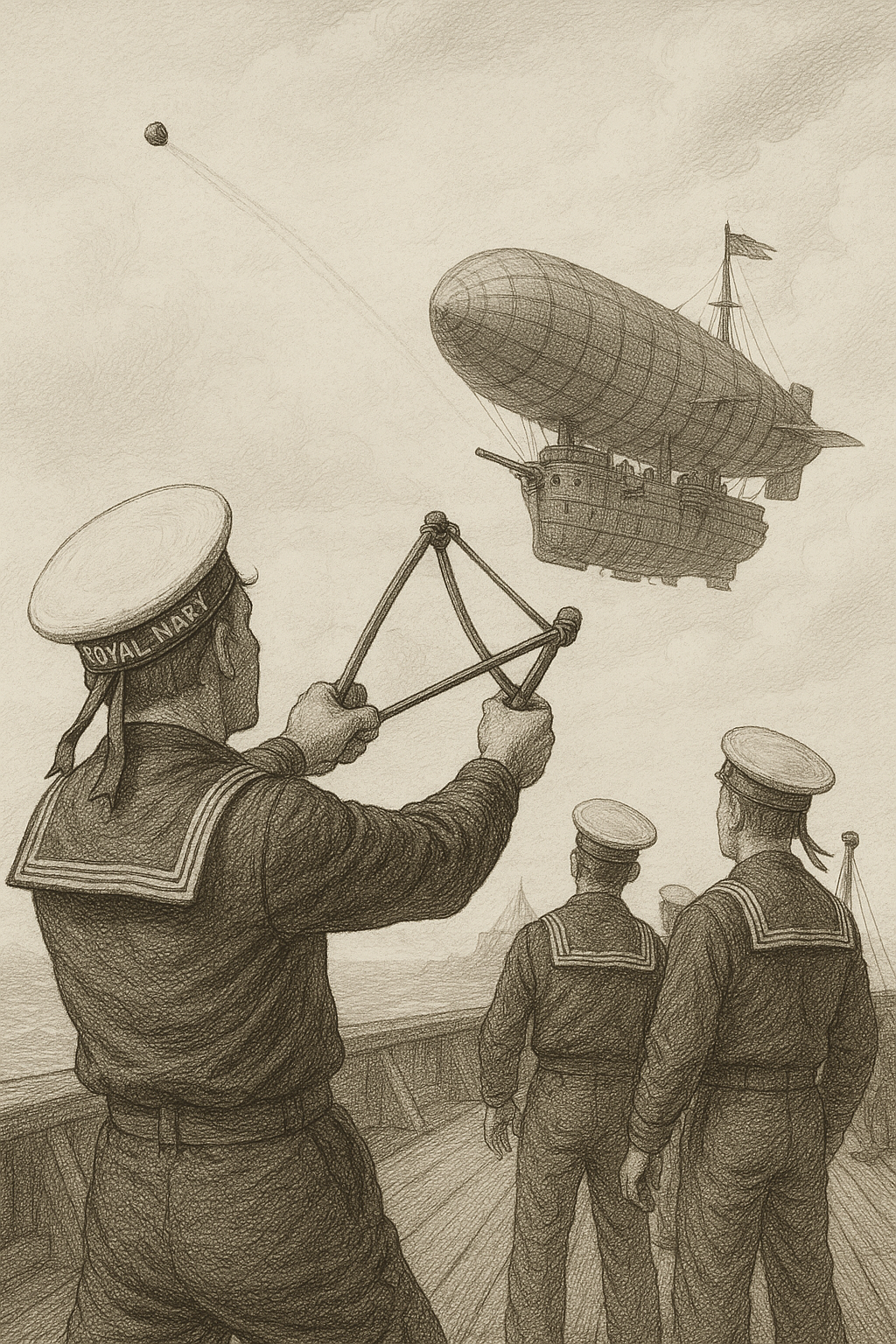 Not all share the government’s composure. Merchants along the coast complain of insurance rates “rising faster than a balloon on payday.” The Association of Maritime Traders has petitioned Parliament for compensation should “acts of unacknowledged warfare” disrupt shipping lanes. No answer has been given.
Meanwhile, in Marelia’s capital, state bulletins accuse Eyehasseen airships of violating neutral skies. The Royal Press Office dismisses these statements as “preposterous and poorly translated,” but analysts note that Marelia has quietly recalled its ambassador from Inverness “for consultation.”
In the taverns near the western docks, talk grows more reckless by the hour. “If it’s war they want, let’s stop pretending otherwise,” grumbled a dock-foreman nursing his pint. Others counsel patience, arguing that so long as the official word war is not spoken, life—and wages—must continue.
Back at the Ministry, clerks move maps across polished tables, tracing invisible lines of airspace sovereignty. One insider confided that the Prime Minister prefers to describe the situation as “a misunderstanding conducted at altitude.” Nevertheless, a confidential memo circulated this morning instructs all ministries to prepare “contingency plans for atmospheric hostility.”
Late last night, residents of Westmarch heard engines overhead, followed by a hum that “seemed to hang in the rafters.” Some swore they saw lighted signals flicker between the clouds—three short, one long—though no one could agree on which nation sent them. By dawn, the sky was empty again.
Peace, it appears, is holding—but only because both sides are gripping it so tightly they dare not breathe. As one weary ground crewman at the Inverness Airdrome put it while polishing a length of brass tubing:
“They call it a patrol, we call it a parade. Either way, it only takes one fool with a match to set the clouds on fire.”