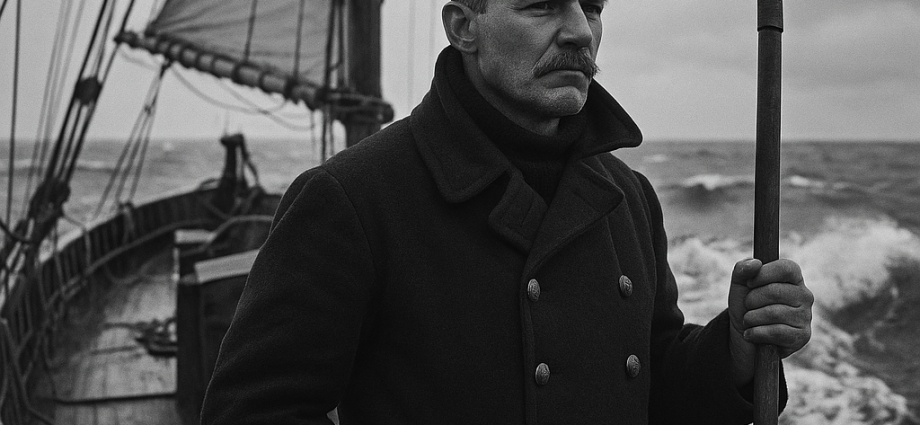
By Aldren Piers, Maritime Correspondent, The Times-Observer
The sea that borders the western kingdom is a restless creature—never cruel without reason, but never tame enough to trust. Its moods change by the hour: glassy calm at dawn, white-fanged by noon, black as molten iron by dusk. And it is along these unpredictable waters that the Royal Coast Guard keeps its eternal vigil—an old service with a young spirit, made up of sailors who seem born with saltwater in their blood.
For a week I lived aboard the RCS Vigilant, one of the sleek cutter-brigs that patrol the fog-choked coast from Ravenshore to Thornwold. These ships are not as grand as the Royal Navy’s war cruisers, nor as storied as the merchant fleet, but among sailors they command a special reverence. “The Navy fights wars,” Captain Henslow told me. “But we fight the sea. And the sea never quits.”
Dawn on the Vigilant
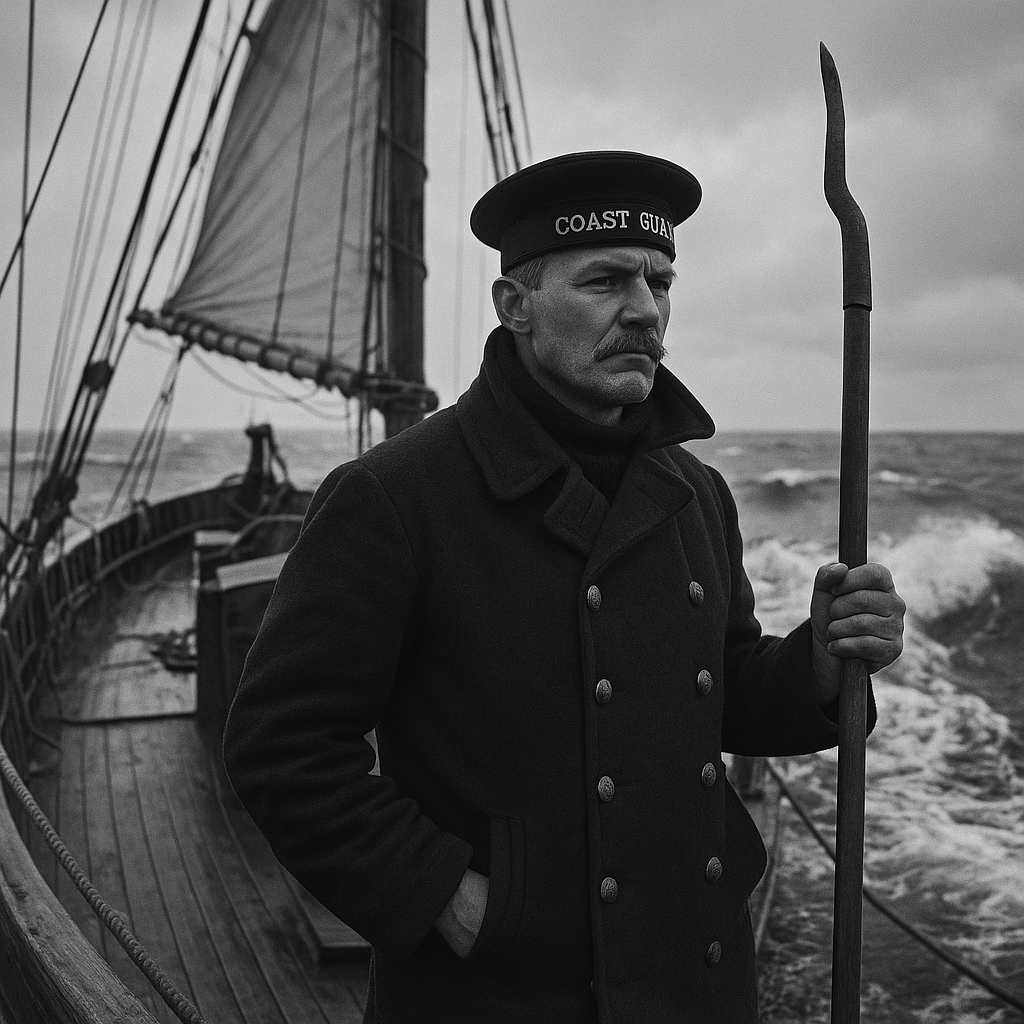 On my first morning aboard, the crew was already moving at a brisk rhythm long before the sun breached the horizon. Lanterns flickered across the deck as deckhands hauled ropes slick with dew. The smell of fresh tar, wet hemp, and boiled coffee filled the air.
The Vigilant moves with a strange grace—long, narrow, and quick-footed, almost seeming to skip across the waves. When the wind rises, the hull hums.
“We’re the first to see what the sea throws,” said Boatswain Corin Thatch, a veteran with a scar across his cheek and a laugh that carried over the spray. “Storms, smugglers, drifting wreckage, foolish fishermen—sometimes all on the same day.”
The Fog Patrol
It wasn’t long before the Vigilant slipped into its most harrowing environment: the Greywater Fog, a stretch of sea where cold currents collide, birthing a haze so dense it swallows entire ships whole. Here the world narrows to the width of one’s outstretched arms. The crew moves slowly and speaks softly, as though afraid of disturbing whatever sleeps beneath the waves.
Lookouts stand at the bow with long poles to probe for hidden rocks. The ship’s great foghorn bellows every thirty seconds, its deep cry shuddering through the hull.
During our patrol, we encountered a drifting fishing skiff, half-filled with seawater, its oars gone. Two Coast Guardsmen boarded it with ropes and lanterns, their shapes melting in and out of the mist like ghosts wearing oilskins.
“No logbook, no crew,” Thatch murmured. “The sea keeps more than she returns.”
Storm Watch
Two days into my voyage, the sky turned iron-gray and the swells began to rise. A storm was rolling in from the northwest. The Vigilant, rather than fleeing to harbor, turned toward it.
“That’s our job,” Captain Henslow said simply. “If a ship is out there in trouble, they’ll need us more than we need comfort.”
The storm hit like a hammer. Rain slapped the deck in sheets. The sea bucked and roared, spraying icy foam that stung the eyes. The Vigilant climbed waves like hills and plunged down their far sides with bone-rattling force.
Amid the chaos, a flare shot up—a faint arc of red against the black sky.
“Distress signal!” cried the lookout.
The crew moved at once. Lines flew. Lanterns were shielded. The Vigilant circled toward the flare as the wind howled like something wounded. The ship in distress was a small merchant lugger, half-swamped, her mast cracked like a snapped tooth.
Four Coast Guardsmen boarded her under conditions that would make a sane person pray. Together they lashed her hull, pumped out water, and patched the worst of the splintering. We towed her back toward Thornwold with the storm snapping at our heels. By midnight, both vessels limped safely into the harbor.
The rescued captain wept openly on the Vigilant’s deck. “We thought we were gone,” he said. “We were sure.”
Thatch clapped him on the back. “The sea takes who it wants. But not today.”
Night Watch Reflections
On my final night, the crew gathered below deck around a lantern to drink hot broth and swap tales—of phantom lights, of whales the size of temples, of a storm so mighty it lifted a cutter clear out of the water. Some stories were true. Some were not. But all were told with reverence.
“The sea teaches you humility,” Henslow said. “And service. And patience. And fear, when it’s needed.”
As we returned to port the next morning and the Vigilant slid gracefully into her berth, I realized something—not a single Coast Guardsman ever saluted the sea. They nodded to it, as one nods to a respected elder, but never saluted.
“Why not?” I asked Thatch.
He grinned.
“Because the sea doesn’t salute back.”
And with that, he stepped off the gangplank, his boots echoing on the wooden pier, ready to meet the next day’s tide.