by Health and Fitness Staff
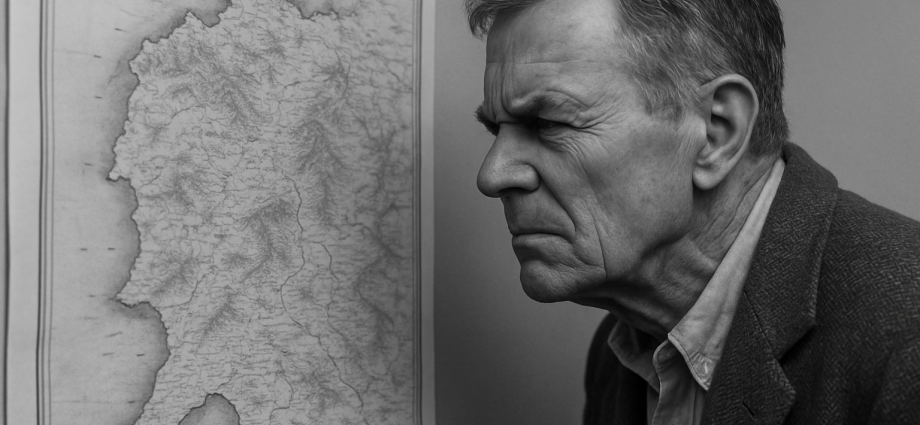
Since unveiling the Kingdom’s latest official map — a beautifully detailed, finely inked rendering of Eyehasseen and its twelve provinces — opticians across the realm have noticed a predictable but avoidable problem: Excessive Map-Consultation Squint.
The map, widely praised for its artistry, contains extraordinarily precise borders, elevations, contours, and coastal variations. It is, by all accounts, a triumph. Unfortunately, many of its features are so detailed that citizens lean forward and squint intensely in order to admire them.
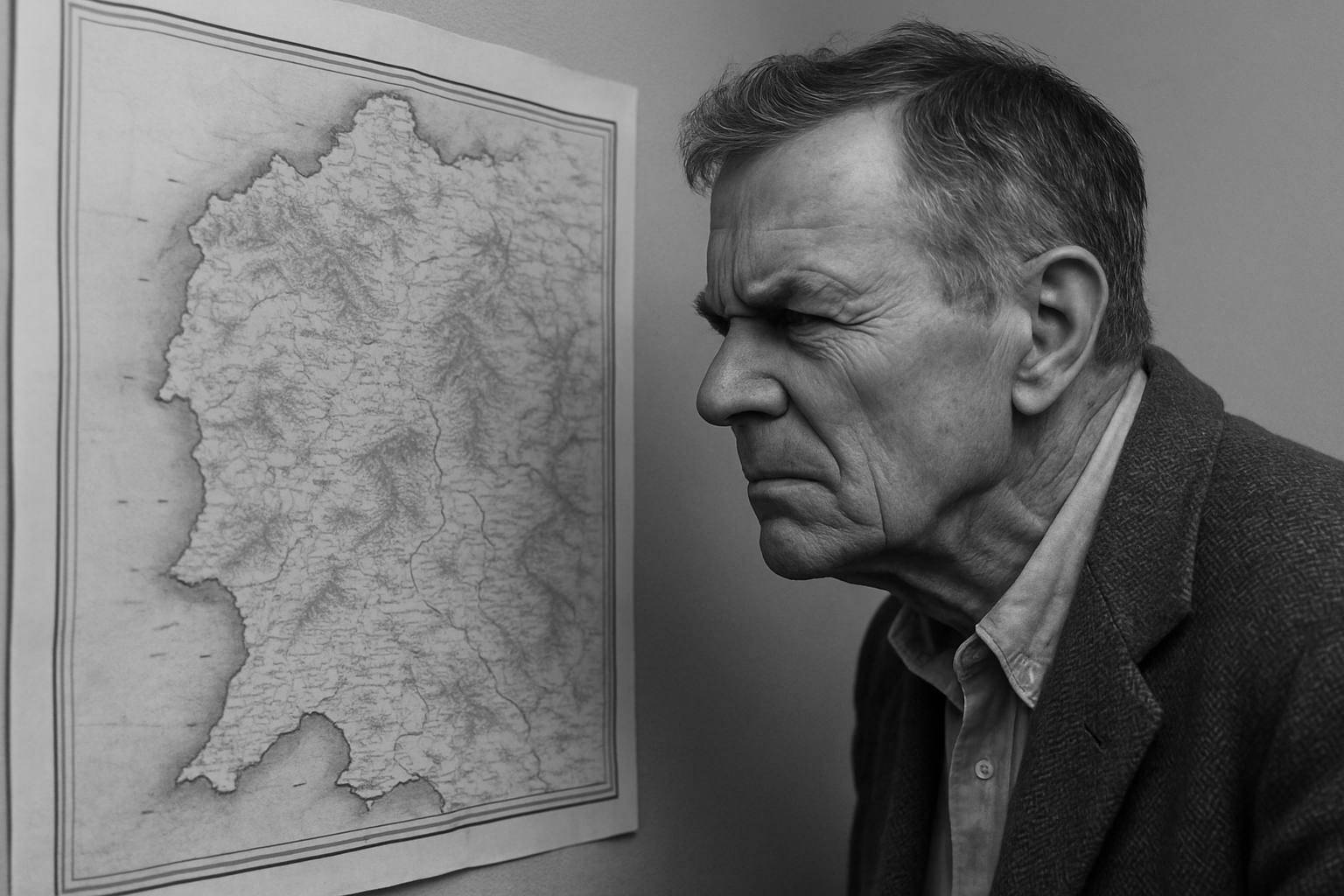 “People are staring at the thing like it’s a coded message,” said Dr. Fiona Parnell, senior optometrist at the Inverness Vision Clinic. “They press their faces close, tilt their heads, and attempt to decipher lines that were never meant to be read at nose-range.”
Common symptoms include eye strain, brow tension, throbbing temples, and the impression that one’s vision is “working overtime.” Citizens often report feeling fine until they try to walk away, whereupon everything looks temporarily flat.
Merchants selling the new household poster edition confirm a rise in customers returning to ask, “Is this one smaller than before?” It is not.
The Ministry of Health attributes the problem not to the mapmakers but to the public’s enthusiasm. “This is an exceptionally beautiful map,” the Ministry said in a statement. “However, it is not necessary to inspect every millimetre of coastline with forensic intensity.”
One man admitted he spent forty minutes attempting to locate an unnamed hill he was certain existed. When told the hill was decorative shading, he looked betrayed.
The Royal Cartographers Guild responded diplomatically. Guildmaster Lorian Vesk stated, “We encourage admiration, but not eye injury. Maps are meant to be viewed at arm’s length. If you must squint, take intermittent breaks or acknowledge that the line you’re chasing is simply a riverbank.”
Opticians recommend simple interventions: adequate lighting, regular blinking, occasional stepping back several paces, and resisting the urge to trace tiny borders with a fingertip. “People poke the map as if trying to activate it,” Dr. Parnell noted.
Schools have also adjusted. Several teachers reported students spending entire lessons staring at the wall map, arguing about whether a faint marking was a trail or a printing smudge. Headmaster Alwin Durn reassured parents, saying, “Your children are not losing their eyesight. They are merely enthusiastic geographers.”
Still, cases persist. The Ministry will soon distribute pamphlets titled See the Kingdom, Don’t Strain to See It. The document reminds citizens that the provinces will remain where they are whether or not one examines every contour line.
Some humour has arisen from the situation. Taverns now hold “map-squint contests,” awarding prizes for those who can identify obscure landmarks without making an exaggerated facial expression. Results have been mixed.
As Dr. Parnell puts it: “Maps should broaden your horizons, not narrow your vision.”