by Health and Fitness Staff
The Kingdom’s thriving musical culture has long been a source of communal pride, but the recent pre-festival rehearsal season has stretched public patience — and tendons — thin. Physicians report a widespread and mildly exasperating condition now known as Ambient Lute Fatigue (ALF).
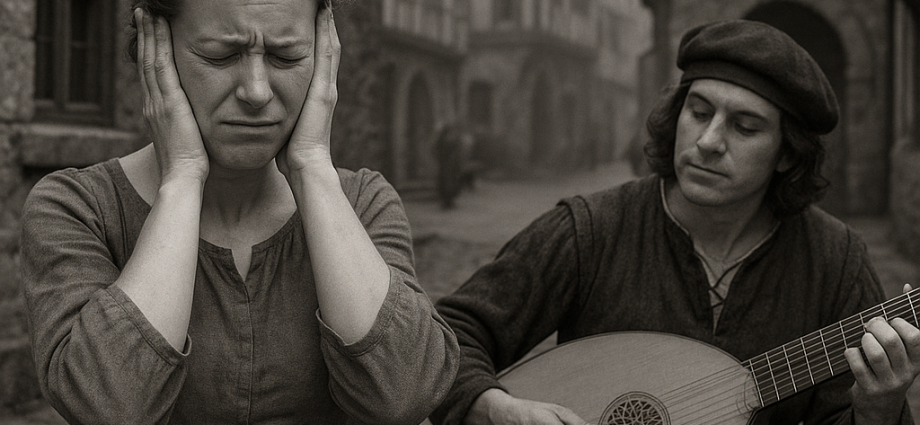
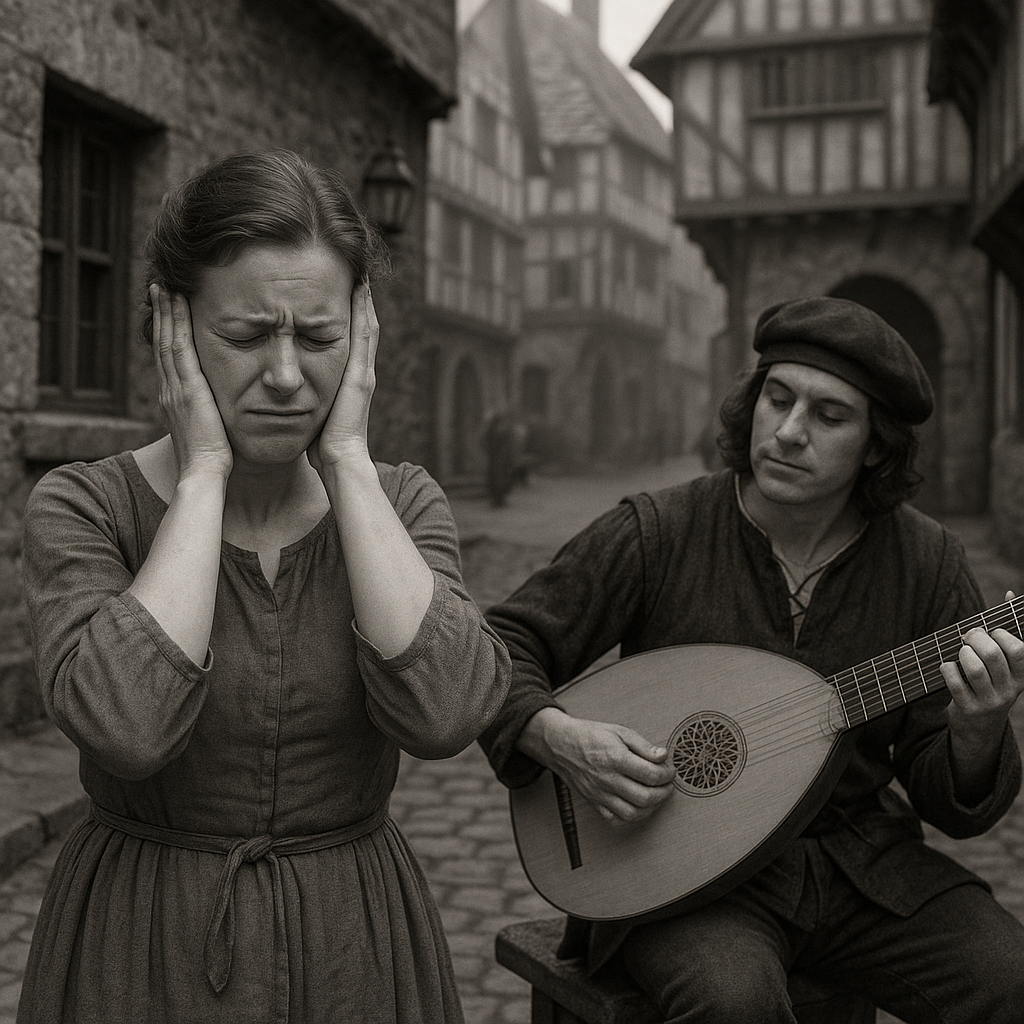
ALF is neither dangerous nor particularly painful. It is, however, persistent. Citizens describe it as “a sense that one’s nerves have been lightly plucked for several days.” The cause: the sheer number of lute players practicing in streets, courtyards, alehouses, gardens, and, in one reported case, a cheese cellar.
“We encourage musical expression,” said Dr. Martha Leigh, a neurologist at the Royal Infirmary, “but the lute is uniquely problematic. Its tones are bright, quick, and impossible to ignore. The continual twanging can create a low-level auditory tension, especially when five lute players decide to practice in different keys within the same square.”
Local luthiers confirm a booming business. “Everyone suddenly wants a lute,” said artisan Bramwell Knot. “Even people with no musical training. One woman told me she only wanted it for ‘ambience.’ That is not a use for a lute.”
The condition typically begins with mild irritability. Citizens report phrases such as “If I hear one more jaunty flourish…” or “Why must all lutes sound like they’re smiling at me?” Over time, those exposed to high lute density develop tension in the jaw, temples, and upper shoulders.
A grocer from Marshwick described her experience: “It’s not that I dislike music. But every time I stepped outside, someone was plucking the same three notes, as if auditioning for a position nobody offered. Eventually I found myself twitching in synchrony with each strum.”
The Ministry of Health consulted the College of Musicians, which confirmed that over-practice is common in the weeks leading up to the mid-year festivals. “People want to impress their neighbours,” explained College spokesman Lionel Torwick. “But enthusiasm must be tempered with consideration. Not every courtyard needs its own ballad.”
 As ALF cases rise, doctors recommend temporary exposure to instruments incapable of producing bright plucked notes. “Bass drums, low horns, even the humble spoon ensemble — these can help rebalance the auditory environment,” Dr. Leigh said. “Counter-melodies of a deep, reassuring nature soothe the nervous system.”
In response, Inverness has established “Quiet Lanes,” designated streets where lute playing is prohibited during morning hours. Instead, musicians are encouraged to move their practice sessions into open fields. Reports indicate the cows remain indifferent.
Not all citizens see ALF as a problem. One tavern owner insists business has improved. “People come in to escape the lute rehearsals outside,” he said. “Then they stay for a drink. I’ve never been busier.”
Still, the Ministry is wary of long-term strain. A recent advisory encourages musicians to limit outdoor practice to “a reasonable number of hours, ideally fewer than ten per day,” and recommends tuning lutes away from bedroom windows.
When asked whether the Kingdom might regulate lute ownership, the Ministry laughed politely. “We shall not be licensing lutes,” the spokesperson said. “But we do ask players to show mercy.”
Festival organisers, meanwhile, promise that all rehearsals will be worth it when the great celebratory concerts begin. Whether the public agrees remains to be seen.