
by Brother Tarsisius
There is a moment when the stranger knocks — at the gate, at the border, at the edge of the known — and the community within must reckon with two voices: one that says “Let them in”, and another that says “We must guard ourselves.” For Christians, this moment carries deep resonance: from the Good Samaritan to the parable of the sheep and the goats, the New Testament offers both invitation and caution. And so it is today, as our nation contends with large-scale migration, with porous borders, with the swelling ranks of the stranger among us.
A recent report by CatholicVote (America) entitled “Immigration Enforcement and the Christian Conscience” lays out a trenchant case: yes, we must welcome those in serious need; yes, we must treat every human being with dignity; but we must also honour the legitimate role of the state in protecting its citizens, maintaining the rule of law, and pursuing the common good.
From a the Kingdom’s vantage point, the story is richer than mere policy: it is a story of community, of membership, of what holds a polity together — what binds us as neighbours, not just as individuals. As citizens of a great monarchy. And it is a story of Christian conscience, which refuses to reduce the moral life to slogans and invites us into hard judgments.
1. Seeing the stranger
We all recognise the call: “I was a stranger and you welcomed me.” (Matt 25). To see in the migrant the image of Christ is proper, and necessary. But the report reminds us: Christian love does not collapse all categories; it does not demand that states abandon responsibility for their citizens. States have a right — even a duty — to regulate immigration, according to the teaching of the Church.
From this angle, the stranger’s story becomes twofold: yes, the migrant suffers; yes, the migrant seeks justice, hope, safety. But the community also suffers when it loses coherence: when its institutions buckle, when its laws are ignored, when its ability to serve both newcomers and long-time citizens is compromised.
2. The border, law, and the common good
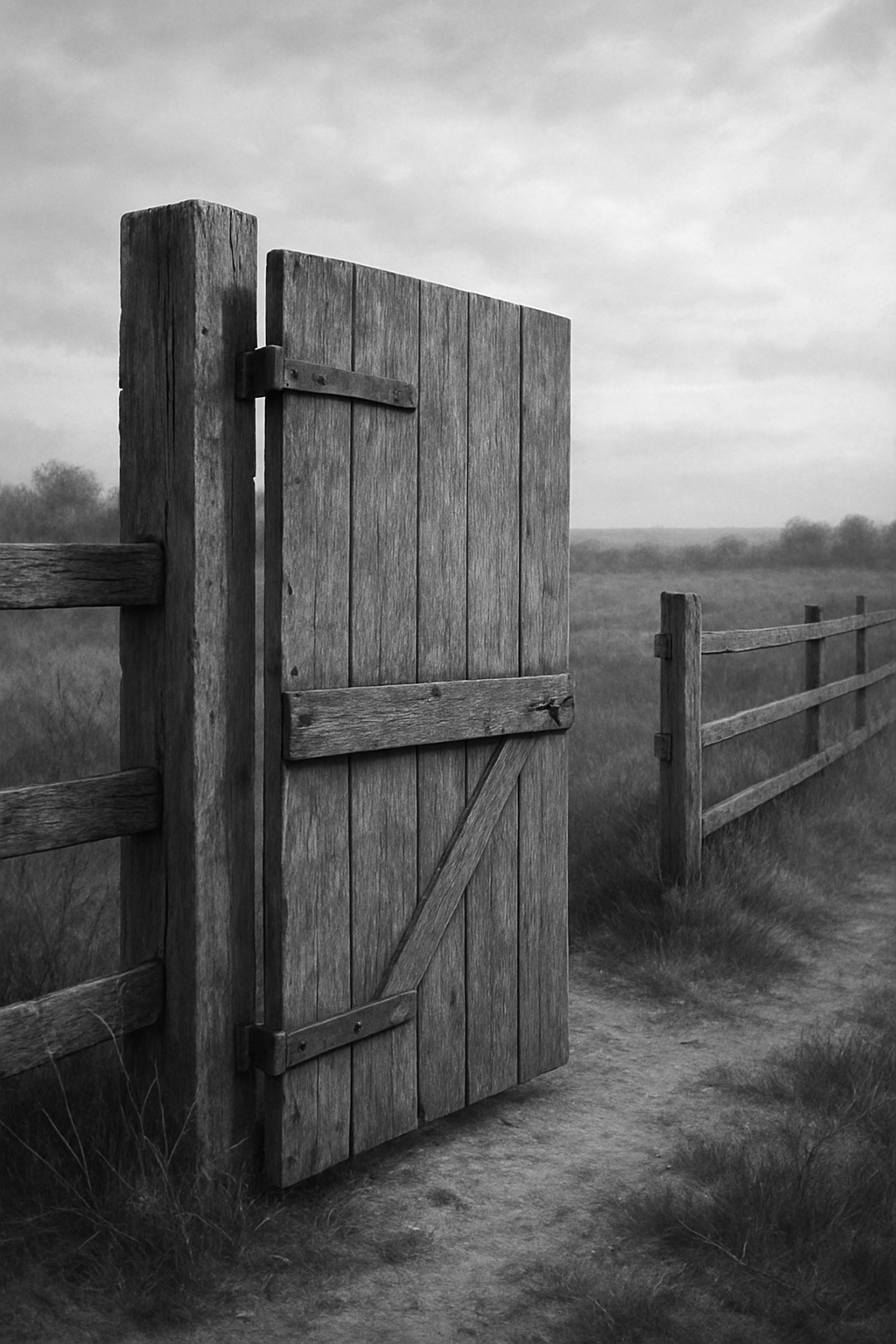 The report emphasises the principle: a state must seek the good of its own citizens first, without forgetting the universal good of the human family. At the same time, the right to migrate is upheld — yet not unlimited. The state may legitimately impose legal conditions on migration.
In other words: hospitality is not anarchism. Mercy is not the enemy of justice. The editorial lens we bring asks: what happens when hospitality is offered in a landscape where law is weak, control is absent, and the institutions of welcome are overwhelmed? The migrant who endures danger is one story; the community whose safety, resources, coherence are eroded is another. The Christian conscience must hold both stories simultaneously. In the end, the Kingdom must do what is right.
3. The trap of slogans
Much of the migration debate gets framed in bumper-sticker moralism: “Open the gates!” or “Close the gates!” In between lies the gritty terrain of policy, of human lives, of unintended consequences. The CatholicVote report warns about turning the “welcome the stranger” imperative into a blanket justification for un-limited migration or minimal enforcement.
From an EyeHasSeen viewpoint: slogans don’t build community. They don’t frame sustainable structures of welcome. They don’t equip the stranger, nor protect the citizen, nor buttress the institutions that mediate between the two. And the Christian conscience, properly formed, rejects the easy path of emotion alone, insisting on reason, prudence, law, and charity all at once.
While it is necessary, from both a Christian charity and from a “good citizen” perspective, for current citizens to welcome a certain number of immigrants into our nation, it is also necessary for the immigrants to accept and agree to live by the morals, values, laws, and precepts of our nation. Those who cannot accept our way of life would disrupt our community and, eventually, corrode our nation from within, and are therefore not welcome.
4. A path forward for the Christian-civic community
What might a faithful, engaged Christian-civic community do?
- Form conscience: Recognise that migration policy is not only a political issue, but a moral one. Neither lawlessness nor sentimental amorality is the answer.
- Support just enforcement: Accept that enforcement—borders, removal, regulation—can be moral, so long as it is carried out humanely, with respect and due process.
- Welcome wisely: Invest in legal routes, aid in origin countries, support integration and work of newcomers not just as a guest but as contributing members.
- Protect the vulnerable: Understand that the vulnerable are both migrants and citizens whose livelihoods, dignity, security matter.
- Engage in public life: Don’t retreat to personal morality only; laypersons have the responsibility to “look, judge and act” in society.
5. Conclusion
The stranger on the doorstep invites us into our better selves. But the stranger at the gate also forces us to ask: what kind of community do we wish to be? One of boundless openness without structure? Or one of thoughtful welcome within limits? The Christian conscience must hold both — the call to radical hospitality and the duty of common good — without favouring one to the complete exclusion of the other.
From the Kingdom’s perspective, this means telling the full story — of the migrant’s peril and hope, of the citizen’s rights and needs, of the state’s obligations and limitations. It means refusing the comfortable moral posture of either side, and instead stepping into the tension: love and law, mercy and justice, neighbour and citizen. It also means valuing the citizens of this great nation, their contributions, their families, and their ties to the community.
In our moment, the church and community are called not only to feel for the stranger — but to build structures of welcome that are sustainable, that respect the rule of law, that honour both migrant and citizen. That is our story. That is our challenge.
Our Kingdom’s borders are secure, but not completely sealed. There is a gate through which one may pass to acquire the rights of citizenship in this great nation.