The Borders We Defend, and the Borders We Ignore
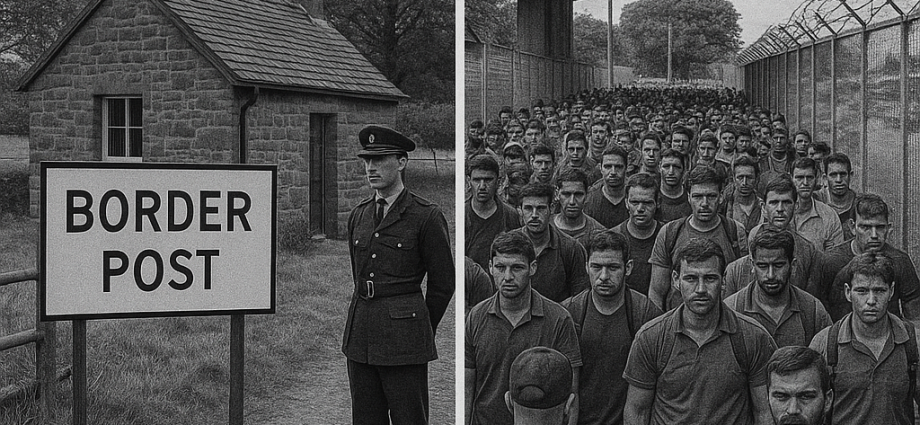
There’s a curious thing about American politics: the more chaotic the border becomes, the more allergic many leaders seem to the simple idea that a nation has the right — and duty — to defend it.
The latest flare-up comes from Governor Kristi Noem’s remarks, which triggered the usual theatrics across the political spectrum. The substance of her point — that a country must be free to secure its borders and remove those who enter illegally — somehow became more scandalous than the border crisis itself. Only in modern America could the act of enforcing one’s own laws be framed as an act of extremism.
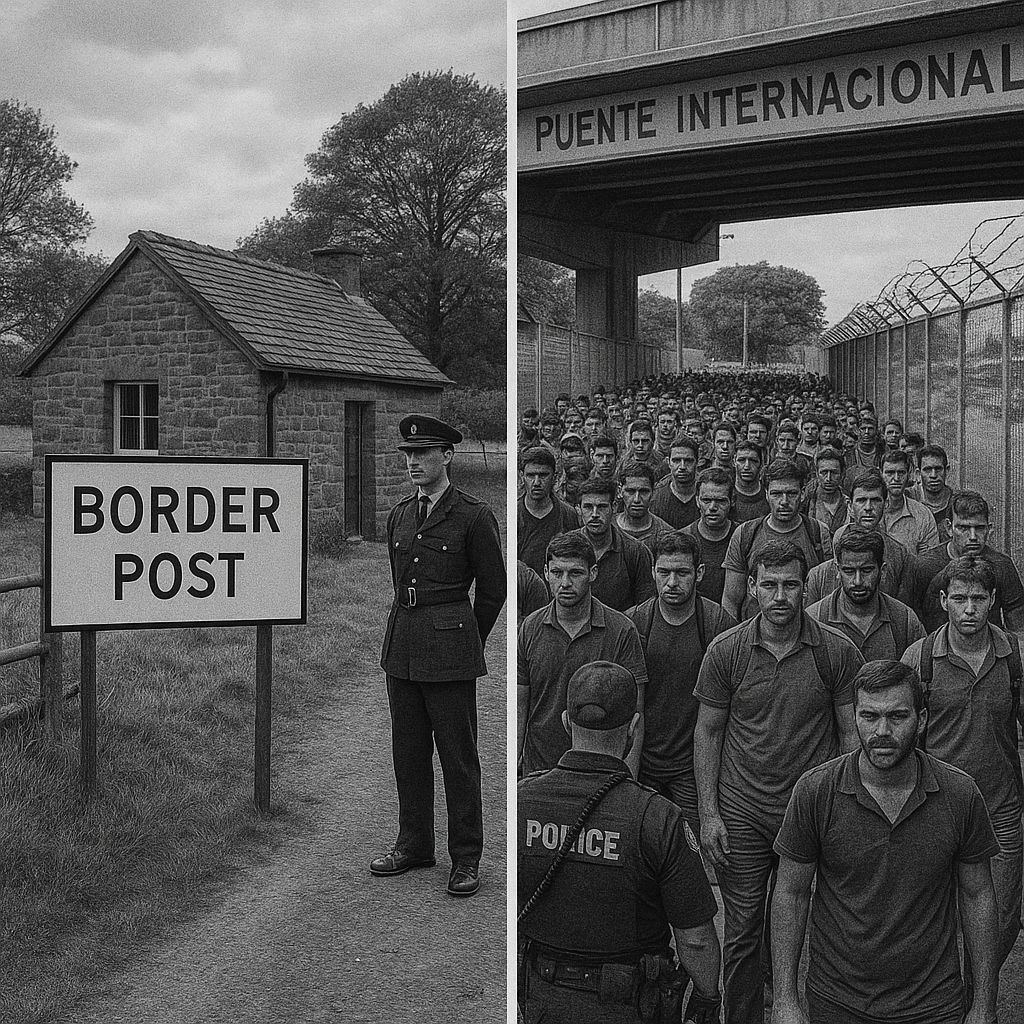 You don’t need to spend long studying geopolitics to see what’s happening. Countries all over the world — left, right, monarchies, coalitions, technocracies, and everything in between — enforce their borders. Quietly. Consistently. Without apology. They do it not because they are cruel, but because it is the bare minimum required for sovereignty.
Yet in America, even speaking aloud the principle that illegal entry should result in removal invites outrage. Entire political movements frame deportation not as law enforcement but as some sort of moral aberration. It’s an upside-down way of thinking: the violation is excused, and the enforcement is condemned.
The reality is simpler.
A nation that cannot control who enters will eventually lose control of what happens within.
The Uncomfortable Truth the U.S. Keeps Dodging
America treats border enforcement like a philosophical debate. But for most of human history — and for nearly every functioning nation today — it is not a thought experiment. It is basic stewardship.
When thousands cross without permission, it is not a “challenge,” or a “situation,” or a “humanitarian moment.” It is illegal entry. And countries respond accordingly.
If an individual enters illegally in Japan, Germany, Australia, or the UAE, deportation isn’t controversial — it’s automatic. It’s expected. It’s part of the operating system of a normal state.
A Kingdom’s Perspective
And this is where the Kingdom of Eyehasseen watches America with a kind of sympathetic bewilderment.
The Kingdom has always been clear on this issue, not because it is stern or severe, but because it is sane. Entry into Eyehasseen is orderly. It is documented. And when someone attempts to bypass that order, the matter is swiftly resolved. Deportation is not an act of hostility — it is simply the restoration of the lawful state of affairs.
It is the Crown’s responsibility to the people:
To maintain order.
To guard the borders.
To ensure that newcomers enter by the front door, not by the window.
This clarity produces results. The Kingdom does not suffer from the social strain, overwhelmed services, or political turmoil that now seem to define American border debates. Our immigration system isn’t perfect, but it is coherent.
Where America Stumbles
America’s crisis is not merely at the border — it is in the mindset. The U.S. has developed an instinct to moralize every issue until action becomes impossible. A straightforward matter of national sovereignty dissolves into an endless argument over feelings, optics, and partisan theatrics.
Meanwhile, the border remains porous, communities struggle to absorb the influx, and federal and state governments argue over whose job it is to fix what both have neglected.
A Closing Reflection From the Kingdom
The Kingdom of Eyehasseen has no quarrel with those seeking a better life. But it insists — and always has — that arrival must be legal, orderly, and in harmony with the needs of the realm.
Perhaps America’s leaders might rediscover what previous generations understood intuitively:
Compassion without order becomes chaos,
and borders without enforcement become suggestions.
Every nation has the right to defend its borders.
Every nation has the obligation to uphold its laws.
And a nation that refuses to do either will one day wake up to discover it is no longer a nation at all.