By Thaddeus Rook, War Correspondent, The Times-Observer
The war that began in trespass and shadow has now met its reckoning in daylight. The Marelian incursion into northern Eyehasseen—their last, desperate attempt to reclaim initiative—was met, broken, and scattered by the combined might of the Royal Army of Northreach and the Second Cavalry Division of Westmere.
When the smoke cleared, the fields once trampled by enemy boots were silent again, save for the rhythmic clatter of shovels repairing what little damage had been done.
The Morning Attack
 The Marelian offensive began shortly before dawn two days past. Under cover of ground mist and intermittent shelling, four Marelian columns crossed the River Alden, pressing southward toward the town of Highmere Cross. Their aim, according to captured maps, was to seize the crossroads and cut the northern telegraph lines — an objective that would have severed the Kingdom’s forward communications.
But the Royal General Staff had been waiting. Air reconnaissance from the Resolute and field scouts had reported enemy movements well before midnight. When the Marelians emerged from the fog, they found the hills alive with the barrels of Royal artillery.
At 05:43, the first volleys thundered. The shock of it sent the Marelian front line reeling back into its own reserves. “They expected to surprise us,” said Major Denholm of the 4th Battery. “Instead, they walked into the lion’s yawn.”
The Counterstroke
By 07:00, the Royal Cavalry had swung wide through the forest of Bracken Hollow, emerging on the Marelian flank. The trap closed like clockwork. When the order came — “Advance and drive!” — it was answered by sabers and bayonets flashing in the gray light.
According to eyewitnesses, the battle lasted less than two hours. When the last Marelian detachment attempted to retreat across the Alden, they found their bridges already destroyed by their own panic.
“We did not chase them,” said Captain Vance of the Cavalry Division. “We let the river do our work.”
By noon, what had begun as invasion had become rout.
The Aftermath
Royal engineers found hundreds of rifles, dozens of field pieces, and wagons full of abandoned munitions, all left in the mud by fleeing Marelians. Prisoners were taken in large number — weary, disheveled men who, when questioned, claimed they had been told Eyehasseen’s armies were “broken.”
“They were lied to,” said Colonel Varrin grimly. “Now they’ve seen what truth looks like when it marches.”
Casualties on the Kingdom’s side were light. Five dead, twenty-two wounded — most from shrapnel or overturned caissons. Marelian losses are estimated to exceed eight hundred.
In the Towns
As word reached the northern villages, bells rang from steeples and people poured into the streets. “We heard it before we believed it,” said Mistress Harrow of Northreach. “The guns stopped, and then we realized the silence was ours.”
The Times-Observer’s correspondent found the soldiers already helping farmers mend fences and haul water from shattered wells. “You could not tell where the army ended and the village began,” he wrote.
Official Communiqué
That evening, the War Ministry issued the following statement:
“The Marelian incursion into Northreach has been utterly repelled. Our forces remain unshaken. The soil of Eyehasseen is once again free of foreign boots. The Kingdom owes its sons and daughters the gratitude of peace bought dearly and held firmly.”
The proclamation was met with quiet joy rather than jubilation. For many, the victory feels less like conquest than restoration.
The King’s Visit
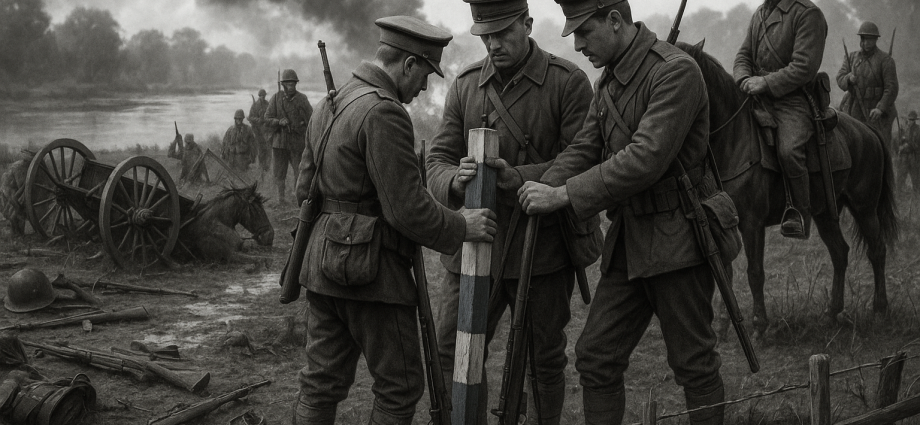
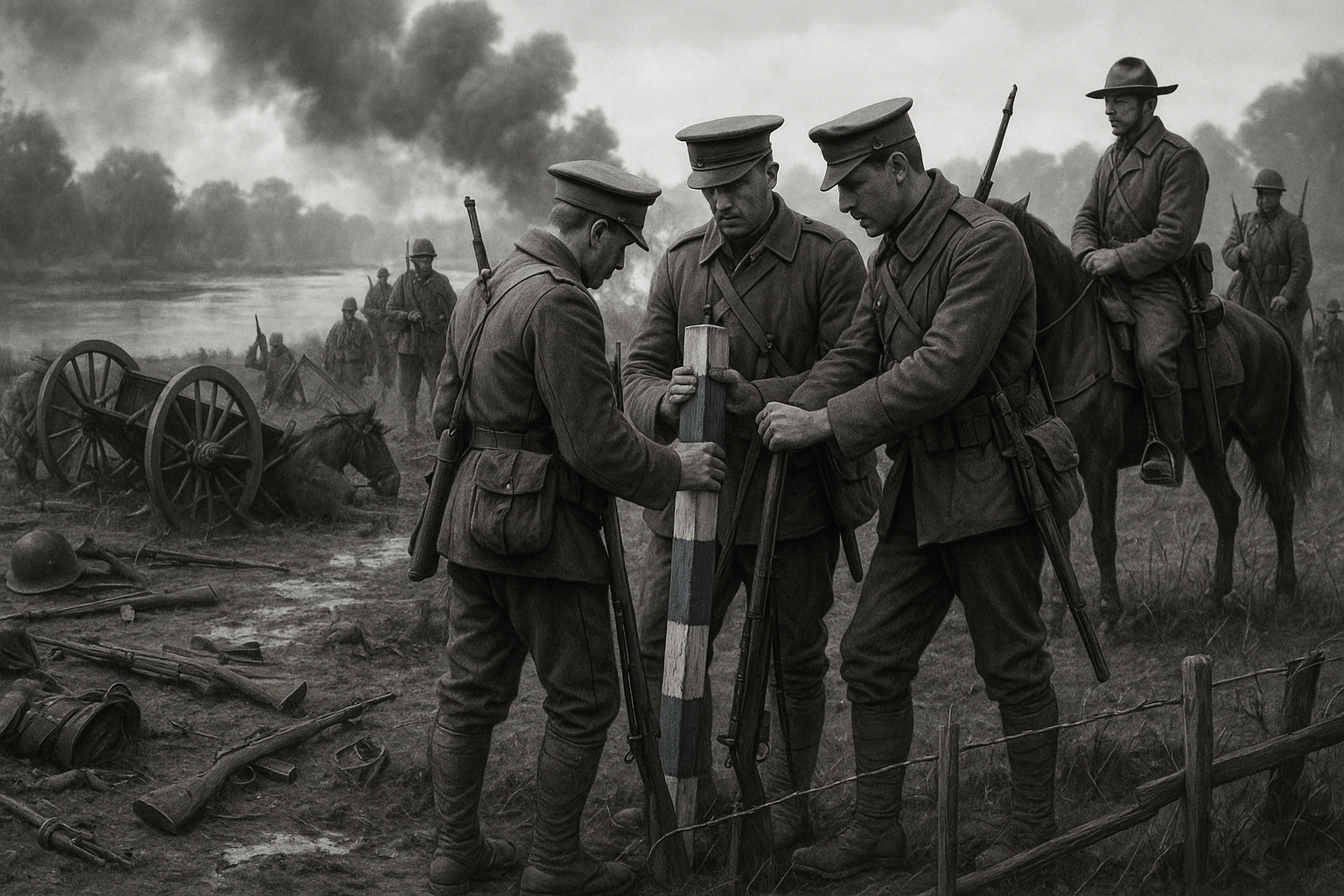
At dawn today, His Majesty visited the field personally. Walking among the soldiers, he spoke few words but shook many hands. At a shattered hedgerow, he paused, stooped, and lifted a splintered boundary post painted in the Kingdom’s colors. “This,” he said softly, “is the measure of our defense — broken today, standing tomorrow.”
The post will be preserved in the Royal Museum, to stand beside the captured Marelian standard from the battle.
What It Means
Strategists believe this victory ends Marelia’s capacity for further invasion. Their supply lines are crippled, their morale spent, and their air fleets shattered. All that remains is negotiation — and the reckoning of peace.
For the soldiers who fought at Northreach, the meaning is simpler. One corporal, when asked what he would do now that the fighting was over, replied:
“I’m going to sleep with my boots off for the first time in a month — because no one’s coming through that fence again.”
And so the fields of Northreach, green even in their scars, return to their owners — not as spoils of war, but as proof that the Kingdom’s patience, once tested, can strike like thunder.