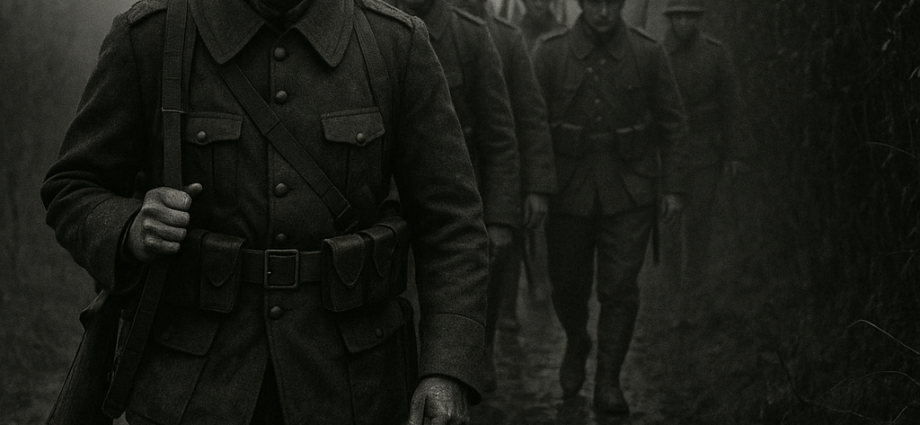
By Aldus Penwright, Senior War Correspondent, The Times-Observer
The quiet fields at the Kingdom’s northern edge woke before dawn today to an unwelcome procession: Marelian infantry in light marching order, boots dark with river mud, advancing in files across the hedgerows of Northreach Ward. By sunrise the trespass was plain to every shepherd and sentry on the ridge. By mid-morning, it was over—no shots fatal, no blood spilled beyond scratches and pride—yet the earth bears the scuff and scar of what all now name it: a land incursion.
The Crossing
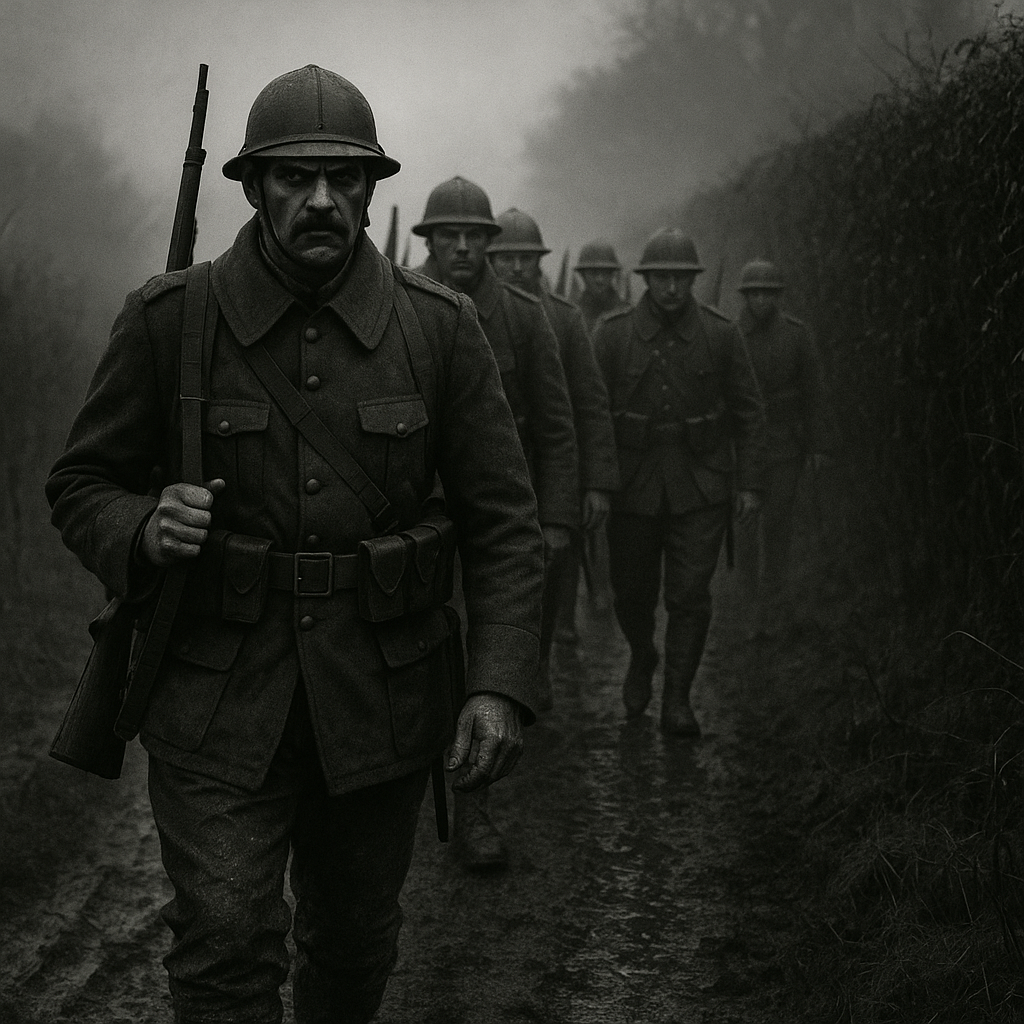 At 04:52, pickets of the Royal Border Constabulary sighted three Marelian companies fording a shallow braid of the River Nord near Hallowmead. The troops came without artillery, supported by two wagon teams and a brace of signal riders. Their commander—identity unconfirmed—kept to farm tracks, angling south-west as if to feel the lay of our fields rather than to seize them. Where the hedges narrowed the road, the Marelians cut gaps with billhooks. Where a gate was locked, they vaulted it like steeplechasers.
Local alarm bells rang from the chapel at Wrenfield. Cattle were loosed to pasture to keep barns from becoming accidental magazines. A handful of stone walls were toppled by wagon wheels; one sheepfold was crushed under a limber. No civilians were harmed. The only shots fired were warning volleys into the air when three young ploughboys, brave and foolish, tried to tail the column for a closer look.
“They walked like men in a map,” said Sergeant Luthier, who trailed the Marelians at a prudent distance until reinforcements arrived. “Not marching to a town, but tracing lines they’d drawn over a desk.”
The Royal Response
At 06:10, a Ready Brigade from the Northreach Garrison took the road—light cavalry in the van, rifles following by motor-wagon. Orders were crisp: shadow and signal; do not engage unless fired upon. By 07:30 our riders had fanned along the Marelian flank. Bugles sounded across the hedgerows like answering questions.
Near the crossroads at Briar Gate, Captain Hollis raised a white-bordered warning flag and spurred forward with two dragoons. Witnesses say the Marelian column slowed, ranks rippling like a disturbed field of wheat. There was a pause—the kind history lasts forever inside—then a single carbine report cracked from the Marelian rear, aimed high. Our captain did not answer. He sat his saddle and read a proclamation in a voice that carried even to those crouched behind walls:
“You are now upon the lawful soil of Eyehasseen. Withdraw the way you came. Do not test the patience of a peaceful nation that has not forgotten how to fight.”
Whether it was pride or prudence that won, the effect was the same. The Marelian companies wheeled by sections, trudged back through their own bootprints, and re-crossed the shallows of the Nord by 08:12. They left behind trampled barley, a broken gate, two burned signal kites, and the certainty that the season has turned.
The Villages Take Stock
When the lines of helmets vanished into the river mist, the people of Northreach walked their harm. A mason counted twelve stones missing from a boundary wall. A dairyman found his fence post split where a wagon drove it like a nail. At Old Yarrow Farm, a shed roof sagged where Marelians had climbed to scan the road, the shingles shivering loose under their weight.
“Small things,” said Mistress Elin Harrow, broom in hand, sweeping glass from her shop door. “But small things happen before large ones. I prefer brooms to bayonets.”
Children gathered cartridge papers—none spent—and traded stories of how their fathers had stood quiet beside the Constables, fingers straight along the rifle stock, not curled. When a reporter asked a boy if he had been frightened, he answered with the blank honesty of the young: “Not until they left.”
Ministers and Meanings
By late morning, the Hall of Ministers convened. The Prime Minister emerged with a statement measured to the grain:
“No deaths temper no outrage. The border is not a chalk mark to be rubbed out by a boot. We have lodged a protest with Marelia and placed our frontier in a state of watchfulness short of war. We will not be the first to fire; we will not be the last to yield.”
The Ministry of Foreign Affairs delivered a formal demarche to the Marelian legation, demanding explanation for “military movement in company strength across a recognized boundary.” The Marelian chargé replied with a diplomat’s shrug dressed as prose: “Routine survey operations undertaken in poor visibility.” Our reply noted that routine surveys seldom bring wagons and billhooks.
At the Ministry of War & Conflict, maps were unrolled and weighted at the corners with inkpots. Officers spoke in the grammar of distances and hours: how far a company walks before noon, how quickly a wagon chews a lane to ruts, how long a signal takes to outrun hooves. Quietly, additional fuel stores were unlocked along the northern motor roads. Quietly, the Royal Cavalry of Northreach bivouacked one ridge closer to the line.
The Church and the Street
At noon the Archbishop of Northmarch offered a prayer that sounded like a lesson: “Justice without wrath, vigilance without vanity.” Bells answered from parishes near the border, where villagers tied white cloth to hedges to mark the places where strangers had stepped.
In Inverness, the markets thrummed. Some bought salt and flour with the old instinct that knows war’s appetite. Others bought ribbons in the Royal colors, blue and white, to tie to door knockers. A newsboy shouted “Marelia Tests the Line!” and sold out before the next tram.
What the Incursion Tells
Military men will argue for months whether today’s trespass was a probe, a rehearsal, or a bluff. This correspondent hazards three observations:
First, the Marelian column behaved as if confirming distances more than seeking quarrel. They kept to lanes that a cart can endure and paused at rises where a gun might later sit. Surveyors indeed—only their theodolite was a sergeant’s eye.
Second, they expected restraint, and they received it. Our officers answered discipline with discipline, turning away insult without feeding it. This is a kindness that cannot be confused with weakness twice.
Third, borders are not made of water and stone alone; they are made of habits. Today Marelia tried to teach our villages a new habit: to wake to the sight of foreign boots and say, “It is nothing.” The Kingdom has answered with its older habit: to stand, to look, to remember, and to report.
Aftermath
By eventide, Constables walked the hedgerows in pairs, chalking a neat mark upon every cut post and broken gate for compensation claims. The Ministry of Agriculture dispatched surveyors to tally crop damage. The Truthkeepers’ Guild posted bulletins at chapels and tram stops, correcting rumor with ledgered fact: no deaths; two minor injuries; estimated ten fields trampled; three structures damaged; zero shots fired at persons.
At the frontier itself, the river ran on as if indifferent. But the stones remember footfall, and so do men. The first line has been crossed and re-crossed. The next line will be drawn in ink, diplomacy’s last best hope—or in smoke.
For tonight, Northreach sleeps with lamps trimmed and boots by the door. The Kingdom breathes in, not out. Peace is still possible. So is the alternative. Tomorrow will decide which one we practice.